







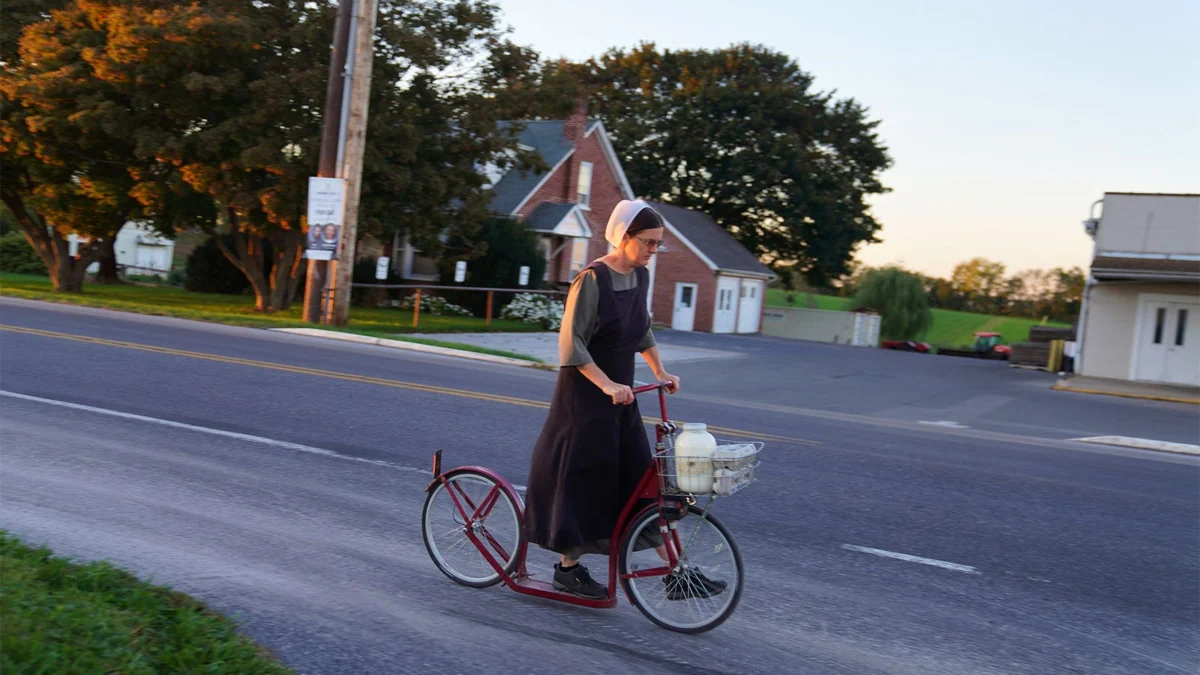
October 31, 2026 — In the bustling outdoor markets of Lancaster County, Pennsylvania, the veneer of a pastoral, insular lifestyle is being challenged by a biological reality. Amidst stalls overflowing with autumn harvests, handmade fry pies, and modern goods, the Amish and Mennonite residents—collectively known as the "Plain communities"—mingle with the broader "English" population. While these communities are often perceived as separate from the modern world, the recent, historic surge of measles has proven that, in the realm of public health, no community is truly an island.
As the nation grapples with its worst measles outbreak in 35 years, Lancaster County has emerged as the epicenter. With over 1,350 confirmed cases in Pennsylvania this year alone—and more than a third concentrated within Lancaster—the crisis has reignited a complex national debate regarding medical autonomy, cultural tradition, and the fragility of herd immunity.
The Anatomy of an Outbreak: A Chronology of Crisis
The current surge did not occur in a vacuum; it is the culmination of years of eroding vaccination rates and shifting public sentiment.
- 2000: The U.S. declared measles "eliminated," a status that relied on consistent, high-level vaccination coverage.
- 2020–2021: The COVID-19 pandemic acted as a catalyst for widespread vaccine skepticism. In Lancaster County, this period saw an intensification of anti-vaccine rhetoric, with high-profile figures, including Robert F. Kennedy Jr., visiting the region to challenge public health mandates.
- 2025: Significant outbreaks began appearing in Mennonite communities in Texas, serving as a warning sign that the virus was finding pockets of vulnerability across North America.
- Early 2026: The first clusters in Pennsylvania were identified. As winter approaches, medical experts fear that indoor gatherings will facilitate further transmission, potentially escalating the case count beyond the current, already high, figures.
State officials acknowledge that the official tally of 1,350 cases is likely a significant undercount. In many rural, conservative communities, medical intervention is sought only in dire emergencies. With three measles-associated deaths recorded in Lancaster and two elsewhere in the state, the gravity of the situation is no longer a theoretical concern but a tragic reality.
Data and Demographics: Beyond the Amish Stereotype
Public perception often leans toward blaming the Amish for the current crisis, but data suggests the issue is far more systemic. While it is true that vaccination rates are lower among the Amish—with a 2022 survey indicating that only about 3 in 10 Amish families vaccinate their children—this is rarely a matter of religious doctrine.
"There’s nothing in Amish theology or historic documents that you can find that specifically addresses or is opposed to immunization," explains Steve Nolt, director of the Young Center for Anabaptist and Pietist Studies at Elizabethtown College. For many, vaccine avoidance is a matter of "culture and habit" rather than religious ideology. As Allen Hoover, an Old Order Mennonite and former administrator, notes, the reasoning is often: "We never did before, and we came through all right."
However, the "English" population is far from immune. Kindergarten vaccination rates in the U.S. have dropped from 95.2% in 2019–2020 to 92.4% in the 2025–2026 school year. In Lancaster County, the rate sits at a precarious 88%. Berwood Yost, director of the Center for Opinion Research at Franklin & Marshall College, warns against scapegoating. "Kindergarten vaccination rates have declined in every central Pennsylvania county since 2020," Yost noted. "Every one of us is susceptible to misinformation and confusing messages."
The "Lion King" of Viruses: Why Herd Immunity Matters
Measles is arguably the most contagious infectious disease known to science. Michael Osterholm, PhD, MPH, director of the University of Minnesota’s Center for Infectious Disease Research and Policy, pulls no punches: "Measles is really the lion king of infectious diseases when it comes to transmission. No one in the United States of America who is susceptible… should feel safe."
Herd immunity, the threshold at which a virus stops spreading through a population, generally requires a 95% vaccination rate. When rates dip into the high 80s or low 90s, the virus finds the gaps. Because Lancaster County’s rate is currently 88%, the virus is effectively "finding" the susceptible individuals in every corner of the community, from private religious schools to public subdivisions.
The health consequences are severe. While some cases remain mild, others lead to life-altering complications, including pneumonia, encephalitis, and permanent neurological damage. The recent controversy surrounding a pediatric death—attributed by the county coroner to a ruptured spleen rather than the virus—highlights the intense political and social friction surrounding the outbreak’s reporting.
Bridging the Trust Gap: The Path Forward
How does a society recover from a breakdown in public health trust? In Lancaster, the answer is being found in small, incremental, and deeply personal interactions.
The Role of Mobile Clinics
Nonprofits like Union Community Care are operating mobile units under the banner of "Plain Healthy." By avoiding aggressive, top-down mandates and instead focusing on community-based outreach, they have successfully administered approximately 450 measles vaccinations. Chief Medical Officer Dr. Anne-Marie Derrico emphasizes that trust is the currency of this operation. "We have Plain patients coming to the city, we have patients in the city who don’t vaccinate… there is no way to imagine this is an isolated community."
Changing Minds
The outbreak itself has served as a grim motivator for some. While staunch opponents like farmer Ephraim Zook remain unconvinced—viewing measles as a "natural thing"—others are reconsidering their stance. One local farmer, who initially avoided the shot, sought vaccination after watching his adult siblings suffer through the illness. The practical reality of being unable to harvest crops or work the land has proven to be a more effective persuader than any government flyer.
Dr. D. Holmes Morton, founder of the Central Pennsylvania Clinic, reports that "vaccine days" are seeing increased attendance. This shift confirms the historical precedent: during the 1991 measles outbreak, the Plain community ultimately turned out in droves to get vaccinated once the threat was understood and the outreach was handled with respect.
Implications for Public Policy
The current crisis has forced a reckoning at the highest levels of government. U.S. Secretary of Health and Human Services Robert F. Kennedy Jr. has found himself in a public standoff with Pennsylvania Governor Josh Shapiro over the management and interpretation of the outbreak data.
Meanwhile, legal battles are escalating. A group of Amish schools and individuals in New York is currently petitioning the U.S. Supreme Court to broaden religious exemptions for school vaccines. This case could have profound implications for Pennsylvania and other states that already allow for such exemptions, potentially creating a legal landscape where state-level mandates become increasingly difficult to enforce.
Conclusion: An Act of Love
As the medical community looks toward the winter months, the focus remains on the necessity of immunization as a social contract. Dr. Diego Hijano of St. Jude Children’s Research Hospital summarizes the moral imperative of the situation: "Getting the shot is an act of love to your community. You will get protected yourself. But in truth, you are actually protecting everyone around you."
In the intersection of the traditional and the modern, the story of the 2026 measles outbreak serves as a stark reminder of our interconnectedness. Whether one lives on a quiet Amish farm or in a bustling suburban center, the virus makes no distinction. The path back to a measles-free America lies not in coercion, but in the slow, painstaking process of rebuilding the trust that once made the "eliminated" status of the virus a standard part of American life.
For the families of Lancaster, and for the nation, the lesson is clear: public health is a shared responsibility, and in an interconnected world, the health of the most isolated is inextricably linked to the health of the whole.