







Get your daily dose of health and medicine every weekday with STAT’s free newsletter, Morning Rounds. Sign up here.
Buongiorno. As the nation puts the final touches on Halloween costumes and prepares for the final stretch of the 2026 midterm elections, the healthcare landscape remains as complex and unsettling as a haunted house. From the startling reality of "surprise" emergency room billing at private clinics to the federal legal battles over Medicaid, the intersection of policy, finance, and human health is undergoing a period of intense turbulence.
I. When Urgent Care Becomes Emergency Care: The "Upgrade" Trap
The promise of modern healthcare delivery is efficiency and accessibility. Companies like Intuitive Health, a private equity-backed firm operating roughly 50 hybrid ER-urgent care clinics, were founded on a compelling premise: providing a one-stop-shop for both minor ailments and life-threatening emergencies. The logic was that a patient could walk into a single facility, receive care for a urinary tract infection (UTI) or a minor laceration, and only be escalated to emergency-level billing if their condition truly required it.
The Financial Shock
In practice, however, the model has frequently devolved into a financial nightmare for unsuspecting patients. Investigations, including a recent deep dive by STAT’s Tara Bannow, have uncovered a systemic trend: patients seeking routine urgent care are leaving with bills that mirror the astronomical costs of a full-scale hospital emergency room visit.
One illustrative case involved a patient who sought care for a simple UTI, only to be slapped with a $1,756 bill on top of the $211 "copay" they had already settled at the front desk. Other reports are even more jarring, with patients facing charges of up to $7,000—reduced to $2,100 after insurance intervention—for common issues like congestion and a cough.
The Lack of Transparency
Company officials maintain that their protocol requires patients to sign a consent form before any "upgrade" to emergency services occurs. Yet, the investigation reveals that this is rarely standard practice. Often, in the high-stress environment of a clinical waiting room, patients are presented with a stack of digital paperwork to sign, masking the fact that they are consenting to emergency-level billing structures. The implication for patients is clear: the convenience of a hybrid model may come at a hidden, and often devastating, financial premium.
II. The Medicaid Tug-of-War: A Halt to Work Requirements
While patients grapple with private billing, a major legal victory has shifted the landscape for public health insurance. A federal judge in Massachusetts recently issued a ruling that effectively halts the federal government’s attempt to tighten "medicaid work requirements" for the medically frail.
Chronology of the Legal Battle
- Early 2026: The Centers for Medicare & Medicaid Services (CMS) releases an interim rule designed to limit exemptions to Medicaid work requirements.
- Mid-2026: States challenge the rule, arguing that CMS overstepped its authority by forcing "medically frail" individuals to prove their conditions prevent them from working, rather than providing a clear list of exempt conditions.
- October 2026: The federal judge rules in favor of the states, citing that the government failed to provide enough time for states to assess eligibility and that the new rule created unnecessary bureaucratic "red tape."
Implications for Beneficiaries
The ruling is a significant setback for the current administration’s push to tie welfare benefits to labor participation. By rejecting the narrow definition of "medical frailty," the court has ensured that thousands of vulnerable citizens will not be forced to navigate an arduous verification process during a period of economic uncertainty. The decision creates a "tangled web" that will likely delay the rollout of these requirements well past the start of 2027, forcing a fundamental reassessment of how Medicaid eligibility is defined at the federal level.
III. The Political Pulse: RFK Jr. and the "Spiritual Battle"
As the midterm elections loom, the rhetoric surrounding public health has taken a decidedly ideological turn. Robert F. Kennedy Jr., serving as Health Secretary, has been a prominent fixture on the campaign trail, particularly in support of candidates who frame agricultural and health policy as matters of moral imperative.
At a recent rally in Iowa for Republican gubernatorial candidate Zach Lahn, Kennedy characterized the fight against "Big Agriculture" as a "spiritual battle." His platform, which resonates with a specific segment of the electorate, centers on "medical freedom," vaccine skepticism, and the promotion of his "MAHA" (Make Americans Healthy Again) initiative.
The Broader Political Context
Kennedy’s messaging represents a shift in how health policy is being weaponized in the current political cycle. By tying the health of the soil and the microbiome to the "spiritual" health of the nation, he is tapping into a growing distrust of mainstream institutional medicine. While his political future and the viability of his movement remain topics of heated debate, his influence on the midterm narrative—particularly regarding the intersection of food production and human disease—is undeniable.

IV. Scientific Frontiers: Decoding Early-Onset Colorectal Cancer
While policy battles rage in D.C., the medical community is racing to solve a grim scientific puzzle: why is colorectal cancer becoming more aggressive and prevalent in young adults?
The "Atlas" of Tumors
Researchers have long noted that patients diagnosed with colorectal cancer under the age of 35 face a significantly worse prognosis than their older counterparts. To find answers, a team led by Kimmie Ng, director of the Dana-Farber Cancer Institute’s Young-Onset Colorectal Cancer Center, has developed a comprehensive "atlas" of 189 tumor samples.
By analyzing these samples across an age spectrum from 20 to 90, the researchers are attempting to isolate biological variables that were previously obscured by confounding factors. The goal is to identify unique molecular features of these tumors that could serve as targets for new, specialized therapies.
The Urgency of the Mission
"It is devastating to care for young patients diagnosed with often advanced stages of colorectal cancer," Ng stated. "These are people in the prime of their life." The project is more than just a database; it is a desperate search for answers that could change the standard of care for a generation currently facing a rising tide of early-onset disease.
V. Gender and Health: Reframing the "Men’s Health" Paradox
A provocative new series in The Lancet is challenging the traditional way we categorize health outcomes. The authors propose that we stop looking at "men’s health" as a purely biological issue of sex and start examining it through the lens of gender.
A New Framework
The paradox is clear: men consistently experience worse health outcomes and lower life expectancy than women, yet they often occupy positions of greater social and economic privilege. The series argues that this is not merely a biological destiny, but a result of "culturally defined roles, responsibilities, attributes, and entitlements."
The proposed framework suggests:
- Intersectional Analysis: Examining health outcomes by looking at structural determinants, such as how the social expectations of "being a man" influence risk-taking behavior and healthcare utilization.
- Public Good: Moving away from a "zero-sum" perspective. The authors argue that improving men’s health is not a detraction from women’s health but a necessary component of the public good that ultimately benefits all of society.
VI. In Memoriam: Helen Branswell
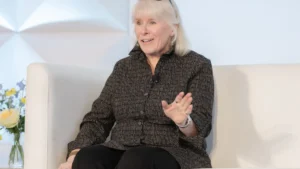
Finally, the health community pauses to honor the legacy of Helen Branswell. This week, the Foundation for the National Institutes of Health awarded the Kovler Prize for Trust in Life Science Journalism to Branswell posthumously.
Branswell, who was a frequent and vital contributor to Morning Rounds for over a decade, was a titan in infectious disease reporting. From her early, prescient coverage of Covid-19 to her tireless dedication to scientific accuracy, she set the standard for how health journalism should be conducted. A video of Branswell accepting the award, recorded shortly before her passing, serves as a poignant reminder of her passion for the work and her commitment to the truth. Her absence is a profound loss to the field, but her work remains a guiding light for those who continue to report on the complexities of medicine and public health.
As we look toward the future, the lessons from this week are clear: from the billing practices of private clinics to the deepest questions of oncology and social equity, the state of our health is inseparable from the state of our society. Stay informed, stay vigilant, and we will see you back in the next edition of Morning Rounds.