








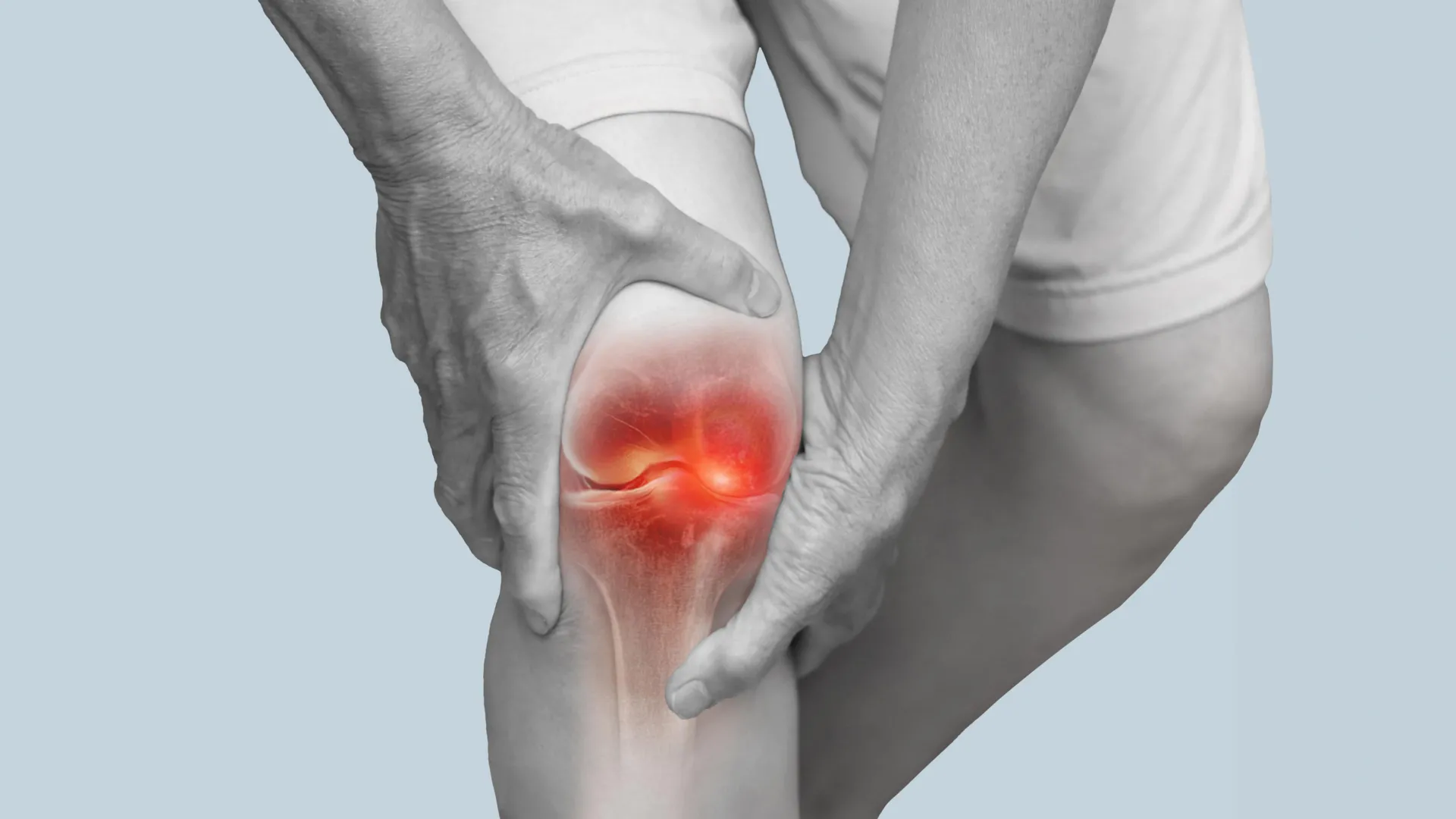
For millions of adults worldwide, the diagnosis of knee osteoarthritis (OA) often feels like the beginning of an inevitable decline. As cartilage—the smooth, protective tissue cushioning our joints—gradually wears away, the path forward typically involves a familiar, often frustrating, regimen: over-the-counter painkillers, physical therapy, weight management, and, eventually, the looming prospect of invasive joint replacement surgery.
But what if the key to managing this chronic, debilitating condition didn’t lie in a pharmacy or an operating room, but in the very way we take our first steps each morning?
Groundbreaking research published in The Lancet Rheumatology has introduced a compelling paradigm shift in musculoskeletal health: personalized gait retraining. By precisely adjusting the angle of the feet, patients can redistribute the mechanical load on their knee joints, offering a non-invasive way to mitigate pain and potentially slow the biological clock of cartilage deterioration.
The Mechanical Root of the Problem
Osteoarthritis is a pervasive condition, affecting approximately 22% of adults over the age of 40. It is a leading cause of long-term disability, transforming simple daily activities—climbing stairs, rising from a chair, or walking to the mailbox—into painful ordeals.
The knee is a complex hinge, composed primarily of two compartments: the medial (inner) and the lateral (outer). In the majority of the population, the medial compartment bears the brunt of the body’s weight during the gait cycle. Consequently, this section of the knee is the most frequent site of damage. When cartilage in this area begins to erode, the body continues to exert excessive pressure on the exposed bone, creating a vicious cycle of inflammation, pain, and further structural decay.
Current treatments, while effective at managing symptoms, largely fail to address this underlying biomechanical culprit. This is where the work of researchers from the University of Utah, New York University, and Stanford University becomes critical. By focusing on the "mechanics of movement," they are targeting the source of the pressure rather than just the symptom of the pain.
A Chronology of Discovery: From Labs to Life
The journey toward this discovery has been a multi-year effort to translate biomechanical theory into clinical practice.
The 2025 Clinical Trial
Published in August 2025, the study led by Scott Uhlrich, an assistant professor of mechanical engineering at the University of Utah, marked the first randomized, placebo-controlled trial to demonstrate the long-term effectiveness of gait retraining.
Over a one-year period, 68 participants with mild to moderate medial knee osteoarthritis were monitored. Researchers used high-fidelity motion-capture cameras and pressure-sensitive treadmills to analyze each participant’s unique gait. Through this diagnostic phase, scientists identified exactly how small adjustments—specifically turning the toes inward or outward by 5° or 10°—affected the force distribution within the knee.
The Six-Week Intervention
Participants were divided into two cohorts. The intervention group underwent six weeks of "biofeedback" training. Using a wearable device on their shin, they received gentle, immediate vibrations whenever their foot drifted outside their prescribed, biomechanically optimal angle. This "real-time" feedback allowed the brain to rewire its motor patterns, moving the adjustment from a conscious effort to a subconscious habit.
The results, measured one year later, were striking. While the sham group (who were instructed to walk "naturally") saw minimal change, the intervention group reported a significant decrease in pain, with an improvement magnitude comparable to commonly used medications, ranging from standard anti-inflammatories to stronger prescriptions.
The 2026 Expansion
Building on this momentum, a subsequent study published in Clinical Biomechanics in April 2026 by researchers at the University of Bath expanded the scope. By testing different biofeedback methods on 50 patients, the team confirmed that while various techniques could reduce pain, the precision of the movement change was the defining factor in achieving a measurable reduction in joint loading (a 7.6% decrease).
Supporting Data and Evidence
The clinical outcomes of these trials go beyond mere patient testimony. The researchers utilized advanced MRI imaging—specifically the T1rho measurement—which can detect the health of cartilage at a molecular level long before visible structural damage appears on a traditional X-ray.
- Pain Reduction: On a 10-point pain scale, participants in the gait retraining group showed an average improvement of 2.5 points, compared to 1.3 points in the placebo group.
- Clinical Significance: Approximately 91% of those who underwent the personalized retraining reported a "clinically meaningful" reduction in pain, compared to 66% in the comparison group.
- Cartilage Preservation: The MRI scans showed a slower degradation rate in the cartilage of the intervention group, providing the first strong evidence that mechanical offloading can actually change the biological progression of the disease.
Official Responses and Expert Perspectives
The research community has received these findings with cautious optimism. Dr. Scott Uhlrich, who co-led the 2025 study, emphasizes that the success of the treatment is rooted in its personalization.
"We’ve known for a long time that higher loads in the knee accelerate osteoarthritis," Uhlrich notes. "The problem with previous attempts at gait retraining was that they were ‘one-size-fits-all.’ If you tell someone to turn their toes out, but they actually need to turn them in to relieve pressure, you might be doing more harm than good."
The U.S. Department of Veterans Affairs, which funded the primary trial, views this as a vital development for aging populations who may not be candidates for major surgery. The potential to fill the "treatment gap"—the decades of pain between the onset of arthritis and the eventual necessity of joint replacement—is seen as a major win for public health.
Implications for the Future of Healthcare
The implications of this research are far-reaching, potentially changing how physical therapy is administered and how we view "preventative" movement.
The "Smart" Future
One of the most significant barriers to this treatment is the current need for a laboratory full of motion-capture equipment. However, the tech sector is already closing that gap. Recent proofs-of-concept, including studies published in Machine Learning with Applications in September 2026, suggest that AI-driven smartphone cameras and "smart shoes" equipped with inertial sensors could soon allow patients to receive this level of care at home.
These systems would analyze a person’s walk during their daily routine, providing the same biofeedback that was previously only available in a clinical setting.
A Note of Caution
Despite the excitement, researchers are quick to warn that this is not a "do-it-yourself" remedy. Gait retraining is a highly technical intervention.
- Professional Assessment: It requires a clinical diagnosis of the specific compartment of the knee affected.
- Calibration: Without proper measurement, individuals risk increasing the mechanical stress on their joints.
- Advanced Disease: The current findings are most applicable to those with mild to moderate symptoms; for those with severe, bone-on-bone arthritis, this approach may not be sufficient.
Conclusion: A New Path Forward
The ability to modify our biomechanics offers a profound sense of agency. For many participants, the realization that they can influence their own joint health without relying on external devices or pharmaceuticals has been life-changing.
"It’s just a part of my body now," one participant remarked, reflecting on the newfound habit. "It will be with me for the rest of my days, and I’m thrilled with that."
While we are not yet at the point where we can claim to "cure" osteoarthritis, the integration of personalized gait retraining into standard medical practice offers a glimpse of a future where we manage our joints with as much precision as we manage our medications. As the research continues to evolve and technology becomes more accessible, the simple act of walking may soon be recognized as the most effective tool we have in the fight against chronic joint pain.