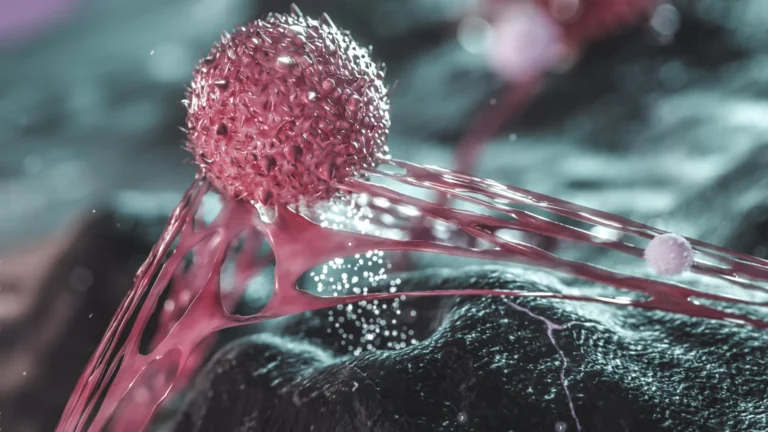









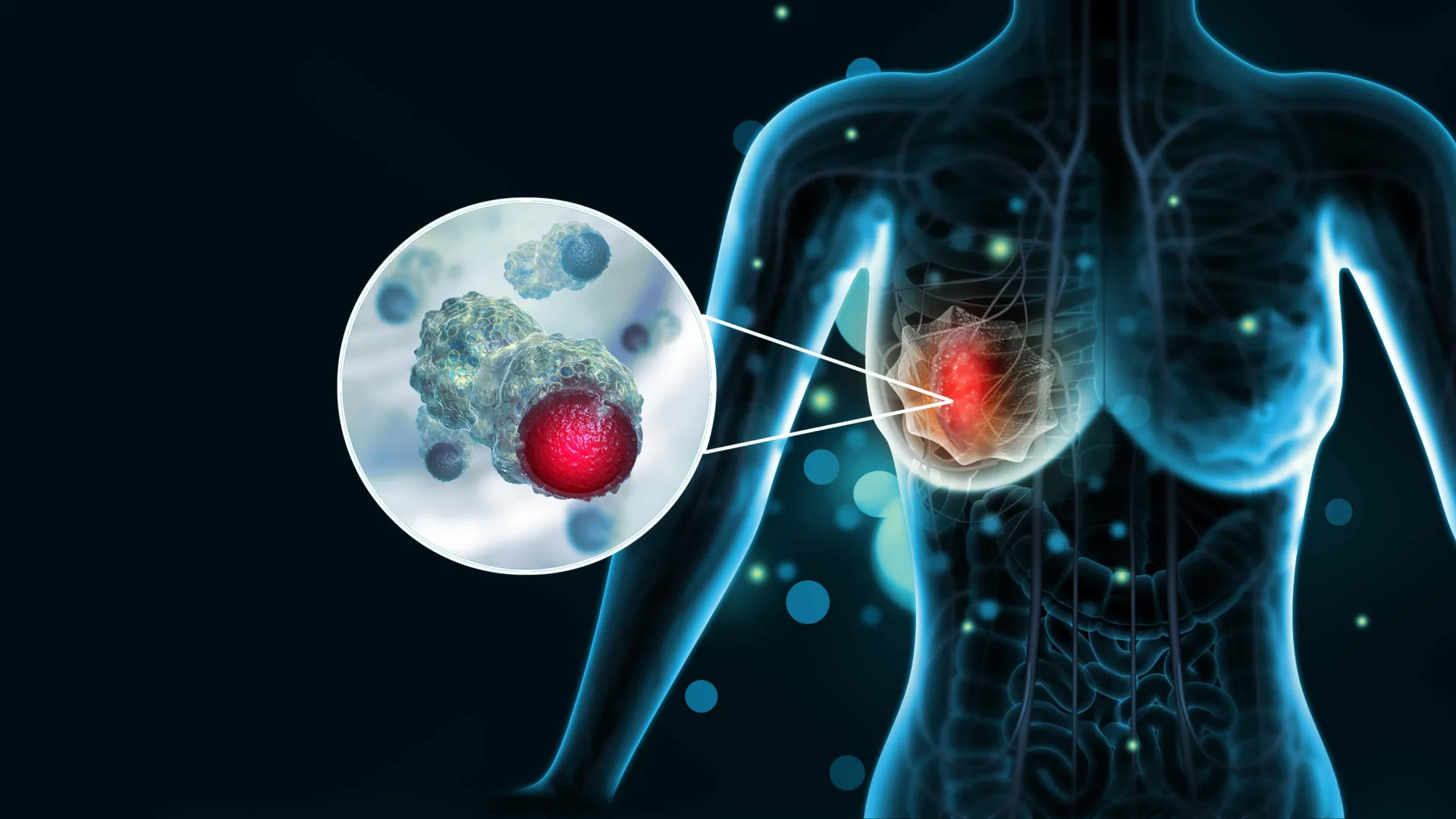
In a discovery that adds a sobering layer to our understanding of environmental health, researchers at the National Institutes of Health (NIH) have identified a significant association between exposure to "forever chemicals"—specifically PFOA and PFOS—and an increased risk of developing estrogen receptor-negative (ER-negative) breast cancer. This aggressive form of the disease, which lacks the hormonal targets common in other breast cancers, has long been a subject of medical mystery. The new findings, published in the Journal of Clinical Oncology, suggest that environmental pollutants may be a missing piece of the puzzle in understanding the etiology of this malignancy.
The Nature of the Threat: Understanding PFAS
Per- and polyfluoroalkyl substances (PFAS) are a massive family of synthetic chemicals that have been staples of industrial and consumer manufacturing for decades. Known for their durability, water resistance, and heat tolerance, they have been utilized in everything from non-stick cookware and food packaging to fire-fighting foams and stain-resistant textiles.
However, this very utility is the source of their danger. PFAS are dubbed "forever chemicals" because they do not break down in the natural environment. Instead, they accumulate in soil, water sources, and the human bloodstream, where they can linger for years, if not decades. Despite the phase-out of certain legacy PFAS, the ubiquity of these compounds means that the vast majority of the population carries some level of these chemicals in their bodies.
A Chronology of Investigation: From the Sister Study to Discovery
The path to this discovery began long before the recent publication, rooted in the massive longitudinal effort known as the "Sister Study." Conducted by the National Institute of Environmental Health Sciences (NIEHS), the project enrolled 50,884 women across the United States and Puerto Rico between 2003 and 2009. These women were specifically selected because they had a sibling who had been diagnosed with breast cancer, making them a high-priority demographic for understanding environmental and genetic triggers.
For the purpose of this specific investigation, researchers examined a subset of 1,609 women who had developed breast cancer after enrolling in the study, comparing their health outcomes against a control group of 2,269 women. By analyzing blood samples collected years prior to a participant’s diagnosis, the scientists were able to effectively look back in time, correlating the concentration of 17 different PFAS in the blood with subsequent cancer developments.
What they found was a stark, statistically significant correlation. While the study did not find a broad link between PFAS and all breast cancer types, the data regarding ER-negative breast cancer was striking.
Supporting Data: The Quantitative Evidence
The statistical findings of the study serve as a wake-up call for public health officials. Researchers observed that women in the highest quartile of PFOA exposure faced a 67% higher rate of developing ER-negative breast cancer compared to those in the lowest exposure group. The trend was even more pronounced with PFOS exposure, where those with the highest levels in their blood showed a 93% increased rate—nearly doubling the risk compared to the lowest-exposure cohort.
It is critical to note, however, that these figures represent relative risk between the studied groups. The study authors were careful to clarify that these findings establish an association rather than definitive causation. The biological pathways through which these chemicals might trigger cancer remain under investigation.
Unlike hormone-receptor-positive breast cancers, which are fueled by estrogen or progesterone, ER-negative tumors do not rely on these hormones for growth. This suggests that the mechanism behind the PFAS-cancer link may be unrelated to endocrine disruption, pointing instead toward potential epigenetic changes, alterations in gene expression, or systemic inflammation caused by the chemicals’ interaction with the immune system.
Official Responses and Policy Implications
The release of this study has prompted an immediate response from federal health leadership. Recognizing the gravity of the potential environmental health crisis, HHS Secretary Robert F. Kennedy, Jr. emphasized the government’s commitment to transparency and investigation.
"Women deserve clear answers about how chemicals in their environment may affect their health," Secretary Kennedy stated. "This NIH study links two forever chemicals to a higher risk of ER-negative breast cancer and demands further investigation. Under President Trump’s leadership, we will pursue the evidence, confront environmental health risks, and give women the information they need to protect their health."
The study is being hailed as a milestone in environmental epidemiology, though experts caution that this is only the beginning of a broader research initiative. Dr. Alexandra White, an NIH Stadtman Investigator and the lead author of the study, noted that the findings were bolstered by a meta-analysis of prior research, which confirmed the consistency of the link between legacy PFAS and this specific, aggressive tumor type.
Why ER-Negative Breast Cancer Demands Attention
The focus on ER-negative breast cancer is not arbitrary. In the landscape of oncology, ER-negative tumors are notoriously difficult to treat. Because they do not express estrogen or progesterone receptors, they do not respond to common endocrine therapies like tamoxifen or aromatase inhibitors, which are staples of modern breast cancer treatment.
Patients with these tumors are often forced to rely on more intensive chemotherapy, radiation, and surgical interventions. Furthermore, there have been fewer established "modifiable risk factors" for this type of cancer compared to other forms. Identifying that environmental pollutants may be a significant, potentially modifiable contributor provides a new, urgent focus for public health policy and preventative medicine.
The Future: Can We Reduce the Risk?
The persistence of these chemicals in the human body poses a complex challenge for public health, yet the researchers remain optimistic that the trend can be addressed. Dr. Che-Jung Chang, the study’s first author and a researcher at the scientific organization DLH, underscored the "modifiable" nature of the threat.
"Although PFAS are persistent in the environment and in our bodies, exposure to them is still potentially modifiable," Dr. Chang noted. "People can take steps to reduce their exposure, and these findings could open new avenues for prevention."
Steps to reduce exposure—such as filtering drinking water, avoiding non-stick cookware that is nearing the end of its lifespan, and being mindful of consumer products known to contain PFAS—are increasingly being recommended by environmental health advocates. However, the study also highlights a growing concern: what about the "replacement" chemicals?
Unanswered Questions and the Path Ahead
While PFOA and PFOS have been largely phased out of industrial production in many parts of the world, they have been replaced by a new generation of PFAS compounds. These newer variants were designed to be shorter-lived in the body, but their long-term health profiles are still largely unknown.
The scientific community is now under pressure to determine if these newer, "next-generation" PFAS carry similar risks. The NIH researchers have made it clear that further investigation is essential. Future studies will need to focus on:
- Replacement Compounds: Rigorous testing to see if the newer, alternative PFAS are associated with the same increased risk of ER-negative breast cancer.
- High-Exposure Populations: Targeting research toward communities living in areas with known water contamination or industrial manufacturing sites where chemical levels are significantly higher than the national average.
- Biological Mechanisms: Determining exactly how these chemicals interfere with cellular health to promote tumor growth.
The study, supported by grants from the NIEHS, serves as a cornerstone for future policy, reminding us that our internal health is inextricably linked to the external environment. As the scientific community continues to peel back the layers of how these "forever chemicals" impact the human body, the hope is that these insights will translate into safer manufacturing regulations, cleaner water, and ultimately, a reduction in the incidence of some of the most aggressive forms of cancer.
For now, the message to the public is one of vigilance. As the regulatory and scientific landscapes evolve, the focus must remain on limiting exposure to these pervasive, persistent substances to protect the health of future generations. The era of ignoring the long-term impact of industrial pollutants appears to be drawing to a close, replaced by a more rigorous, data-driven approach to environmental safety.