









WASHINGTON, D.C. — In the high-velocity environment of the nation’s capital, where the rhythm of life is dictated by legislative calendars and the relentless churn of the 24-hour news cycle, it often takes a cataclysmic event to force a collective pause. However, in September 2026, that pause was not triggered by a political upheaval or a macroeconomic shift, but by the silent collapse of a 55-year-old oak tree in the north end of Dupont Circle.
What began as a routine instance of storm damage has evolved into a profound case study on community resilience, urban biophilia, and the essential human need to be "seen" and "known." The "Dupont Memorial Tree," as it has come to be known, now stands—or rather, lies—as a testament to the power of shared grief and the unexpected ways in which the mundane can become a conduit for mental well-being.
Main Facts: The Anatomy of a Local Landmark
The event occurred during the second week of September 2026, following a localized but intense weather system that swept through the District of Columbia. While the storm resulted in widespread power outages and the closure of several area schools due to obstructed transit lines, the most significant cultural impact was felt in Dupont Circle.
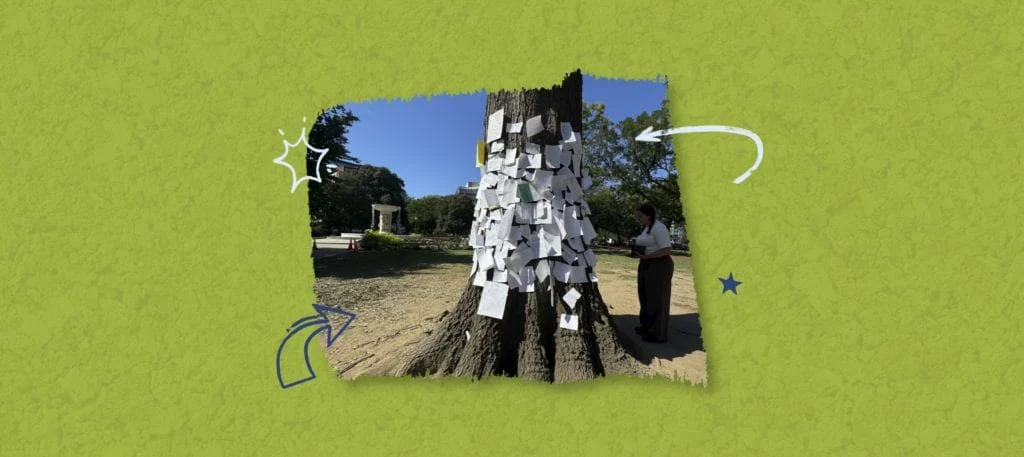
An oak tree, a fixture of the neighborhood for over half a century, succumbed to the saturation of the soil and the velocity of the winds. Standing over 60 feet tall before its fall, the tree was a geographical anchor for residents, commuters, and tourists alike. Today, a 15-foot jagged stump is all that remains of the vertical structure, surrounded by a labyrinth of gnarled roots that have begun to heave from the earth.
In the days following the collapse, the site transformed. A single handwritten note, tacked to the bark of the stump, ignited a spontaneous grassroots memorial. Within a week, the stump was covered in hundreds of messages, sketches, and tokens of appreciation. This phenomenon has drawn the attention of sociologists and mental health advocates, including the national non-profit Active Minds, which has highlighted the event as a critical example of how "micro-communities" form to process loss and find connection in an increasingly digital world.

Chronology of a Collapse: From Shadow to Shrine
The Pre-Storm Context
For 55 years, the oak tree at the north end of Dupont Circle was largely invisible. In the parlance of urban planning, it was "green infrastructure"—a functional part of the canopy that provided shade, reduced the heat island effect, and offered a backdrop for the thousands of people who passed it daily. To the local community, it was a "halfway marker" for joggers or a quiet roof for those reading on the park benches.
September 12-13, 2026: The Storm
A "wicked wind and pelting rain," as described by local meteorological reports, descended upon the District overnight. While most Washingtonians slept through the peak of the storm, the oak tree reached its breaking point. The combination of aged root systems and the sheer volume of precipitation led to a structural failure.
September 14, 2026: The Discovery
As the city woke to clear skies, the absence of the oak’s canopy was immediately jarring. "It wasn’t just that a tree was gone," noted one local resident. "It was as if a building had disappeared overnight. The light in the park was different." By noon, the first note appeared. It was a poignant adaptation of a philosophical classic: “When you’re falling in Dupont and there’s nobody around, did you ever even crash or even make a sound?”
September 15–Present: The Memorial Flourishes
The single note acted as a permission slip for the neighborhood. Within 48 hours, the stump became a corkboard for the community’s collective consciousness. Conversations began to bridge demographic divides—men in business suits paused to read notes alongside teenagers and parents with strollers. The site transitioned from a debris zone into a "third space" for emotional expression.
Supporting Data: The Science of Biophilia and Community Mental Health
The reaction to the Dupont oak is supported by a growing body of research regarding the "shared history of humans and oaks." According to a study published in the National Institutes of Health (NIH), the cultural and emotional relationships humans form with trees often translate into powerful symbols that are incorporated into religious beliefs and secular mythology.
The "Biophilia Hypothesis," popularized by E.O. Wilson, suggests that humans possess an innate tendency to seek connections with nature and other forms of life. When a landmark like the Dupont oak falls, it represents more than the loss of flora; it represents the severance of a multi-generational connection to a specific place.

Furthermore, data from Active Minds suggests that "micro-interventions"—small, unplanned moments of community connection—can significantly lower cortisol levels and reduce feelings of isolation. In a society built for "efficiency and grit," these moments of "quiet interruption" allow individuals to step out of the "chaotic hustle" and engage in what psychologists call "collective effervescence"—the feeling of belonging and social identity that comes from shared experience.
The Wall of Notes: A Dialogue of Generations
The content of the notes left on the Dupont stump reveals a deep-seated desire for intentionality. The messages range from the whimsical to the deeply personal:
- Gratitude: "Thank you for the shade during my first date in D.C. ten years ago."
- Grief: "I realized I never looked at you until you were gone. I’m sorry."
- Hope: "The roots are still here. We are still here."
- Community: "To the person who wrote the note about the storm: I watched it from my window too. You weren’t alone."
These exchanges illustrate a shift in how urban dwellers are managing their relationships with their environment. In an era where "to be loved is to be seen," the tree became a mirror. By acknowledging the tree’s life and death, residents were inadvertently acknowledging one another. The act of writing a note and tacking it to a stump is a physical manifestation of a "dopamine hit" that is grounded in reality rather than a digital screen.
Official Responses: Stewardship and Sensitivity
The spontaneous memorial has placed local officials in a delicate position regarding urban forestry and public safety.
National Park Service (NPS) Perspective
While the NPS typically moves quickly to remove fallen timber from public parks to ensure safety, the overwhelming community response has led to a temporary stay of execution for the stump. A spokesperson for the regional office stated, "We recognize the unique cultural significance this specific site has taken on. While we must eventually address the structural integrity of the remaining stump, we are working with community leaders to ensure the transition is handled with the sensitivity it deserves."
Active Minds Advocacy
Active Minds has released a statement praising the "Dupont Pause." A representative for the organization noted: "What we are seeing in Dupont Circle is a masterclass in community mental health. We often talk about the importance of ‘checking in’ on friends, but checking in on our shared spaces is equally vital. This tree has reminded a neighborhood that they are not just a collection of individuals, but an ecosystem. We encourage the city to preserve this moment of connection as a reminder that we are only strangers as long as we don’t see one another."

Implications: Lessons from the Mundane
The fall of the Dupont oak serves as a poignant reminder of the fragility of our "fixtures." In a world of finite time and infinite possibilities, the community’s reaction suggests a growing hunger for "slow culture"—the ability to mourn a tree, to write a physical letter, and to speak to a stranger about the weather.
The implications for mental health are significant. As we move further into a tech-centric future, the "Dupont Memorial Tree" highlights several key takeaways for urban well-being:
- The Value of Interruption: Routine is the enemy of awareness. When the oak fell, it interrupted the "fast-moving colloquial culture" and forced a moment of mindfulness.
- The Power of Vulnerability: The notes allowed people to express "grief for the mundane," a type of vulnerability that is often suppressed in high-pressure environments like Washington, D.C.
- The Ecosystem of Care: The tree reminded residents that they "should say it (or write it down)"—referring to the appreciation they have for their surroundings and their neighbors.
As the city eventually moves to clear the site, there are already calls to commission a permanent memorial or to use the wood from the oak to create benches for the park. Regardless of the physical outcome, the psychological impact of the September 2026 storm remains.
In the final words of one of the most famous children’s books about nature, often quoted in the notes on the stump: "And the tree was happy." In its fall, the oak did more to connect the people of Dupont Circle than it ever did in its 55 years of standing tall. It reminded a city of "efficiency and grit" that the most important thing we can do is simply pause and see one another.