









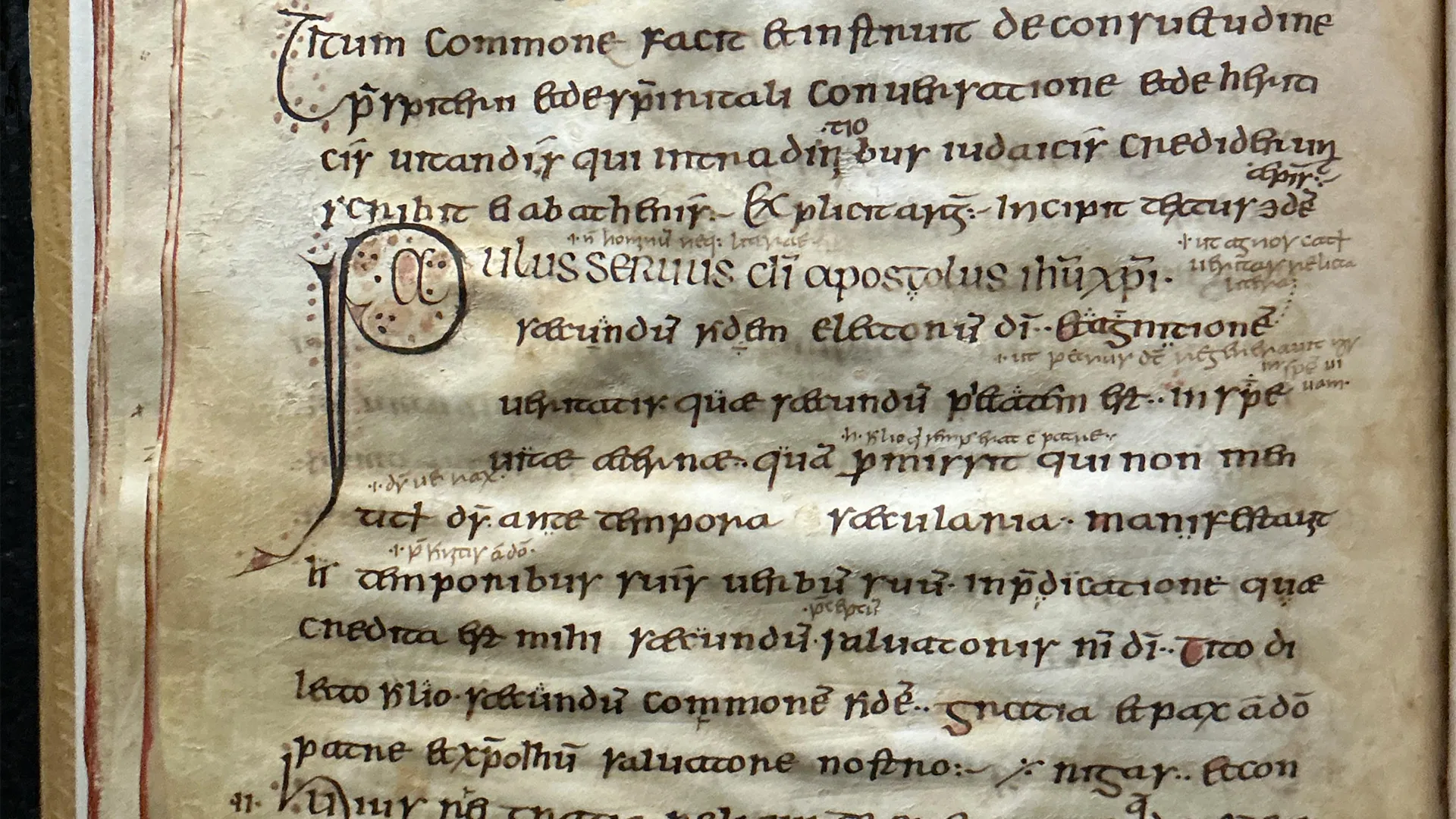
In the quiet, climate-controlled stacks of Europe’s most prestigious libraries, a revolutionary scientific investigation has been unfolding. For centuries, scholars have treated medieval manuscripts as vessels for theology, law, and literature. However, a groundbreaking study led by University College Dublin (UCD) has revealed that these pages—crafted from the skins of long-dead livestock—serve as unintended biological archives, harboring the genetic ghosts of ancient diseases.
By extracting ancient DNA (aDNA) from the parchment of iconic works such as the 1,000-year-old York Gospels, researchers have successfully reconstructed 3,500 years of the sheeppox virus (SPPV). This discovery not only provides an unprecedented look at the evolution of a pathogen that continues to devastate livestock today but also transforms our understanding of how cultural artifacts can double as forensic tools for modern epidemiology.
The Secret in the Skin: Bridging History and Biology
The parchment used in the Middle Ages was not a uniform material. Before the ubiquity of wood-pulp paper, scribes relied on the skins of sheep, goats, and cattle. The preparation process involved scraping, soaking, and stretching these hides—a treatment that, paradoxically, proved ideal for preserving biological evidence.
The international research team, comprised of specialists in genetics, virology, history, and conservation, utilized high-throughput sequencing to analyze these materials. They discovered that the parchment pages were essentially "time capsules" for the sheeppox virus. The presence of viral DNA on multiple pages of these manuscripts confirms that the animals utilized for the parchment were already infected at the time of their slaughter.
This finding carries significant weight for historians and scientists alike. It demonstrates that the economic impact of sheeppox—a disease known for its rapid transmission and high mortality rates—was woven into the very fabric of medieval intellectual life. When a monk sat down to copy the York Gospels or annotate the Corpus Glossary, he was working upon the remains of an agricultural system plagued by an invisible, relentless enemy.
Chronology of a Persistent Pathogen
To map the trajectory of the sheeppox virus, the research team expanded their scope far beyond the medieval period. The study, published in Science Advances, provides a comprehensive timeline that traces the virus back to the Bronze Age.
The Bronze Age Origins
The researchers went beyond parchment, analyzing sheep teeth recovered from archaeological sites across the Eurasian steppe. Teeth are highly resilient, acting as natural vaults for DNA that would otherwise degrade in the soil. By comparing the viral genetic material found in these 3,700-year-old remains with the DNA extracted from medieval manuscripts, the team was able to build a cohesive narrative of viral persistence.
The Evolution of the Capripoxvirus
Genetic modeling suggests that the capripoxvirus family—which includes the sheeppox virus, goatpox virus, and lumpy skin disease virus—diverged between 11,500 and 3,700 years ago. This timeline aligns perfectly with the Neolithic and Bronze Age transitions, periods defined by the intensification of livestock domestication and the large-scale migration of human populations. As pastoralist societies moved across the Eurasian landmass, their herds acted as both a source of sustenance and a vehicle for the spread of zoonotic disease.
Medieval Persistence
The manuscripts analyzed, spanning from Britain to continental Europe, confirm that the virus had firmly established itself in European flocks by the medieval era. The data reveals a chilling consistency: the virus that plagued the sheep of the Anglo-Saxon period is genetically remarkably similar to the one that causes modern outbreaks, proving that SPPV has been a constant, stable presence in the agricultural landscape for millennia.
Supporting Data: Why Parchment Matters
The methodology of this study represents a paradigm shift in how we view archival collections. The researchers discovered viral DNA not only on sheepskin but also on parchment made from calfskin and goatskin. While sheeppox primarily targets sheep, these findings present two compelling possibilities: either the virus displayed a higher degree of cross-species infectivity in the past, or the cross-contamination occurred during the intensive, communal nature of medieval parchment production, where skins from different species were often processed in the same vats.
The study’s reliance on interdisciplinary collaboration was crucial. By combining the expertise of UCD’s School of Agriculture and Food Science with institutions like the Helmholtz Institute for One Health and the University of Cambridge, the team turned "dusty" historical records into a rigorous dataset. The ability to identify viral signatures in materials that have been handled, stored, and preserved for a millennium proves that we have only scratched the surface of what library archives can tell us about our biological past.
Official Responses and Perspectives
"The recording of ancient DNA of pathogens has completely changed our understanding of infectious disease in the past," says Louis L’Hôte, a PhD candidate at UCD and lead author of the study. L’Hôte emphasizes that the stability of the sheeppox genome is a critical finding. Unlike the smallpox virus, which underwent significant evolutionary changes, sheeppox has remained largely unchanged. "This might mean that the genetic changes that allowed the virus to adapt to its host occurred much earlier in its history, which is a vital clue for future vaccine development and pathogen control."
Dr. Kevin G. Daly, the study’s supervising author and an Associate Professor at UCD, echoes this sentiment, highlighting the beauty of the interdisciplinary approach. "Parchment making has been considered a vanishing craft, but we are beginning to understand just how much of the past it has retained. This project shows that parchments not only preserve our cultural history but also the landscape of disease in our livestock in the medieval period."
The project, funded by Taighde Éireann-Research Ireland and the European Research Council, involved over 30 global institutions. It serves as a testament to the power of "open science," where historians provide the access and geneticists provide the lens, allowing for discoveries that neither field could achieve in isolation.
Implications for Modern Agriculture and Future Research
The implications of this study reach far beyond the historical interest of manuscript preservation. Sheeppox remains a lethal threat to global food security. Recent outbreaks in regions such as Greece have demonstrated that the disease can still cause catastrophic economic damage, leading to the culling of thousands of animals and the disruption of wool, meat, and milk supplies.
A New Tool for Surveillance
By proving that ancient documents serve as "disease archives," the researchers have provided modern scientists with a new protocol. Libraries and archives globally may now be considered potential sites for bio-prospecting. If we can map the history of sheeppox through parchment, we might also be able to map the history of other livestock pathogens—or even human diseases—that left their mark on the animal products used in antiquity.
Understanding Viral Stability
The surprising genetic stability of the sheeppox virus provides a roadmap for contemporary researchers. Because the virus has been so stable for over 3,000 years, the genetic factors that enable it to thrive in sheep are deeply ingrained. Understanding this "ancient" biology allows scientists to focus their efforts on specific, long-standing vulnerabilities in the virus, rather than chasing rapidly mutating targets.
The Preservation of History
Finally, the study underscores the importance of continued investment in the conservation of historical archives. These documents are not merely reflections of human thought; they are physical, biological records of the human and animal experience. As the craft of parchment making fades into obscurity, the scientific value of these existing manuscripts only increases.
Conclusion
The discovery that the York Gospels and other medieval treasures hold the genetic blueprints of the sheeppox virus is a poignant reminder of our connection to the past. Our history is not just written in the ink on the page; it is embedded in the skin of the manuscript itself. Through the lens of modern genetics, the medieval world becomes a vibrant, living, and often dangerous place—a world where the struggle against disease was as much a part of daily life as the act of writing itself. As researchers continue to probe these ancient pages, we can expect further revelations about the pathogens that have shaped, and continue to shape, the trajectory of human civilization.