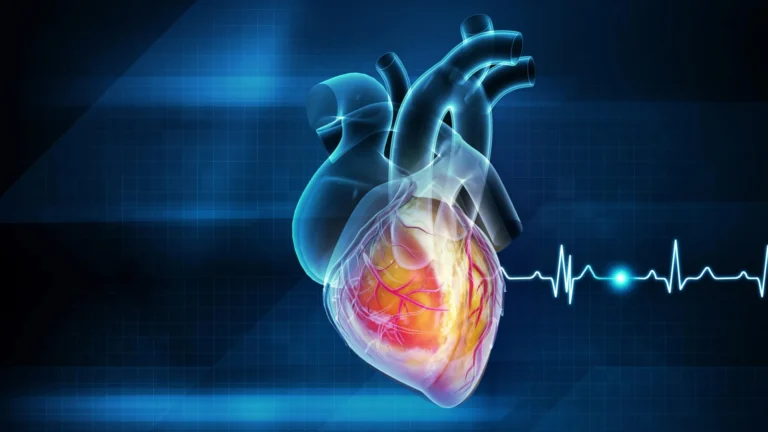












In a landscape where cannabis legalization is rapidly expanding and societal perceptions of the drug are shifting toward normalization, a groundbreaking study has surfaced to challenge the narrative that marijuana is a benign substance. New preliminary research presented at the American Heart Association’s (AHA) Scientific Sessions 2026 has uncovered a concerning, non-linear association between cannabis consumption and an increased risk of cardiovascular disease, most notably stroke.
With a data set encompassing more than 440,000 American adults, the study suggests that the risks associated with cannabis are not merely a byproduct of heavy or chronic usage. Instead, even occasional consumption appears to be linked to adverse cardiovascular outcomes. This finding raises urgent questions for public health officials, clinicians, and the millions of Americans who have incorporated cannabis into their daily lives.
The Rising Tide of Cannabis Consumption
To understand the gravity of these findings, one must look at the meteoric rise of cannabis use in the United States. According to the study, 1 in 6 American adults reported using cannabis within the last month in 2024, a significant leap from the 1 in 10 reported in 2020. This 51% increase in just four years highlights a fundamental shift in American health behaviors.
"Previous research has indicated that cannabis use is rapidly increasing in the United States," says lead author Aabha Divya, M.B.B.S., M.Ch., an assistant professor in the division of cardiothoracic surgery at the Tulane University School of Medicine. "As recreational legalization and the commercial availability of various products—from smoked flower to infused edibles—have expanded, we wanted to revisit the cardiovascular connection with a much larger, more contemporary population."
While previous studies conducted between 2016 and 2020 hinted at a correlation between marijuana and heart issues, the results were often inconsistent, hampered by smaller sample sizes or a lack of differentiation between tobacco and cannabis use. The 2026 analysis, drawing from the Behavioral Risk Factor Surveillance System (BRFSS), provides a more robust, albeit still evolving, picture of the risks involved.
Chronology of the Research
The study utilized data collected via telephone surveys across various U.S. jurisdictions between 2020 and 2024. This period is critical, as it tracks the post-pandemic era of widespread legalization and the proliferation of high-potency cannabis products.
- 2020–2024: Researchers aggregated data from 16 to 24 states that included optional cannabis-related questions in their annual BRFSS surveys.
- November 2026: The findings were formally presented at the American Heart Association’s Scientific Sessions in Chicago, a global hub for cardiovascular research.
- The Methodology: The research team analyzed the responses of 442,906 adults with an average age of 49. Participants were categorized by their frequency of use: non-users, occasional users, and frequent users. They were then cross-referenced with medical histories, specifically looking for diagnoses of heart attack, stroke, coronary heart disease, and heart-related chest pain.
The "Non-Linear" Paradox: Challenging Conventional Wisdom
Perhaps the most startling discovery of the research is that the risk of cardiovascular disease does not follow a simple "dose-response" curve. In pharmacology and epidemiology, one usually expects that more exposure to a harmful substance leads to a higher risk of injury. However, Divya and her team found that the link between cannabis and heart health was far more complex.
"We were surprised to find that the link between cannabis use and cardiovascular disease was not straightforward," Divya noted. "We expected that the chances of heart disease would gradually rise as people used cannabis more often, but that wasn’t the case."
Both low-use and high-use groups showed elevated odds of developing cardiovascular conditions. This suggests that the cardiovascular impact of cannabis may not be limited to cumulative toxicity, but could instead involve acute triggers—such as spikes in heart rate or blood pressure—that occur regardless of whether a person consumes cannabis once a month or once a day.
Dissecting the Data: Addressing Confounding Variables
A recurring criticism of cannabis-cardiovascular research has been the "tobacco trap." Historically, it was difficult to determine if a patient’s heart disease was caused by the marijuana they smoked or the tobacco often mixed with it.
The 2026 study attempted to mitigate this by accounting for a wide array of established risk factors, including:
- Tobacco smoking habits
- Alcohol consumption
- Obesity and physical inactivity
- Diabetes and chronic kidney disease
- Demographic factors (age, income, education)
By controlling for these variables, the researchers aimed to isolate the "cannabis effect." However, as Robert L. Page II, Pharm.D., M.S.P.H., FAHA, points out, the reality of patient behavior remains messy. "Many patients who use cannabis may also smoke tobacco, which completely clouds the issue," says Page, a professor at the University of Colorado and a leading expert on the AHA’s 2020 cannabis scientific statement. "In patients who use both, cannabis has always been considered an innocent bystander; however, this is not the case."
Expert Perspectives and Clinical Implications
The medical community is increasingly viewing cannabis not as a neutral lifestyle choice, but as a potential clinical risk factor. Dr. Page emphasized that the evidence is beginning to form a consensus. "This is the second observational study to suggest that cannabis exposure, even independent of tobacco smoking, may be a risk factor for cardiovascular disease," he noted.
The clinical implication is clear: Healthcare providers must start treating cannabis use with the same level of scrutiny as tobacco or alcohol consumption. During routine physicals, clinicians should explicitly ask about cannabis use—including the method of delivery—to accurately assess a patient’s cardiovascular profile.
Limitations: What We Still Don’t Know
Despite the massive scale of the 442,906-person study, the authors are the first to acknowledge its limitations. Science is an iterative process, and this study is an observational analysis, not a clinical trial.
- Correlation vs. Causation: The study identifies an association at a single point in time. It cannot definitively prove that cannabis caused the heart condition; it is possible that individuals with pre-existing health concerns turned to cannabis to manage symptoms or stress.
- Recall Bias: As the data relied on self-reporting via telephone surveys, there is a margin for error. Participants may underestimate their consumption due to social stigma or simply misremember their usage patterns over the previous month.
- Product Variability: The study lacked data on the chemical composition of the cannabis used. It did not distinguish between high-THC products, CBD-dominant products, or synthetic cannabinoids. As market products vary wildly in potency, the lack of granular data makes it difficult to pinpoint which components of the cannabis plant are most damaging to the cardiovascular system.
- The "Former User" Effect: There is a possibility that some individuals in the "non-user" category are actually former users who quit because they had already developed a cardiovascular condition. This could potentially skew the data, making the "non-user" group appear less healthy than it truly is.
The Path Forward
As cannabis products become as ubiquitous as craft beer or over-the-counter supplements, the need for rigorous, longitudinal research has never been greater. The findings from the 2026 Scientific Sessions serve as a wake-up call. We are no longer dealing with a fringe substance; we are dealing with a mainstream commodity that may carry significant, hidden cardiovascular costs.
For the average consumer, the message is one of caution. "As cannabis use becomes more common, it is increasingly important that people and their healthcare professionals include it in conversations about cardiovascular health," Dr. Divya concluded.
Moving forward, researchers hope to see studies that track individuals over time, monitor the specific chemical profiles of the products consumed, and determine if certain methods of delivery—such as smoking versus edibles—pose different levels of risk to the heart and vascular system. Until then, the medical advice remains conservative: when it comes to heart health, the safest approach to cannabis is to acknowledge it as a potential risk factor and discuss it openly with a primary care physician.