







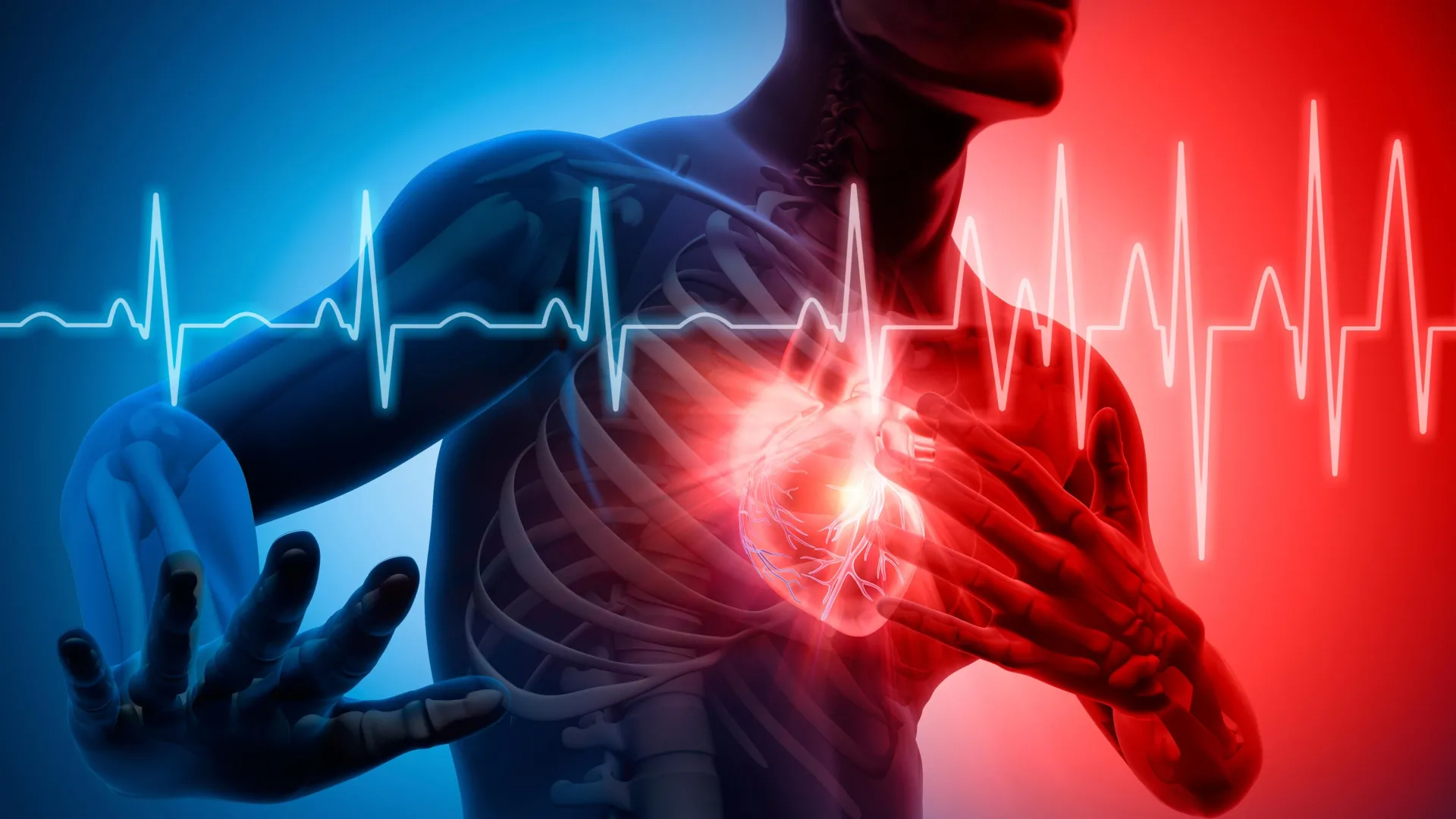
Heart disease remains the silent architect of global mortality. According to the World Health Organization (WHO), cardiovascular diseases claim approximately 17.9 million lives annually, with heart attacks and strokes accounting for more than 80% of these fatalities. For decades, the medical community has operated under a clear mandate: lower LDL cholesterol, or "bad cholesterol," and you lower the risk of a coronary event.
Yet, a stubborn clinical reality persists. Many patients who successfully reach their target LDL levels still experience heart attacks and strokes. A groundbreaking study conducted by researchers at the Chalmers University of Technology in Sweden has finally begun to pull back the curtain on this "residual risk," identifying biological mechanisms that extend far beyond simple cholesterol accumulation.
The Limits of the Cholesterol Paradigm
For years, the gold standard of cardiovascular health has been the lipid panel. The logic is sound: coronary heart disease is characterized by the buildup of fatty deposits, or plaques, within the arteries. These plaques are composed largely of cholesterol. When these vessels narrow, blood flow is restricted; if a plaque ruptures, a clot forms, often triggering a heart attack.
LDL (low-density lipoprotein) has long been the primary villain in this narrative. As a vehicle for transporting cholesterol, LDL is essential for cellular function, but in excess, it infiltrates arterial walls. However, the Chalmers University study, published in the European Heart Journal, challenges the idea that LDL is the sole protagonist in this pathology. By utilizing advanced proteomics—the large-scale analysis of proteins within blood plasma—researchers have discovered that other fat-carrying particles, specifically triglyceride-rich lipoproteins (TRL) and lipoprotein(a) (Lp(a)), operate through distinct and perhaps more insidious biological pathways.
A Chronology of Discovery: From Lipids to Proteomics
The evolution of this research represents a shift from static measurements to dynamic biological mapping.
- Initial Observations: Clinicians noted that patients with identical LDL levels often experienced wildly different cardiovascular outcomes. This discrepancy suggested that the "count" of cholesterol was insufficient to capture the full picture of arterial health.
- The Shift to Particle Counting: In previous studies, the same research group at Chalmers identified that counting the actual number of lipoprotein particles—rather than just the cholesterol they carry—was a more precise predictor of future disease.
- The Proteomic Breakthrough: The current study moved beyond particle counting to analyze the proteins associated with these particles. By examining nearly 3,000 proteins in blood samples, the team created a "protein signature" for three primary classes of lipoproteins: LDL, TRL, and Lp(a).
- The Correlation Phase: By integrating these proteomic signatures with long-term health records and genetic data, researchers were able to observe how these particles interact with the body’s immune and inflammatory systems.
Decoding the Players: LDL, TRL, and Lp(a)
To understand why some patients remain at risk, one must understand the unique "personalities" of the particles involved. All three share a common structural protein, apolipoprotein B (apoB), which acts as a key to enter arterial walls. However, their biological influence varies significantly.
LDL: The Architect of Plaque
LDL remains the primary carrier of cholesterol. Its proteomic signature is closely linked to lipid metabolism and the physical accumulation of cholesterol within the vessel walls. It is, in essence, the "bricks and mortar" of arterial plaque.
TRL and Lp(a): The Inflammatory Agents
The most striking finding of the Chalmers investigation concerns TRL (triglyceride-rich lipoproteins) and Lp(a). While these are physically distinct, their associated blood protein patterns are remarkably similar. These particles do not merely deposit cholesterol; they appear to carry proteins that recruit immune cells. This triggers inflammation and structural remodeling of the blood vessel walls. By fostering an inflammatory environment, TRL and Lp(a) may contribute to heart disease through biological processes that remain active even when cholesterol levels are controlled by statins or other lipid-lowering drugs.
Supporting Data and Technical Context
The researchers analyzed blood samples against a backdrop of complex health data, providing a high-resolution snapshot of biological activity. Unlike genomics, which provides a static map of an individual’s inherited risk, proteomics offers a dynamic view of how diet, stress, and lifestyle are currently affecting the body’s protein expression.
The study utilized the following data points to draw its conclusions:
- Proteomic Profiling: Measurement of 3,000+ proteins.
- Comparative Analysis: Mapping protein expression to specific lipoprotein types.
- Long-term Longitudinal Data: Correlating protein signatures with the subsequent incidence of coronary events.
The result is a clearer understanding of "residual risk." While LDL is responsible for the mechanical buildup of plaque, TRL and Lp(a) are seemingly responsible for the underlying biological "instability" of the vessel wall, attracting immune cells that make a plaque more likely to rupture.
Official Perspectives: The Path Forward
The research team, led by Assistant Professor of Precision Medicine and Diagnostics Clemens Wittenbecher and lead author Jakub Morze, maintains a balanced view of their findings.
"Lowering LDL cholesterol remains a cornerstone of prevention," emphasizes Dr. Wittenbecher. The team is careful to note that their findings do not suggest patients should abandon their current treatment regimens. Instead, they frame this as a vital addition to the clinical toolkit.
"For this study, we wanted to understand what happens beyond the accumulation of cholesterol in artery walls," says Jakub Morze. "The overlap for TRL and Lp(a) is one of the most interesting findings. It suggests that these particles may affect some of the same inflammatory and vascular processes. This could help identify targets for more precisely directed prevention in the future."
The academic community views this study as a call for a more nuanced approach to cardiovascular screening. If a patient is at high risk despite "normal" cholesterol, current diagnostics might be missing the inflammatory signatures that TRL and Lp(a) leave behind.
Clinical Implications: The Future of Heart Health
The potential for this research is significant, though it currently sits at the intersection of discovery and clinical application.
1. New Diagnostic Targets
If TRL and Lp(a) can be identified as the primary drivers of inflammation in specific patients, doctors might eventually use proteomic blood tests to create a "risk profile" that goes beyond the standard lipid panel. This would allow for earlier intervention for those whose risk is driven by inflammation rather than simple cholesterol volume.
2. Personalized Prevention
The goal of precision medicine is to tailor treatments to the individual. For a patient whose cardiovascular risk is driven by TRL, interventions targeting triglyceride metabolism or specific inflammatory pathways might prove more effective than blanket cholesterol reduction.
3. The Need for Further Validation
The researchers acknowledge that this study is an observational milestone, not a clinical trial for a new drug. The next phase of research must determine whether these protein patterns can be used to monitor patient response to new treatments or if targeting these inflammatory pathways can lead to a measurable reduction in heart attacks.
Conclusion: A More Complete Picture
The study from Chalmers University of Technology serves as a critical reminder that biology is rarely simple. While the medical community has successfully lowered mortality rates through aggressive LDL reduction, the persistence of heart disease suggests that the human cardiovascular system is subject to a complex web of inflammatory and metabolic factors.
By identifying the distinct roles of TRL and Lp(a), researchers have opened a new chapter in cardiology. We are moving toward a future where a heart-healthy strategy is not just about the numbers on a cholesterol test, but about understanding the biological symphony of proteins that keep our arteries functioning—or threaten to tear them down. As science continues to map the proteomics of cardiovascular health, the goal remains the same: a more precise, more effective, and ultimately more life-saving approach to medicine.
Research Credits:
The study, titled "Apolipoprotein B-containing lipoproteins: distinct roles in atherosclerosis revealed by plasma proteomic profiling," was a collaborative effort involving experts from the Chalmers University of Technology, the University of Gothenburg, Harvard Medical School, the University of Copenhagen, and several other prestigious international institutions. The diverse authorship underscores the global commitment to solving the mystery of residual cardiovascular risk.