







For decades, the prevailing medical narrative surrounding acute viral infections has been one of binary outcomes: you are either sick, or you are recovered. Whether it is a seasonal cold, a bout of the flu, or a stomach virus, the common understanding is that once the pathogen is cleared and symptoms subside, the body returns to its baseline state. However, groundbreaking research from the Pompeu Fabra University (UPF) in Barcelona suggests that this "clearance equals recovery" model may be fundamentally flawed.
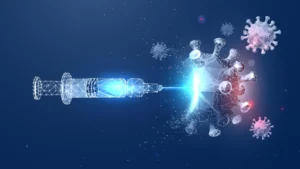
A study recently published in the journal Cell Death & Disease has uncovered evidence that acute viral infections can leave behind a "hidden scar" on the immune system, causing persistent dysfunction that lasts long after the virus has been eradicated. Crucially, the research also reveals that vaccination serves as a powerful shield not just against the disease itself, but against this lasting physiological damage.
The Invisible Aftermath: Challenging the "Transient Infection" Paradigm
To understand the scope of this discovery, one must first look at how we have traditionally categorized viral illnesses. When a virus invades, the body mounts an inflammatory response, symptoms emerge, and the immune system eventually brings the viral replication to a halt. We view this as a closed loop.
However, the team at the Infection Biology Laboratory at UPF, led by ICREA research professor Andreas Meyerhans, hypothesized that this process might be more taxing on the body’s internal architecture than previously assumed. To test this, researchers monitored mice through an acute viral infection cycle.
The results were startling. While the mice successfully cleared the viral load—meaning the virus was no longer detectable in their systems—their immune defenses remained critically compromised. They were not "back to normal." Instead, they exhibited a reduced capacity to respond to subsequent, unrelated pathogens, essentially remaining in an immunocompromised state despite being technically "cured" of the primary infection.
Chronology of a Silent Decline: From Infection to Fibrosis
The study provides a detailed, step-by-step look at how this post-viral impairment occurs. The researchers traced the lingering effects to the spleen, a vital organ often overlooked in public discourse but central to immune orchestration.
The Mechanism of Damage
As the immune system scrambled to contain the virus, the spleen underwent a process of pathological remodeling. The intense activity required to fight off the infection triggered the development of fibrosis—the buildup of excessive, scar-like tissue within the organ.
Structural Disruption
As the fibrosis took hold, the internal architecture of the spleen became disorganized. The precise spatial arrangement of immune cells, which is essential for rapid communication and deployment, was disrupted. This physical rearrangement acted as a barrier to the interactions between immune cells, specifically interfering with the activation of T cells.
The T-Cell Bottleneck
T cells are the "special forces" of the adaptive immune system. Their primary role is to identify and destroy infected cells. Because the structural damage in the spleen hindered the necessary signaling pathways, the T cells could no longer be effectively mobilized. Consequently, even months after the virus was gone, the mice were essentially fighting with one hand tied behind their back, leaving them vulnerable to any new threats they might encounter.
Supporting Data: The Power of Preemptive Protection
The most significant finding of the study emerged when the team introduced a control group: mice that had been vaccinated against the virus prior to exposure.
The researchers compared the "recovered" unvaccinated mice with the vaccinated cohort. The disparity was stark. The vaccinated mice, having been primed by the vaccine to recognize the pathogen, managed to neutralize the virus without triggering the damaging inflammatory cascade that led to splenic fibrosis.
In these vaccinated animals:
- Structural Integrity: The spleen maintained its healthy, functional architecture.
- T-Cell Efficacy: T cells remained fully responsive and primed for future threats.
- Immune Baseline: Their post-infection immune profile was indistinguishable from mice that had never encountered the virus at all.
This suggests that vaccination acts as a biological "pre-emptive strike." By training the immune system to respond efficiently, the vaccine prevents the "over-reaction" or "misdirected-reaction" that leads to the collateral damage of organ fibrosis. In essence, the vaccine protects the immune system’s own infrastructure from the wear and tear of a full-scale battle.
Official Responses and Expert Perspective
The implications of these findings have sent ripples through the immunological community. Dr. Paula Cebollada Rica, the study’s first author, emphasizes the gravity of these findings regarding how we define "recovery."
"The infection can be controlled, but that does not necessarily mean that the host has fully recovered," Dr. Cebollada Rica noted. "Our findings show that the immune-related consequences of an acute viral infection can persist beyond the period in which the virus is detectable, leaving the animals in an immunocompromised state."
Professor Andreas Meyerhans added that this research challenges the cultural perception of viral illnesses as merely "minor, transient events." He suggests that by failing to account for these long-term, invisible consequences, public health narratives may be drastically underestimating the true burden of infectious disease.
"There is a general perception that an acute viral infection is a relatively minor and transient event," Meyerhans stated. "Once the virus is controlled and the symptoms have resolved, the body has fully recovered and is back to normal. But this view may underestimate consequences that are not immediately visible and can persist long after the infection itself has resolved."
Implications for Public Health and Future Policy
The implications of the UPF study extend far beyond the laboratory. If these mechanisms hold true in humans, they could provide a biological basis for understanding why certain individuals seem to suffer from weakened immune health following major viral outbreaks.
Rethinking Vaccination Value
For decades, the value of a vaccine has been measured primarily by its ability to prevent symptomatic disease or death. If vaccines also prevent "long-term immune scarring," the cost-benefit analysis of vaccination programs becomes even more compelling. Public health officials now have a new, powerful argument: vaccines aren’t just preventing the "sickness of today," they are preserving the "immune resilience of tomorrow."
Political and Social Context
This research arrives at a pivotal moment in global health. As vaccination policies face increasing scrutiny and, at times, political polarization, the need for data-driven, transparent communication has never been higher. The researchers argue that scientific evidence must remain the bedrock of public health policy, particularly when skepticism threatens to undermine coordinated efforts to prevent disease.
"The benefits of vaccination highlighted by this research are important not only for healthcare, but also for how we communicate the value of vaccination to the population at large," Meyerhans said. "It is important that people are aware of the broader protection that vaccination can provide and continue to trust in vaccines as one of the most effective tools to prevent diseases. Put simply, vaccines provide strong health benefits at a relatively low cost to society."
Conclusion: A New Frontier in Immunology
While the study was conducted on a mouse model and further human trials will be required to confirm that these specific splenic changes occur in humans, the findings open an entirely new frontier in immunology.
If acute infections act as a "tax" on our immune system—causing structural damage that accumulates over a lifetime—then the role of preventative medicine is far more critical than we once imagined. By opting for vaccination, individuals may not only be avoiding the immediate discomfort of an illness but also protecting the long-term structural integrity of the organs that keep them alive.
As we continue to navigate a world of evolving viral threats, the "hidden benefit" of vaccination may prove to be one of the most significant medical revelations of the decade. We are no longer just looking at a choice between being sick or being healthy; we are looking at a choice between maintaining our internal defenses or allowing them to slowly erode. In that light, the vaccine is not just a shield—it is a foundation for lifelong health.