









In a sobering development for public health, the United States has officially lost its "measles-elimination" status. This designation, once a point of pride for the nation’s immunization infrastructure, has been revoked following a series of persistent, localized outbreaks that have erased decades of scientific progress. The U.S. now joins the ranks of Mexico, Bolivia, and Canada, all of which have recently seen their measles-free status rescinded due to stagnant vaccination rates and the resurgence of this highly contagious virus.
As the news ripples through the country, a common question has emerged among the general public: "Am I protected, or do I need a booster shot?" For most Americans, the answer remains a reassuring "no." However, as the epidemiological landscape shifts, medical experts are urging a more nuanced understanding of immunity, particularly for those in high-risk categories or those born during specific windows of vaccine development.
The Landscape of Immunity: How We Got Here
Measles, a virus that was declared eliminated in the U.S. in 2000, is one of the most infectious diseases known to humanity. It spreads through respiratory droplets, lingering in the air for up to two hours after an infected person has left a room. Because of its extreme contagiousness, a community needs a vaccination rate of approximately 95% to maintain "herd immunity," which protects those who cannot be vaccinated, such as infants or the immunocompromised.
Dr. Richard Martinello of the Yale School of Medicine emphasizes that for the vast majority of the population, prior vaccination or natural infection during childhood provides lifelong immunity. "Most people are protected without needing a booster," he explains.
For the purposes of public health guidelines, Americans born before 1957 are generally considered to have "presumptive evidence" of immunity. During the pre-vaccine era, measles was so ubiquitous that nearly every child contracted the virus, allowing them to develop robust, lifelong natural antibodies.
Chronology of a Public Health Setback
The path to losing elimination status was not sudden; it was a slow erosion of immunity coverage.
- 1963: The first measles vaccine was licensed, revolutionizing the prevention of childhood diseases.
- 1963–1967: A critical window in vaccine history. During these years, some children received an inactivated (killed) version of the virus, which later proved significantly less effective than the modern live-attenuated vaccine.
- 2000: The Centers for Disease Control and Prevention (CDC) declared measles eliminated in the United States, meaning there had been no sustained transmission of the virus for over a year.
- 2010s: Rising rates of vaccine hesitancy began to create pockets of vulnerability in various communities.
- 2024: Canada lost its elimination status, signaling a broader regional trend.
- 2025: The United States, Mexico, and Bolivia formally lost their elimination status following outbreaks that proved difficult to contain, marking a significant step backward in North American public health.
Supporting Data: The Power of Two Doses
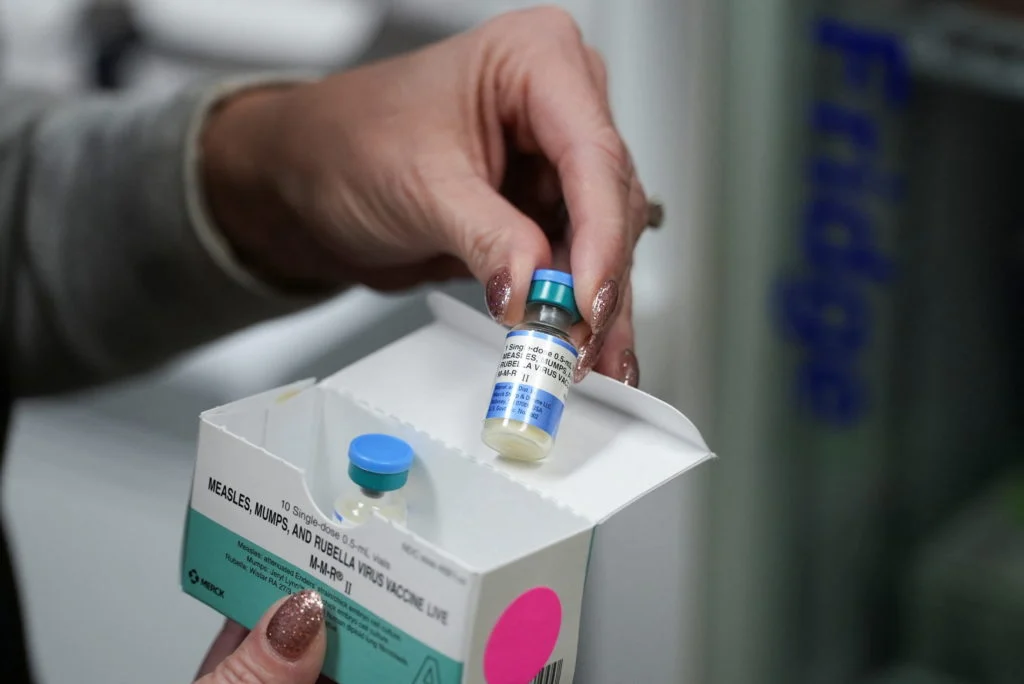
The gold standard for measles protection remains the two-dose MMR (Measles, Mumps, and Rubella) vaccine. According to the CDC, the efficacy rates are exceptionally high:
- One dose: Approximately 93% effective at preventing measles.
- Two doses: Approximately 97% effective at preventing measles.
The "two-dose" standard was not universally adopted until 1989. Before that year, a single dose was considered sufficient for lifetime protection. This shift in policy creates a demographic of adults who may be under-vaccinated by modern standards. Consequently, health officials are now stressing that adults should ensure they have at least one documented dose of the MMR vaccine, with a second dose prioritized for specific high-risk cohorts.
Identifying the Need for Boosters
While the general public may not need additional shots, medical experts identify specific groups that should evaluate their immunization status:
1. Healthcare Workers
Individuals working in clinical settings are at a higher risk of exposure. Healthcare workers born before 1957, or those who lack documented proof of immunity, are encouraged to seek serological testing or a booster shot to ensure they do not become vectors for the disease, potentially exposing vulnerable patients in hospitals and clinics.
2. The 1963–1967 Cohort
Individuals who received the inactivated vaccine during this four-year window should consult their physicians. Because this older version of the vaccine failed to provide the long-term, high-level immunity afforded by the live-attenuated vaccine, these individuals are often advised to receive at least one dose of the modern MMR vaccine.
3. High-Risk Individuals and Travelers
Dr. Joshua Sharfstein, Vice Dean for Public Health Practice and Community Engagement at the Johns Hopkins Bloomberg School of Public Health, suggests that if you fall into certain categories, a second shot should be a priority:
- International Travelers: Given that measles is circulating in many parts of the world, travel increases exposure risk significantly.
- Students and Employees: Those living in high-density environments like college dormitories or professional training centers.
- Immunocompromised Households: If you live with someone who has a weakened immune system, your vaccination status is not just a personal health choice; it is a vital protective measure for your household.
Official Responses and Clinical Guidance
The medical community is currently pivoting toward a strategy of "proactive verification." If you are unsure of your vaccination status, you are not alone. The CDC recommends a multi-pronged approach to tracking down your records:
- Consulting Family Records: Reach out to parents or primary caregivers for childhood medical records.
- Institutional History: Contact your high school or university health services, which often mandate immunization records for enrollment.
- Employer Records: Check with human resources departments at previous workplaces that required physical exams or vaccinations.
- State Registries: Many states maintain digital immunization information systems (IIS) that can verify adult records.
For those who remain uncertain, blood tests—known as "titers"—can measure antibody levels. However, Dr. Martinello cautions that these tests are not a perfect proxy for immunity. "While the test is accurate in detecting the presence of antibodies, we don’t have a precise, universal metric to say exactly how much protection a certain level of antibodies provides," he notes.
In most cases, doctors argue that receiving an extra dose of the MMR vaccine is safe and provides a "fail-safe" for those who might have lost their initial immunity. The only major contraindications include pregnancy and certain severe immune system disorders.
Implications: A Call to Vigilance
The loss of elimination status is a stark reminder that public health is not a static achievement but a continuous effort. For decades, measles was a disease that many Americans thought they had "left behind," leading to a dangerous sense of complacency.
"Too many people took measles for granted or just didn’t think about it," Dr. Sharfstein reflects. "But now it is something to think about."
The implications of this shift are twofold. First, it requires individuals to take personal responsibility for their immunization records. Second, it necessitates a renewed societal commitment to vaccination. As the virus finds pockets of under-vaccinated individuals, the risk to the entire population grows.
Public health officials are now calling on the public to do more than just check their own status; they are encouraging citizens to act as advocates within their communities. Encouraging friends, family, and colleagues to review their vaccination records is, according to experts, the most effective way to help the U.S. regain its measles-free status.
In a world where international travel and population density are at all-time highs, the virus will continue to find opportunities to spread. Maintaining high vaccination coverage is not just a clinical recommendation—it is a cornerstone of a healthy, functioning society. The return of measles serves as a wake-up call that the fight against infectious disease is a permanent mission, requiring the vigilance of every generation.