








In an era defined by fractured consensus and surging public health challenges, the American healthcare landscape is currently navigating a period of unprecedented volatility. As the nation grapples with a resurgence of preventable infectious diseases, the political machinery in Washington is struggling to reconcile scientific evidence with evolving populist sentiment. This tension reached a fever pitch recently during a high-stakes Senate Health, Education, Labor and Pensions (HELP) Committee hearing, where the ideological gulf between established medical governance and the new administration’s public health priorities was laid bare.
Main Facts: A Resurgence of Contagion
The urgency of the current political discourse is rooted in stark epidemiological data. According to the U.S. Measles Tracker, maintained by the Johns Hopkins Bloomberg School of Public Health, the nation is witnessing a troubling trend in vaccine-preventable illnesses. Last year, the first year of President Donald Trump’s second term, the U.S. recorded 2,214 confirmed measles cases—a staggering figure for a nation that once declared the disease eliminated. The momentum of this outbreak has shown little sign of deceleration; as of the current reporting period, the country has already logged 1,923 cases.
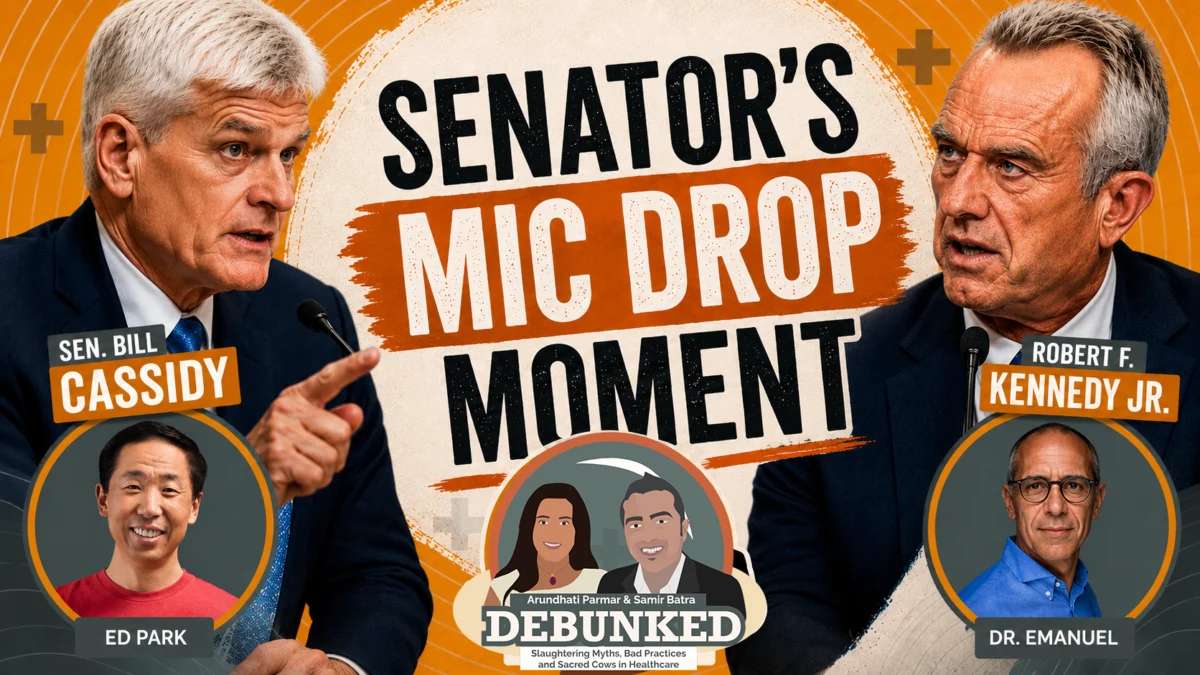
It was against this alarming backdrop that Department of Health and Human Services (HHS) Secretary Robert F. Kennedy Jr. appeared before the Senate HELP Committee. He was met by the committee’s chair, Senator Bill Cassidy (R-LA), a physician whose professional background provided a sharp, evidence-based counterpoint to the Secretary’s long-standing skepticism regarding traditional immunization programs.
Chronology of the Confrontation
The Senate hearing was not merely a procedural event; it was a watershed moment in the relationship between the executive branch’s health arm and the legislative oversight body.
- Early 2025 – Q1 2026: The U.S. experiences a steady rise in measles and other vaccine-preventable diseases, placing immense strain on local public health infrastructure and sparking intense debate among state legislatures regarding mandatory immunization laws.
- The Lead-up: Reports emerged that Secretary Kennedy Jr. would face intense scrutiny from the Senate regarding his administrative directives, which many medical organizations argued were undermining confidence in public health agencies like the CDC and FDA.
- The Hearing: Senator Cassidy, utilizing his clinical expertise, pressed the Secretary on the statistical correlation between declining vaccination rates and the recent outbreaks. The exchange, characterized by sharp rebuttals and a high degree of tension, became a focal point for national media, highlighting the widening chasm between political rhetoric and clinical reality.
- The Aftermath: Following the "mic drop" moment of the hearing, industry leaders and policy analysts began dissecting the long-term viability of current public health messaging strategies, leading to a surge of interest in independent policy analysis, including the recent episode of the Debunked podcast.
Supporting Data: Analyzing the Healthcare Ecosystem
The surge in measles is not an isolated phenomenon; it is a symptom of broader systemic pressures within the American healthcare apparatus. The Debunked podcast, co-hosted by MedCity News Editor-in-Chief Arundhati Parmar and Health Innovation Pitch Managing Partner Samir Batra, recently analyzed the implications of these developments.
The data suggests that public trust in institutional health guidance is at a multi-decade low. When coupled with the fiscal instability of Medicare Advantage (MA) plans—a topic currently dominating healthcare finance discussions—the potential for a "perfect storm" in the American healthcare system becomes apparent.
In a recent interview, Ed Park, CEO of Devoted Health, brought a fresh perspective to the fiscal challenges facing Medicare. Park’s testimony before the CMS (Centers for Medicare & Medicaid Services) underscored a controversial position for a plan executive: the argument that CMS should reduce payments to Medicare Advantage plans.
"Every year since the inception, we have been encouraging CMS to pay plans less," Park noted during a panel moderated by Parmar at the Medicarians conference. "The only thing that is not good is if you basically go up 10% in one year and 0% in another year. That’s not good. But they should index the cost of Medicare to less than inflation and guarantee that it’s actually less than traditional Medicare."
This philosophy challenges the status quo, suggesting that the industry must pivot from a model of maximizing reimbursement to one of genuine value-based efficiency.
Official Responses and Political Posturing
The response to the Kennedy-Cassidy hearing has been deeply polarized. Supporters of Secretary Kennedy argue that he is providing a necessary "disruption" to a pharmaceutical-industrial complex that has, in their view, become overly prescriptive and exclusionary of alternative health perspectives. Conversely, the medical establishment, represented by voices like Senator Cassidy, insists that public health policy must remain tethered to peer-reviewed, longitudinal data.
Dr. Ezekiel Emanuel, a prominent voice in health policy, recently articulated a broader philosophical question in The Bulwark: "What Would You Give Up to Make American Healthcare Better?" This query strikes at the heart of the current stalemate. It forces stakeholders to consider whether they are willing to sacrifice short-term profitability—in the case of PBMs (Pharmacy Benefit Managers) or MA plans—for the long-term stability of the American public health infrastructure.
Samir Batra, in his analysis on Debunked, noted that the issue of drug prices and the opaque nature of PBM operations are inextricably linked to the public’s eroding trust in the system. If the public perceives that the system is optimized for profit rather than patient outcome, the inclination to follow public health mandates—such as vaccinations—inevitably declines.
Implications: The Path Forward
The implications of this intersection between high-level policy debates and grassroots health outcomes are profound.
1. The Erosion of Public Health Authority
The current trend of measles outbreaks is a bellwether for the future of infectious disease control in the U.S. If the federal government continues to send mixed messages regarding the safety and efficacy of vaccines, the burden will fall increasingly on state and local governments. This "fragmentation of health" could lead to a patchwork of immunity levels across the country, creating pockets of vulnerability that will be difficult to remediate.
2. Fiscal Responsibility in Medicare
Ed Park’s call for lower CMS payments represents a significant departure from the typical lobbying efforts seen in Washington. Should the administration heed this call, it could trigger a restructuring of the Medicare Advantage market, potentially squeezing out inefficient players and forcing a consolidation that favors long-term, sustainable care models. However, such a move carries political risk, as it could be framed as a reduction in benefits for the aging population.
3. The Role of Independent Analysis
In an era of deep skepticism, the role of independent, evidence-based commentary—such as that provided by the Debunked podcast—becomes vital. By dissecting complex topics like vaccine policy and healthcare financing, such platforms help bridge the gap between technical policy jargon and the lived experience of the American patient.
Conclusion
The confrontation between Secretary Kennedy and Senator Cassidy is a microcosm of the larger struggle to define the soul of American healthcare. On one side stands a populist movement demanding a re-evaluation of institutional authority; on the other, a professionalized medical class attempting to preserve the gains of modern medicine.
As we look toward the remainder of the year, the stability of our healthcare system will depend on whether these two factions can find common ground. Whether it is through reforming the fiscal structures of Medicare or restoring the public’s confidence in the immunization schedule, the path forward requires a level of transparency and accountability that has been largely absent from the discourse thus far.
The data provided by Johns Hopkins and the insights offered by industry leaders like Ed Park serve as a roadmap. The question remains: does the political will exist to follow it? To gain a deeper understanding of these critical issues, stakeholders and the public alike are encouraged to engage with the full discussion on the Debunked podcast. The future of our collective health, and the solvency of the systems that support it, may depend on our ability to listen to one another, even when the debates are at their most contentious.