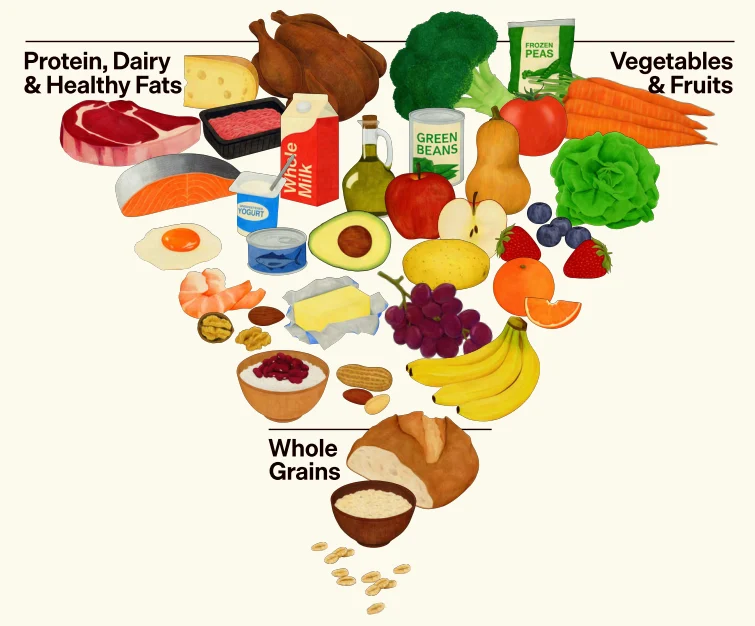
The release of the 2025–2030 Dietary Guidelines for Americans (DGAs) was intended to be a watershed moment for public health. With a catchy, modern tagline—"Eat Real Food"—the federal government aimed to simplify nutrition for a nation grappling with chronic disease. However, the rollout has been met with significant skepticism from the scientific community. While the guidelines take a commendable, firmer stance against the consumption of added sugars and highly processed foods, they are simultaneously being criticized for a paradoxical visual presentation that appears to prioritize saturated-fat-rich animal products, potentially undermining the very health goals the document purports to support.
The Main Facts: A Shift in Tone and Strategy
The latest iteration of the DGAs arrives at a time when the American diet is characterized by an over-reliance on ultra-processed goods and excessive sugar. In a move widely praised by nutrition experts, the new guidelines explicitly call out "highly processed foods." This represents a significant pivot from previous editions, which focused primarily on singular nutrients like sodium or trans fats. The 2025–2030 framework pushes consumers toward whole, fiber-rich grains and away from the refined, sugar-laden staples that have become the hallmark of the standard American diet.
Furthermore, the new DGAs adopt a remarkably strict stance on added sugars. The guidelines state clearly that "no amount of added sugars or non-nutritive sweeteners is recommended or considered part of a healthy or nutritious diet." This represents a tightening of policy, particularly for children, with the recommended age for avoiding added sugars rising from age two to age ten.
However, the "New Food Pyramid" accompanying the guidelines has sparked intense controversy. Unlike its predecessor, the MyPlate graphic, this inverted pyramid visually elevates red meat, full-fat dairy, and butter—items traditionally limited in heart-healthy dietary patterns. This visual prominence creates a jarring disconnect: while the text of the guidelines maintains the long-standing scientific recommendation to limit saturated fat to 10% of total daily calories, the graphic suggests that these high-saturated-fat foods are pillars of a healthy lifestyle.
Chronology of a Controversial Rollout
The path to the 2025–2030 guidelines was unconventional, setting the stage for the current friction between government policy and independent science.
- Evidence Review (2023–2024): The process began as it has for decades, with an independent Dietary Guidelines Advisory Committee (DGAC) composed of nutrition science experts. This group conducted an extensive, two-year review of current literature, focusing on the relationship between diet and chronic disease.
- The Rejection (Late 2024): In a move that surprised many, the current administration declined to adopt the full findings of the independent committee.
- The Supplemental Analysis: Instead of relying solely on the DGAC report, the government initiated a "federal contracting process" to conduct a supplemental scientific analysis. This process, which critics argue lacked the transparency of the traditional peer-review cycle, ultimately formed the basis of the new guidelines.
- Release (January 2026): The final guidelines were published, featuring the "New Food Pyramid" and the "Eat Real Food" messaging. Almost immediately, experts from institutions like the Harvard T.H. Chan School of Public Health raised concerns regarding the methodology behind the final document and the potential for industry influence.
Supporting Data: The "Saturated Fat Math" Problem
The conflict between the text of the guidelines and their visual representation is best illustrated by the math of saturated fats. For a standard 2,000-calorie diet, the 10% limit equates to approximately 22 grams of saturated fat per day.
If a consumer follows the DGAs’ recommendation of three daily servings of dairy, the arithmetic becomes precarious. One cup of whole milk (5g), three-quarters of a cup of full-fat Greek yogurt (6g), and one ounce of cheddar cheese (6g) bring a consumer to 17 grams of saturated fat before they have even cooked a meal. Adding a single tablespoon of butter or beef tallow—both of which are highlighted as recommended cooking fats in the new pyramid—pushes the total to 23–24 grams. This leaves zero room for the saturated fat naturally occurring in proteins, snacks, or other prepared foods.
Dr. Frank Hu, chair of the Department of Nutrition at the Harvard T.H. Chan School of Public Health, emphasizes the danger of this disconnect. "The mixed messages surrounding saturated-fat-rich foods such as red meat, butter, and beef tallow may lead to confusion and potentially higher intake of saturated fat and increased LDL cholesterol and cardiovascular risk," he warns.
Furthermore, the guidance on plant oils remains problematic. While the pyramid suggests olive oil, it does so without emphasizing the importance of essential fatty acids (alpha-linolenic and linoleic acids) found in higher concentrations in other plant oils like soybean or canola. By failing to differentiate between the health outcomes of animal fats versus unsaturated plant fats, the guidelines provide a roadmap that could inadvertently increase the population’s risk of cardiovascular disease.
Official Responses and Transparency Concerns
The lack of transparency in the creation of the 2025–2030 guidelines has become a focal point of professional discourse. Deirdre Tobias, an assistant professor who served on the 2025–2030 Advisory Committee, has been vocal about the deviation from established protocols.
"The reviews themselves, as well as their overall presentation and integration, deviate significantly from the rigorous process that the HHS developed," Tobias noted in a recent Q&A. She pointed out that the methodology used by the supplemental committee was not subjected to the same level of peer review or public accountability as the original committee’s work.
Reports from outlets like STAT News have further complicated the narrative by highlighting that some of the reviewers involved in the supplemental analysis had disclosed financial ties to the beef and dairy industries. While these disclosures were made within the supplemental report, critics argue that the appearance of a conflict of interest—coupled with the prime placement of meat and dairy in the visual guidelines—undermines the credibility of the entire federal effort.
Implications for Public Health
The potential consequences of these guidelines are far-reaching. Historically, Americans have struggled to follow dietary guidelines, and this new, more consumer-friendly format—which includes an interactive website and shorter, punchier text—is designed to change that. However, if the guidance provided is internally contradictory, the result may not be better health, but deeper confusion.
1. The Protein Paradox
The guidelines suggest a significant increase in protein intake—1.2 to 1.6 grams per kilogram of body weight—which is 50–100% higher than previous minimums. While this may benefit specific populations, such as the elderly, it lacks a critical qualifier: the quality of the protein. The guidelines fail to distinguish between the health impacts of processed meats versus plant-based proteins or fish. For the average American already consuming more than enough protein, this encouragement could lead to a higher intake of "protein packages" that are simultaneously high in sodium and saturated fats.
2. The Alcohol Ambiguity
The guidelines offer a vague suggestion to "consume less alcohol for better health." In public health, specificity is crucial for behavior change. Without clear, actionable limits or a definition of "less," this guidance provides little utility for individuals attempting to mitigate the risks associated with alcohol consumption.
3. Environmental and Socioeconomic Neglect
Perhaps most notably, the 2025–2030 DGAs continue to ignore the environmental impact of food production. The nexus between dietary patterns and planetary health is well-documented, yet the federal government remains silent on the sustainability of certain animal-based food systems. Additionally, the guidelines often lack practical advice for populations facing food insecurity or those living in "food deserts," where access to the "real food" recommended is restricted by both cost and geography.
Conclusion: A Need for Clarity
The 2025–2030 Dietary Guidelines for Americans represent a missed opportunity. While they successfully move the needle by calling out the dangers of ultra-processed foods and added sugars, they fail to provide a consistent, science-backed framework for fat and protein intake.
The disconnect between the government’s textual recommendations and its visual "New Food Pyramid" risks delegitimizing public health messaging at a time when clarity is most needed. For consumers, the best course of action remains the pursuit of evidence-based tools, such as the Healthy Eating Plate developed by independent nutrition researchers. As the medical community continues to process these new guidelines, the burden of translation falls, once again, to registered dietitians and healthcare providers to help patients navigate the noise and focus on the fundamentals of a truly nutritious diet.