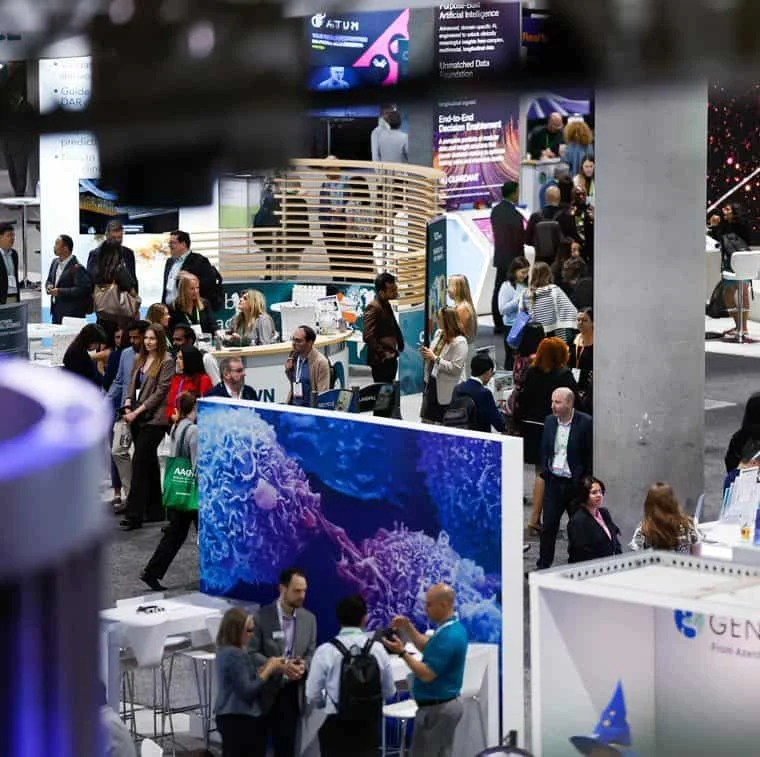
At the 2026 American Association of Cancer Research (AACR) Annual Meeting, the atmosphere was defined by a dual sense of triumph and urgency. National Cancer Institute (NCI) Director Anthony Letai, MD, PhD, delivered a keynote that served as both a victory lap for the last three decades of progress and a sobering roadmap for the hurdles that remain. While the scientific community has successfully navigated the landscape of immuno-oncology to turn once-terminal diagnoses into manageable conditions, the fight against cancer is entering a more complex, high-stakes era.
The State of the Union: Three Decades of Progress
The 2026 American Cancer Society’s Cancer Statistics report offers compelling evidence that the "War on Cancer" is yielding measurable returns. Over the past 30 years, cancer mortality in the United States has plummeted by approximately one-third. This decline is not merely a statistical victory; it represents millions of additional birthdays, graduations, and quiet moments shared between patients and their families.
This progress has been primarily driven by the maturation of immuno-oncology. By teaching the body’s own immune system to recognize and eliminate malignant cells, researchers have moved beyond the "slash, burn, and poison" methods of traditional chemotherapy and radiation. Today, immunotherapy is a cornerstone of care, extending survival rates for diseases that were previously considered death sentences. However, Dr. Letai cautioned that this success has created a "plateau of complacency" that the research community must actively dismantle.
The Emergent Crisis: Early-Onset Malignancies
Despite the broader decline in mortality, a shadow looms over the progress: the rise of early-onset cancers. Data presented at the meeting revealed an alarming trend, particularly regarding colorectal cancer. Once considered a disease of the elderly, colorectal cancer has become the leading cause of cancer-related mortality among adults under 50. Incidence rates in this younger cohort are climbing by nearly 3% annually, a statistic that has sent shockwaves through the oncological community.
This trend is not isolated. Across the board, clinicians are reporting an uptick in aggressive, treatment-resistant tumors in patients who were previously thought to be at low risk. These early-onset cases often present with different biological signatures, suggesting that environmental, lifestyle, or genetic triggers are evolving in ways that current screening protocols are not yet equipped to detect.
Chronology of the Modern Research Landscape
To understand where we are, one must look at the evolution of the research ecosystem:
- 1990s–2010s: The Genomic Revolution: Focus was placed on mapping the human genome and identifying specific driver mutations. This era gave birth to targeted therapies that revolutionized care for specific subtypes of lung and breast cancer.
- 2010s–2025: The Immunotherapy Era: The clinical success of checkpoint inhibitors and CAR-T cell therapy shifted the focus from the tumor to the microenvironment. Researchers realized that the "soil" (the immune system) was just as important as the "seed" (the tumor).
- 2026 and Beyond: The Data-Integration Era: As Dr. Letai articulated, the current frontier is no longer just about discovering new molecules, but about mastering the "data deluge." The challenge today is moving from siloed, disjointed studies to an interconnected, AI-driven framework that treats cancer as a personalized, systemic puzzle.
The Data-Driven Imperative
Cancer is not a monolith; it is a chameleon. Two patients with the same clinical diagnosis may have tumors with vastly different biological drivers. The future of precision medicine depends on our ability to map these differences at scale.
"The bottleneck is no longer our ability to generate data," Dr. Letai noted. "The bottleneck is our inability to connect it."
This is where initiatives like the Cancer Research Institute’s (CRI) Discovery Engine become critical. By harmonizing genomic, spatial, and cellular data into an AI-ready resource, the Discovery Engine allows researchers to compare findings across global systems. This interoperability is essential. Without it, researchers risk reinventing the wheel in isolation. With it, they can identify patterns of resistance and efficacy that would be invisible to the naked eye, drastically shortening the time it takes to move a discovery from the laboratory bench to the bedside.
Official Responses and Systemic Reforms
Dr. Letai’s address was marked by a candid critique of the U.S. clinical trial infrastructure. While the U.S. remains a global hub for biomedical innovation, it is increasingly being outpaced in the speed of early-phase clinical trials.
"We cannot afford to be tethered to 20th-century regulatory pathways in a 21st-century field," Letai remarked. He pointed specifically to the rapid growth of clinical research ecosystems in China and parts of Europe, where streamlined regulatory processes allow for faster, more parallel testing of early-stage compounds.
To compete, the U.S. must adopt:
- Parallel Trial Design: Moving away from sequential testing to adaptive trial models that can pivot based on real-time data.
- Regulatory Streamlining: Reducing the administrative burden that keeps promising drugs in "bureaucratic purgatory" for months or years.
- Cross-Institutional Coordination: Incentivizing data sharing between academic medical centers and private industry to ensure that every trial—even those that fail—contributes to the collective knowledge base.
Investing in the Human Pipeline
Perhaps the most poignant portion of Dr. Letai’s address focused on the "brain drain" of early-career investigators. The modern academic environment is increasingly hostile to young researchers, with intense competition for a shrinking pool of federal grants and mounting administrative hurdles.
If the next generation of breakthroughs depends on the talent of today’s postdocs, the system is currently failing them. The CRI’s IGNITE Award is a direct response to this crisis, providing five years of catalytic, independent funding to bridge the gap between training and tenure. By removing the immediate pressure of "grant-chasing," these awards allow scientists to take the high-risk, high-reward bets that lead to true paradigm shifts.
Addressing the Equity Gap
Scientific brilliance is hollow if it is not accessible. Dr. Letai emphasized that the "precision medicine" movement must not become an "elite medicine" movement. Currently, significant disparities exist in access to cutting-edge screenings and therapies, particularly among economically marginalized and rural populations.
Reducing these disparities requires a two-pronged approach:
- Scientific Innovation: Developing diagnostic tools that are affordable and mobile, moving away from high-cost, hospital-only infrastructure.
- Community Engagement: Strengthening the bridge between the ivory tower of research and the community clinics where patients receive their care. As Letai noted, "We must translate our research into a language that policymakers and patients understand, ensuring that the fruits of our labor reach the people who need them most, not just those who can afford them."
The Path Forward: Precision, Partnership, and Purpose
As the 2026 AACR meeting concluded, the consensus was clear: the field of oncology has reached a point of unprecedented technical capability, but it faces an equally unprecedented set of structural challenges.
The roadmap for the next decade rests on three pillars:
- Precision: Utilizing AI and high-resolution data to tailor treatment to the individual’s unique biology.
- Partnership: Breaking down the walls between global research centers to create a unified front against treatment resistance.
- Purpose: Ensuring that the research mission remains centered on the patient, particularly those in underserved communities.
For the families currently navigating the uncertainty of a cancer diagnosis, this work is more than just academic; it is a lifeline. For the researchers, it is a call to move with greater agility. And for the public, it is a reminder that the next breakthrough—the one that might save a life—is currently being built in a lab, waiting for the resources, the data, and the courage to move forward.
The progress of the last thirty years has been monumental, but as Dr. Letai reminded the assembly, we are not running a marathon where the finish line is fixed. We are evolving alongside a disease that is constantly shifting. Our success depends entirely on our ability to out-innovate, out-collaborate, and out-pace the challenges of tomorrow.