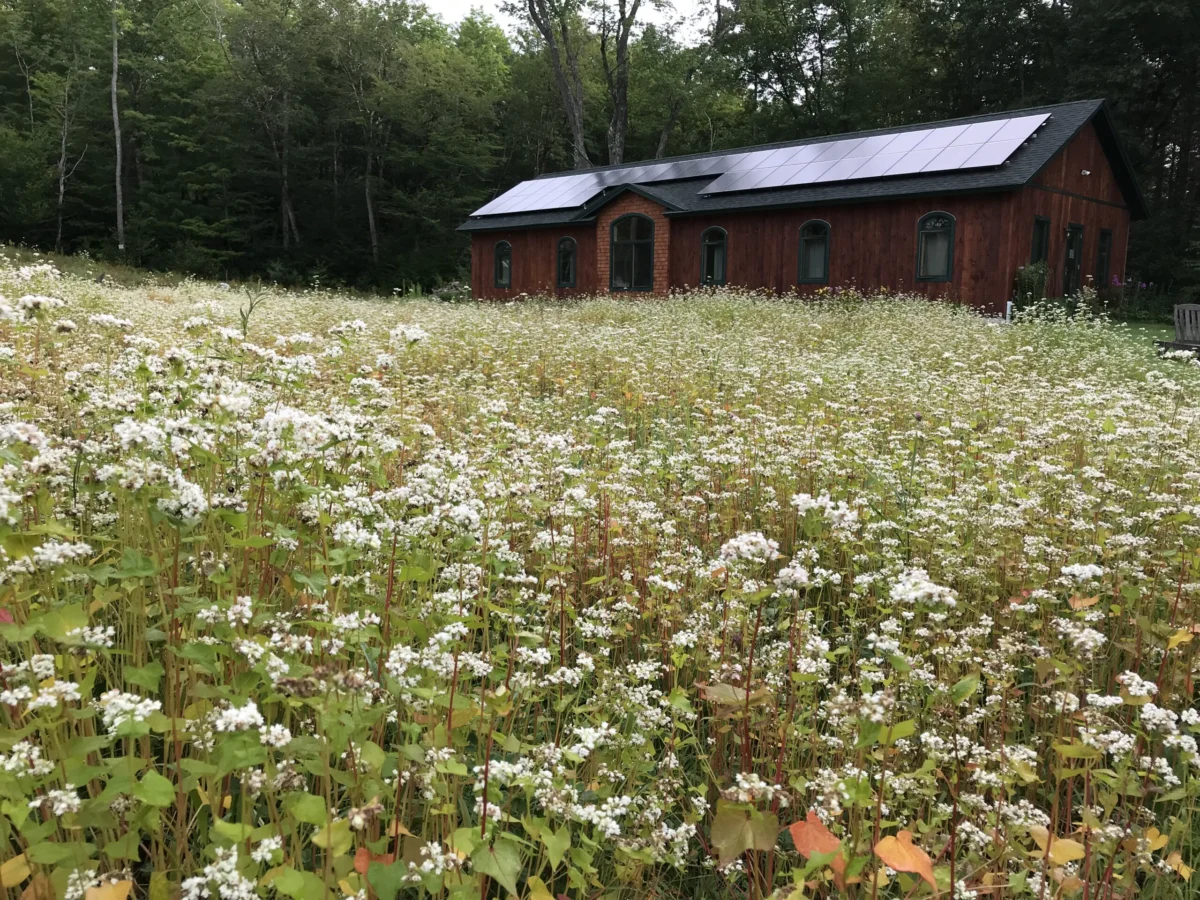
In the rolling, verdant hills of Brookline, Vermont, a quiet revolution in mental healthcare is taking place. Away from the sterile corridors of traditional psychiatric wards and the rapid-fire prescriptions of modern clinical practice, a 43-acre farmstead known as Inner Fire offers a starkly different path. Founded by Beatrice Birch, the residential program has spent the last decade pioneering a model that treats "mental health" as "soul health," prioritizing the slow, supported tapering of psychotropic medications—including powerful antipsychotics and benzodiazepines—in favor of a rhythm-based, labor-intensive, and spiritually grounded recovery.
In a recent comprehensive dialogue with Robert Whitaker of Mad In America, Birch outlined the philosophy, the harrowing origins, and the daily mechanics of a program that has become a beacon of hope for those the traditional system has often left behind.
Main Facts: A Sanctuary for the "Seeker"
Inner Fire is not a hospital, nor is it a traditional rehab center. It is a non-locked, residential community designed for those Birch calls "seekers"—individuals who are looking for an alternative to a life defined by chemical intervention. The program is unique in its explicit focus on medication tapering, a process often avoided or rushed in conventional settings due to the high risk of withdrawal symptoms and "rebound" psychosis.
The program’s core tenets include:
- The One-Year Commitment: Unlike 30-day "revolving door" facilities, Inner Fire requires a full year of residency.
- The "Seeker" Philosophy: Moving away from the labels of "patient" or "client," the term "seeker" acknowledges the individual’s active quest for meaning and autonomy.
- The Whole-Person View: Rooted in anthroposophical medicine, the program views the human being as a tripartite entity of body, soul, and spirit.
- Deep Grounding: Recovery is facilitated through physical labor, organic nutrition, and a total removal of digital distractions (no cell phones or computers).
Chronology: From Tragedy to Transformation
The genesis of Inner Fire was not a business plan, but a "karmic moment" born of profound tragedy. Beatrice Birch’s journey began in Europe, where she spent nearly 40 years practicing Hauschka Artistic Therapy in anthroposophical clinics, primarily in the United Kingdom. In these settings, medication was rarely the primary tool; instead, therapy focused on the creative forces within the individual.
Upon her return to the United States, Birch began working at a traditional American rehab facility. The contrast was jarring. "A number of the residents realized I was not really from the system," Birch recalled. "They looked me straight in the eyes and said, ‘I hate being medicated. Is there a choice?’"
The turning point came after she left that facility. Within two years of her departure, six of the twelve people she had worked with—individuals who had expressed a desperate desire to live without the numbing effects of their prescriptions—chose suicide.
"I realized innocence is bliss, and I’m not innocent," Birch said. "I made an inner promise: you haven’t died in vain. I don’t know how the heck I’m going to do this, but I know there’s an alternative."
Supported by her husband, Tom Kavet—an economist for the Vermont State Legislature—Birch set out to create that alternative. They purchased an abandoned 43-acre farmstead for $500,000, a price lowered by a seller who believed in the mission. For the first nine years, Birch and Kavet lived in two small rooms in the farmhouse, raising over $1 million to build the "East Wing" dormitory, which opened in 2019. To date, the program has served approximately 65 seekers, maintaining a deliberately small capacity to ensure the intensity of the work remains manageable.
The Daily Rhythm: Supporting Data and Methodology
Inner Fire operates on a rigorous, sun-up to sun-down schedule designed to "ground" the seeker as their brain chemistry adjusts to the reduction of medication. Tapering is described as "very slow," often taking many months to ensure safety.
The Science of Grounding
A critical challenge in tapering from antipsychotics or lithium is the sensory "flood" that occurs. Seekers describe colors becoming painfully bright and sounds becoming sharper. Without a structured environment, this sensory overload can lead to mania or a return to psychosis.
To counter this, Inner Fire employs "grounding" activities:
- Physical Labor: Seekers engage in wood-splitting, gardening, and animal husbandry (caring for 12 goats and a flock of hens). Birch notes that physical exertion forces the seeker out of the "head" and back into the body.
- Nutritional Support: The program recently transitioned to a ketogenic diet, which is increasingly recognized in metabolic psychiatry for its potential to stabilize brain energy. The diet is organic, biodynamic, and strictly free of sugar, caffeine, and nicotine.
- Artistic Therapies: The afternoons are dedicated to Hauschka Artistic Therapy, Eurythmy (a form of movement therapy), and Spatial Dynamics. These are designed to help the "soul breathe" and process the trauma that often precedes a psychiatric diagnosis.
The Social Architecture
Community life is structured to rebuild the seeker’s sense of worth.
- Morning Circles: Sharing gratitude and intentions.
- The "Sharing a Question" Mondays: A non-dialogue format where seekers listen to various perspectives on deep existential questions.
- Friday Appreciations: A "soft and fluffy" evening where members of the community share what they appreciate about one another, specifically designed to combat the deep shame and "brokenness" many feel after years in the psychiatric system.
Official Responses and Challenges: The High Cost of Autonomy
Despite its success, Inner Fire faces significant systemic hurdles, most notably financial. The cost for a one-year stay is $237,000.
"For me, that’s the hardest thing of all," Birch admitted. While the program offers financial aid for about two-thirds of its seekers through intensive fundraising, the lack of institutional support is a glaring issue. Most insurance companies do not recognize the program, and state funding has remained elusive. Birch argues that this is a sign of "systemic failure," noting that while the cost is high, it is often comparable to or less than the cost of a year of repeated hospitalizations and emergency interventions in the traditional system.
The Issue of Safety and Violence
A common criticism of medication-free or tapering-focused programs is the risk of violence. Birch is transparent about this: in 11 years, there have been five acts of violence. However, she contextualizes this against the daily violence often found in locked psychiatric wards.
The program manages risk through "preventative observation." Staff—known as "guides"—are trained to watch for subtle changes in a seeker’s gait or eye movement that might indicate a slip into mania. "If someone is walking a bit too fast… we might say, ‘Okay, let’s go dig in the garden,’" Birch explained. The physical act of "digging in the earth" serves as a biological brake on escalating agitation.
Implications: A Model for a Global Shift
The influence of Inner Fire is beginning to reach far beyond the borders of Vermont. Birch reports receiving inquiries from Texas, Michigan, the U.K., Africa, and even Japan. The message is clear: there is a global "groundswell" of people seeking a different way to understand human suffering.
The program’s implications for the future of psychiatry are profound:
- Redefining "Non-Compliance": Birch suggests that when a patient is labeled "non-compliant" for refusing meds, they are often actually "listening to their Inner Fire"—an internal signal that the current treatment is suppressing their spirit rather than healing it.
- The Necessity of Time: Inner Fire challenges the "quick fix" insurance-driven model, proving that for some, the path to stability requires a year of slow, rhythmic rebuilding rather than a week of stabilization.
- The Role of Nature: The program underscores the clinical value of "nature as a therapist," using the Vermont landscape as an active participant in the healing process.
As Birch seeks to raise $2.1 million to complete the "West Wing" of the facility, her goal is not to create a massive institution, but to create a "model project" that others can study. "I want to say, if you want to start an Inner Fire, come and live with us. It’s not a recipe. Drink it, breathe it, work it, and then go back to your state or country."
In an era where psychiatric medication use is at an all-time high, Inner Fire stands as a testament to the resilience of the human spirit and the possibility that, for some, the road to health is not found in a pill bottle, but in the soil, the community, and the courage to reclaim one’s own voice. As Birch concludes, "I’ve always believed in the resilience of the human spirit, and now I see it… awe and joy at seeing this resilience despite the hell people have gone through."