








MADRID — A tense, high-stakes logistical operation is underway in the Canary Islands as Spanish authorities prepare for the Sunday arrival of the MV Hondius, a Dutch-flagged expedition cruise ship currently battling an outbreak of the rare and potentially deadly hantavirus. With three confirmed fatalities linked to the vessel and a frantic global effort to track passengers who disembarked days ago, the situation has mobilized health agencies across four continents.
Despite the gravity of the situation, the World Health Organization (WHO) has urged calm, characterizing the public health risk as "low" and explicitly distancing the current outbreak from the rapid, airborne transmission patterns associated with COVID-19.
The Situation at Sea: A Controlled Arrival
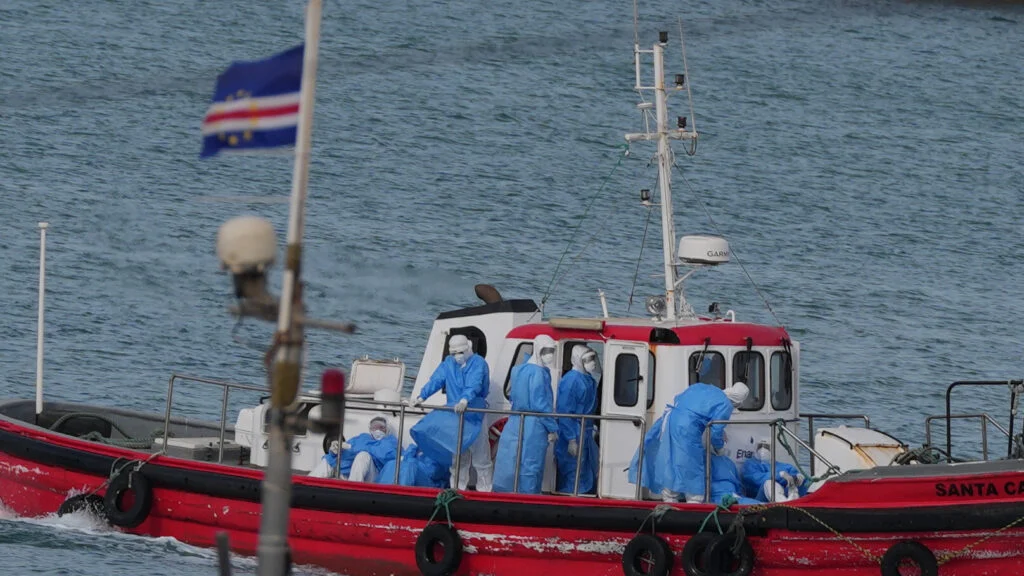
The MV Hondius is currently navigating toward Tenerife, where the Spanish government has implemented a rigorous, multi-layered isolation protocol. Virginia Barcones, the head of Spain’s emergency services, confirmed that the vessel will be met with a "completely isolated, cordoned-off" reception strategy designed to prevent any possible exposure to the general population.
"Our priority is the safe and secure transfer of the passengers and crew directly from the ship to their respective repatriation aircraft," Barcones stated. The plan involves ferrying passengers from the ship to the shore via small boats, followed by a transport sequence using specialized, guarded buses that will travel through restricted, sterile corridors at the airport. Spain has also requested medically equipped aircraft to facilitate the transfer of any individuals who may begin exhibiting symptoms during the final leg of the journey.
As of Friday, the ship’s operator, Oceanwide Expeditions, reported that there were no individuals currently on board exhibiting symptoms of a hantavirus infection. However, given the nature of the virus, which can have an incubation period of up to eight weeks, health officials remain on high alert.
Chronology of a Public Health Emergency
The unfolding crisis is the result of a delayed recognition of the pathogen, which has complicated contact tracing efforts significantly.
- Mid-April: The MV Hondius makes a stop at the remote island of Tristan da Cunha. It is during this window that potential transmission occurred.
- April 24: Approximately two weeks after the first death on board, more than two dozen passengers from 12 different nations disembarked the ship. At this stage, the nature of the illness was not yet identified as hantavirus, and these individuals dispersed across international borders without formal contact tracing protocols in place.
- April 25: A Dutch passenger, whose husband had already perished on the ship, attempted to travel home via a commercial KLM flight. She became too ill to continue and was removed from the plane in Johannesburg, where she subsequently died.
- May 2: The WHO officially confirms the presence of hantavirus on the MV Hondius, finally identifying the source of the mysterious illnesses that had plagued the voyage.
- May 5 (Present): International authorities scramble to monitor the health of those who disembarked and prepare for the arrival of the remaining 140+ individuals on board.
The Nature of the Threat: Understanding Hantavirus
Hantavirus is a viral family typically transmitted to humans through the inhalation of aerosolized rodent excreta. While human-to-human transmission is considered exceptionally rare, the strain identified in this outbreak—the Andes virus—has raised concerns among virologists due to its unusual capacity for person-to-person spread.
The virus has an incubation period that ranges from one to eight weeks, a factor that complicates current surveillance. Dr. Christian Lindmeier, a spokesperson for the WHO, emphasized that the public should not view this as a repeat of recent global pandemics. "The risk remains absolutely low," Lindmeier said on Friday. "This is not a new COVID. Hantavirus is not easily transmitted between people."
The anxiety surrounding the virus was momentarily heightened by a flight attendant who had worked on the KLM flight involving the deceased Dutch passenger. The attendant developed symptoms and was placed in an isolation ward in Amsterdam. However, health officials breathed a sigh of relief on Friday when her test results returned negative, a development the WHO cited as evidence that the risk of widespread, community-based transmission remains minimal.
Global Response: A Multilateral Effort
The repatriation of the passengers has become a centerpiece of international cooperation. With citizens from across the globe on board, multiple nations have stepped in to manage the logistics of bringing their nationals home.
The U.S. Response: Nebraska’s Specialized Unit
The United States has committed to chartering a flight for the 17 American citizens aboard the MV Hondius. Upon arrival in the U.S., these passengers will be transferred to the National Quarantine Unit at the University of Nebraska Medical Center in Omaha. This facility is one of the few in the world specifically equipped for biocontainment, having previously handled Ebola patients and early COVID-19 cases.
"We are prepared for situations exactly like this," said Dr. Michael Ash, CEO of Nebraska Medicine. The facility allows for world-class medical observation while ensuring the absolute containment of any potential pathogen.
United Kingdom and European Coordination
The British government is also organizing a charter flight to bring home the nearly two dozen UK nationals currently on the ship. The U.K. Health Security Agency is simultaneously tracking a third British passenger who remains on the remote island of Tristan da Cunha, where they are being monitored for symptoms.
In Spain, authorities are investigating a separate case in the province of Alicante. A woman, who was a passenger on the same flight as the Dutch victim who died in Johannesburg, is currently undergoing testing after presenting with symptoms consistent with the virus. Her case highlights the complexity of the "contact web" that health agencies are currently attempting to map.
Implications for Global Health Surveillance
The MV Hondius incident has exposed potential vulnerabilities in maritime health reporting and international travel protocols. The fact that dozens of passengers were able to disembark and disperse globally before a pathogen was identified suggests a critical need for more robust health-screening mandates on expedition cruise vessels.
Furthermore, the incident has reignited debates regarding the speed of communication between ship operators and port authorities. While the WHO continues to reiterate that the risk to the general public is low, the incident serves as a stark reminder of how quickly a localized outbreak in a remote environment can evolve into a complex, multi-continental health security challenge.
As the MV Hondius nears Tenerife, the world watches to see if the containment measures prove effective. For now, the focus remains on the "isolated, cordoned-off" evacuation, the medical monitoring of the survivors, and the exhaustive efforts to ensure that every individual who had contact with the vessel—whether on board or in transit—is located and evaluated.
The tragedy on the MV Hondius is a somber chapter in the history of expedition travel, but for the passengers and their families, the focus is entirely on the safe return home, provided the virus can be kept behind the walls of the world’s most secure isolation wards.