










By Industry Editorial Staff
On April 9, 2026, the New York Genome Center served as the epicenter for a critical reckoning within the global oncology community. Lumanity’s Cancer Progress 2026, an event with a four-decade legacy of fostering uncomfortable, necessary discourse, moved beyond the usual celebration of scientific milestones. Instead, it functioned as a pressure test for an industry currently grappling with its own success—and its structural limitations.
As the day’s final panel, "Beyond Next-Gen: How Should We Engineer Future Breakthroughs?" convened, the tone was starkly honest. Industry leaders, researchers, and biotech pioneers gathered to confront a reality that has long been whispered in laboratories: the traditional "spaghetti at the wall" approach to drug development, while historically productive, has reached a point of diminishing returns.
The Main Facts: A Shift in Methodology
The central thesis of the meeting was that oncology is entering a period where sheer volume of experimentation is no longer a viable proxy for innovation. For years, the industry relied on a high-throughput, trial-and-error methodology. If a molecule showed promise, researchers would test it against various tumor types and in countless combinations.
However, as the science of immuno-oncology has matured, the limitations of this "pantry-dumping" approach—where every ingredient is tossed into the pot in hopes of finding a cure—have become glaring. The panel argued that this creates a system that produces more clinical trials than actual, actionable scientific insights. When the goal is to decode the complex, systemic language of the human immune system, "throwing spaghetti" is no longer enough; it is now arguably a barrier to progress.
Chronology of the Discussion: From Chaos to Precision
The event unfolded as a deliberate deconstruction of the status quo.
Morning Sessions: Assessing the Current Landscape
Early discussions focused on the state of targeted therapies. While successes in biomarker-driven medicine have been monumental, attendees noted that the "low-hanging fruit" of oncology has largely been harvested. The industry is now facing the "hard problems"—refractory cancers, metastatic disease, and complex tumor microenvironments—that do not respond to monolithic strategies.
Mid-Day: The Integration of Technology
A significant portion of the day was dedicated to the role of data science. Speakers debated whether digital twins and high-fidelity modeling could eventually replace certain phases of clinical trials. The consensus, however, remained grounded in biology: data is only as good as the underlying biological hypothesis.
The Afternoon Finale: "Beyond Next-Gen"
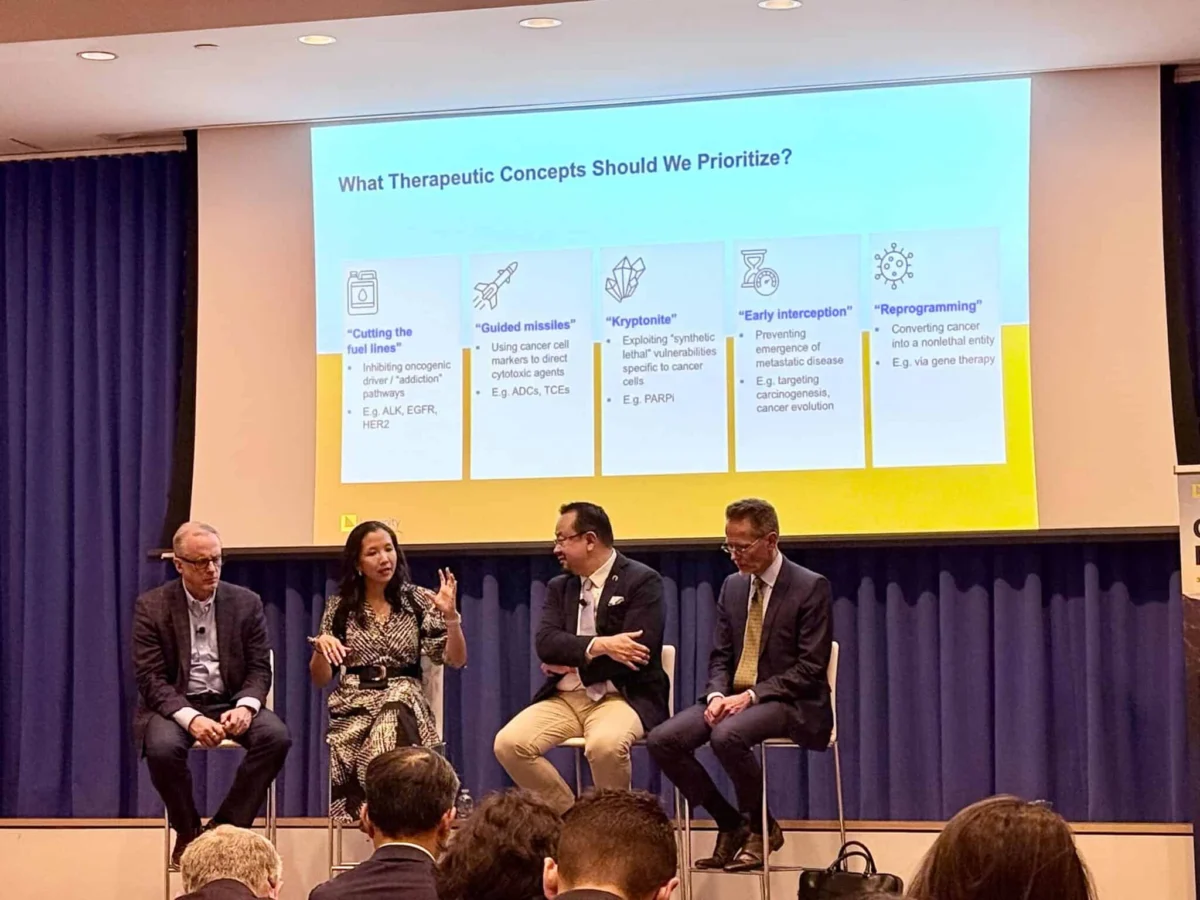
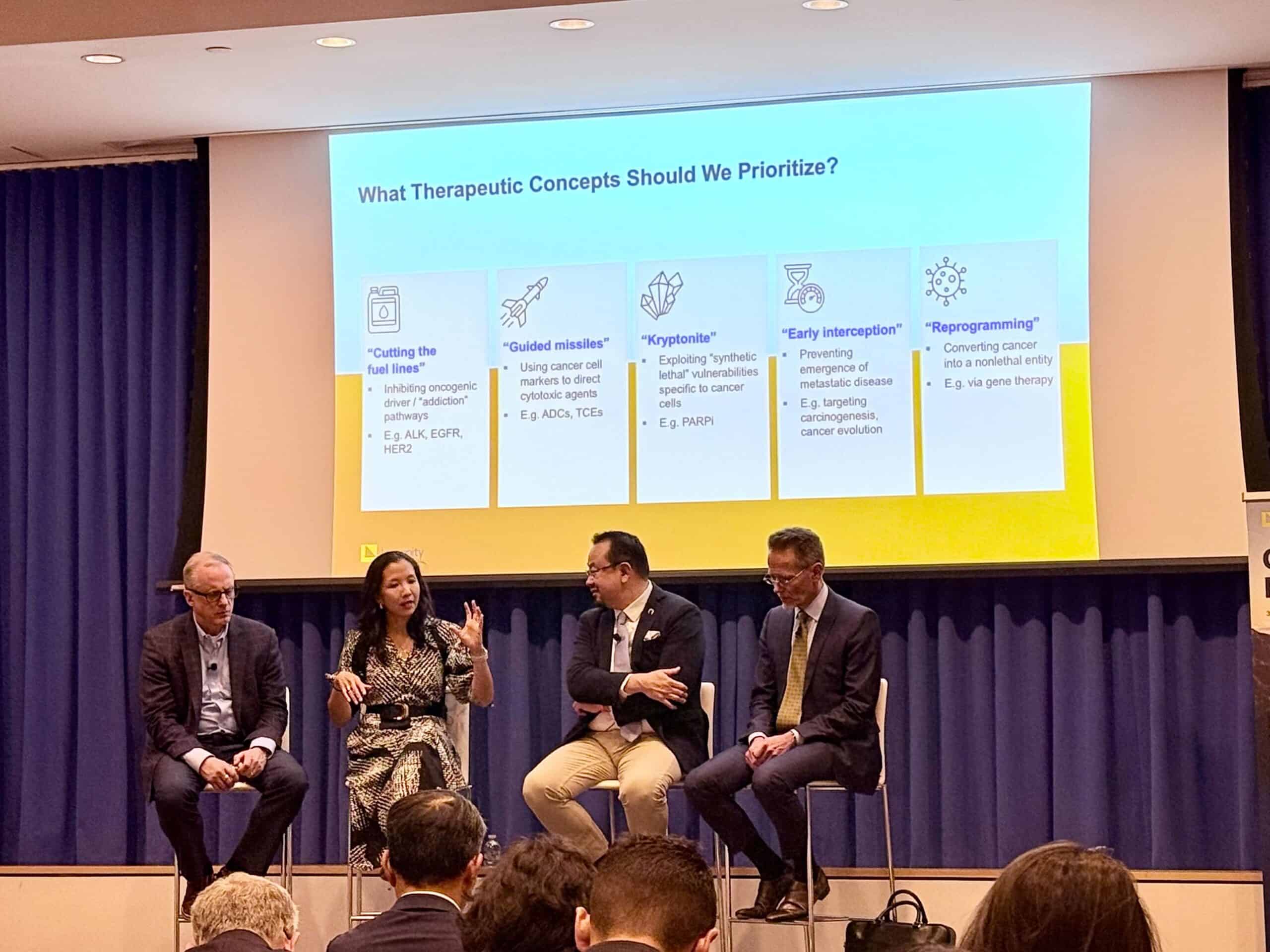
The final panel, featuring leaders from the forefront of the field, served as the climax of the event. The conversation moved quickly from "how do we discover more" to "how do we understand what we have already found." The panelists addressed the "knowledge gap"—the fact that we have more molecular data than at any time in history, yet we often lack the contextual understanding of how these molecules interact within the vast, interconnected network of the human immune system.
Supporting Data: The Cost of Complexity
The implications of the current "trial-heavy" model are not just scientific; they are economic. The industry is currently contending with a "structural bottleneck":
- The Cost of Failure: With the average cost of bringing a drug to market exceeding $2 billion, the current strategy of pursuing numerous, overlapping combination trials is increasingly unsustainable.
- The Patient Population Paradox: As medicine becomes more personalized, patient cohorts for specific trials are shrinking. Traditional, massive Phase III trials are becoming harder to fill and significantly more expensive to execute.
- The "Signal-to-Noise" Ratio: The panelists noted that as the number of variables in clinical trials increases—multiple lines of therapy, diverse modalities, and complex combination regimens—the ability to isolate a single, causal factor becomes nearly impossible. The signal is effectively "buried under the sauce."
Official Responses and Expert Perspectives
Dr. Alicia Zhou, CEO of the Cancer Research Institute (CRI), provided perhaps the most poignant critique of the industry’s current trajectory. Addressing the audience, Dr. Zhou emphasized that while experimentation is the lifeblood of oncology, it must be directed, not random.
"There has to be the right time in the development pipeline where I do think ‘spaghetti’ could be the right technique," Dr. Zhou noted. "But when it comes to combinations, when you’re thinking about the multiple permutations that you could possibly have—that’s where we have to be more directed."
Regarding the promise of Artificial Intelligence, Dr. Zhou offered a sobering, nuanced take that countered the prevailing hype. "I believe generative AI is going to hit a wall. It cannot predict things that we cannot actually validate biologically in the physical world." She argued that letting AI "run amok" without a grounded biological framework leads to hallucinations rather than breakthroughs. Instead, she pointed toward the CRI Discovery Engine as a model for how AI should be used: as a tool to map the "contours of the immune system" rather than a magic wand that bypasses the need for empirical validation.
Implications: A New Era of Oncology
The conclusion of Cancer Progress 2026 left the industry with a clear mandate for change. The implications for the next decade of oncology are profound:
1. Moving Toward "Mechanistic" Drug Development
The era of testing drugs by trial and error is shifting toward a requirement for mechanistic understanding. Researchers are now being challenged to explain why an immunotherapy interaction succeeds or fails before it reaches a large-scale human trial. This necessitates a heavier investment in early-stage, systems-biology research.
2. Rethinking the Regulatory and Economic Model
If science is evolving, the panel argued, the regulatory framework must follow. There were robust calls for:
- Synthetic Controls: Utilizing real-world data and digital history to reduce the need for placebo-heavy trials.
- Adaptive Trial Designs: Moving away from rigid, multi-year protocols toward flexible models that can pivot based on real-time data.
- Sustainable Pricing Models: Recognizing that the billion-dollar development pathway is incompatible with the future of highly targeted, small-population therapies.
3. The End of "Productive Chaos"
Perhaps the most lasting takeaway was the acknowledgement that the "productive chaos" of the last 40 years—the willingness to test hypotheses without a full picture—has fundamentally changed the landscape. We have built an incredible toolbox of therapies. The challenge for the next generation is no longer to add more tools, but to understand the architecture of the house we are trying to build.
Conclusion: The Horizon is Closer
As the event drew to a close, the mood was one of tempered optimism. The "spaghetti" approach served its purpose in the early, exploratory years of immunology, providing the initial sparks that led to current breakthroughs. However, the industry is now facing a "patent cliff" and increased global competition, which leaves little room for inefficient processes.
Dr. Zhou’s closing sentiment resonated with many in attendance: "The goal here is to say, can we start to really understand the mechanism of what’s actually happening? It’s not about chasing every molecular detail. It’s about understanding the contours of the immune system—where it holds, where it breaks, and where intervention is actually possible."
The next wave of breakthroughs in oncology will not be defined by the volume of trials or the number of new combinations. They will be defined by an intentional, data-driven, and biologically grounded approach to unraveling the deepest mysteries of human biology. The industry has the tools, the data, and the capital; it now requires the discipline to look past the "sauce" and focus on the science. As Cancer Progress 2026 demonstrated, the era of guesswork is ending—and the era of true engineering in medicine has finally begun.