






By Keith Appleton, LMSW, Combat Veteran
In the sterile, fluorescent-lit environment of a detox ward, a veteran sat on the edge of his bed, his bags packed, eyes fixed on the door. He was a man gripped by the dual demons of Post-Traumatic Stress Disorder (PTSD) and substance-use disorder. He was ready to walk out, convinced that no civilian—no matter how many degrees they held—could possibly understand the geography of his pain.
As a fellow veteran, I didn’t see a patient resistant to treatment; I saw a soldier operating under the tactical assumption that his environment was hostile. I spoke to him not in the language of clinical pathology, but in the vernacular of the service. I reframed his detox as a mission—a necessary tactical pause to regain his footing for the next phase of his life. He stayed. That singular moment underscores a vital, often overlooked truth in mental health: culturally competent care, informed by the nuances of military service, is not just a benefit; it is life-saving (Hurley, 2021).
Main Facts: The Scope of the Crisis
The statistics surrounding veteran mental health are sobering. Approximately 7% of U.S. veterans live with PTSD, and over 20% grapple with substance-use disorders (NCPTSD, 2023). Yet, the most alarming figure is that more than half of those in need never receive care. They are deterred by the shadow of stigma or the deeply ingrained belief that civilians "just don’t get it" (VA, 2022).
Military service is not merely a job; it is an all-encompassing identity forged through rigid structure, symbolic rituals, extreme hardship, and a culture of shared sacrifice. When a veteran enters a therapist’s office, they are not just bringing a list of symptoms; they are bringing an entire worldview. When that worldview is misunderstood or dismissed by a clinician, the therapeutic alliance—the bedrock of all successful treatment—fractures before it even begins.
Chronology of Identity: From Uniform to Civilian Life
To understand the veteran, one must understand the evolution of their identity. Military service is a transformative process that begins at basic training and culminates in the internalizing of specific values.
The Symbolic Power of the Uniform
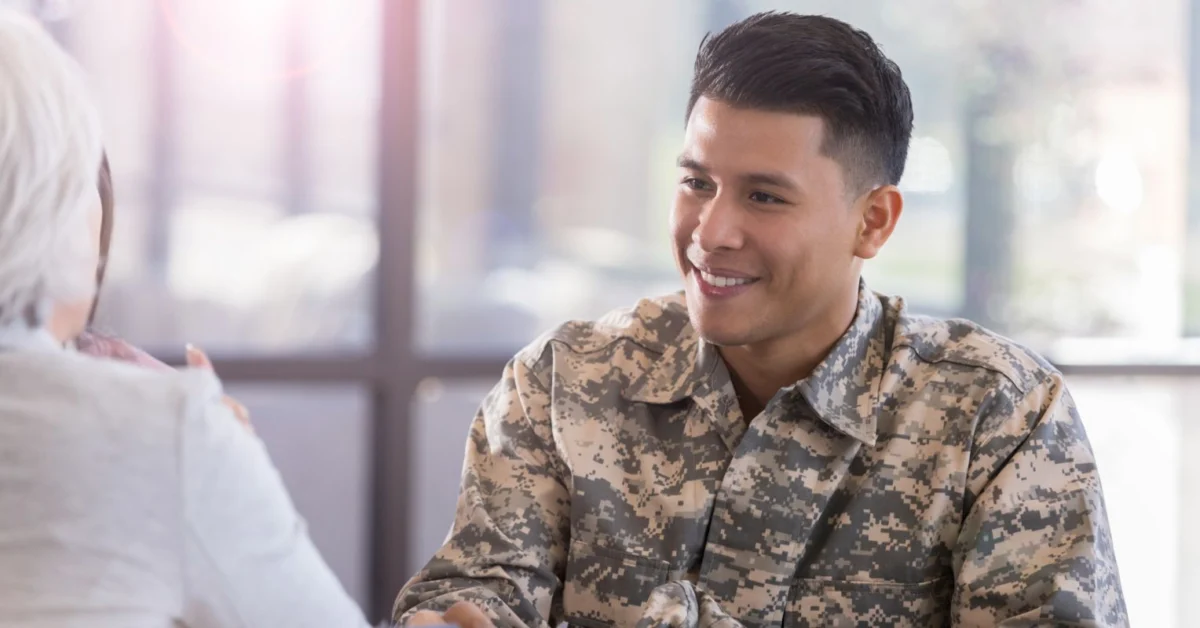
In the military, symbols are the shorthand of character. Badges, combat patches, service ribbons, and specialty schools completed are far more than ornamental; they are the narrative markers of a veteran’s life. During my own service, wearing my Combat Action Badge above my Air Assault Wings wasn’t about vanity; it was about pride and a visual record of the ground I had covered. These insignias served as immediate icebreakers, providing a bridge between soldiers that allowed for the exchange of wartime lessons that can only be understood through shared experience.
The Attachment Rupture
When a veteran separates from the service, that entire symbolic framework is stripped away. Attachment theory (Bowlby, 1980) posits that when key identity anchors are lost, individuals—especially those conditioned to value structure and loyalty—struggle to adapt. The military functions as a "secure base." Leaving that base without a new, cohesive "tribe" to join can feel like a profound attachment rupture, resulting in disorientation, grief, and an overwhelming sense of isolation.
Supporting Data: The Science of Connection
The need for belonging is not just a sociological theory; it is a psychological necessity. Author Sebastian Junger, in his seminal work Tribe (2016), highlights the primal human requirement to belong to purpose-driven, cohesive groups. For many, the military is the only place they have ever felt truly "at home."
The clinical challenge, therefore, is not to force the veteran to "forget" the military, but to help them translate those skills into a civilian context. This is the process of encouraging a flexible identity. In therapy, we work to shift the narrative from "I was a soldier" to "I am a leader, mentor, and protector." This shift is supported by research into Post-Traumatic Growth (PTG), which shows that when individuals find meaning and growth in their experiences, they are more resilient to the symptoms of trauma (Dell’Osso et al., 2022).
The Role of the Family: Rebuilding the Unit
A veteran’s trauma does not exist in a vacuum; it radiates outward, touching spouses, children, and parents. Despite this, families are frequently excluded from the clinical process.
I once treated a veteran paralyzed by "moral injury"—a deep, soul-level distress caused by the violation of his own ethical code when he was unable to deploy with his unit after 9/11 (Davis, 2023). By bringing his spouse into the therapy sessions, we were able to dismantle the shame he carried. The family acted as a bridge, reframing his service not by his deployment status, but by his enduring role as a provider and a patriot. Involving the family doesn’t just provide the veteran with a support network; it restores the connection that trauma so often severs (Bowen, 1978).
Implications for Clinical Practice: The Mission-First Approach
How do we bridge the gap between the battlefield and the counseling room? It starts with a shift in clinical approach.
Familiar Values, Familiar Language
Veterans are more likely to engage when they recognize familiar values in their clinician: empathy, mentorship, and mission-focused guidance. A people-first approach in the military—where you look out for your squad before yourself—mirrors the best practices of trauma-informed care.
Structured modalities like Cognitive Behavioral Therapy (CBT) and Eye Movement Desensitization and Reprocessing (EMDR) resonate deeply with veterans because they provide the discipline, goal-setting, and tangible progress they were trained to value (Shapiro, 2018). Clinicians can build immediate rapport simply by asking:
- What was your Military Occupational Specialty (MOS)?
- What are you most proud of from your time in service?
- What do your ribbons or badges represent to you?
Healing Through Storytelling
A critical error in some treatment models is focusing exclusively on the "horror" of trauma. This ignores the full scope of the human experience. Veterans carry memories of profound beauty: the camaraderie of a birthday party in a war zone, the silence of a desert sunset, or the grit of completing a physical challenge in 110-degree heat. These memories are not trivial; they are the bedrock of the veteran’s identity. By integrating these positive stories into the therapeutic narrative, we help the veteran create a "whole" self—one where trauma is a chapter, but not the entire book.
Moving Forward: The Mission Continues
As a society, our responsibility to those who served extends far beyond the "thank you for your service" platitude. We must serve them with clinical precision and cultural competence. This means:
- Training Clinicians in Military Culture: Understanding that the military is a unique subculture with its own values and communication styles.
- Systemic Inclusion: Recognizing that the veteran is part of a family unit, and that healing that unit is part of the treatment.
- Reframing Trauma: Moving away from a purely symptom-reduction model toward a model of Post-Traumatic Growth that honors the veteran’s past and builds their future.
Veterans carry their experiences as invisible badges. They are not broken machines to be repaired, but individuals who have lived lives of intense purpose. When delivered with cultural competence, therapy ceases to be a sterile clinical intervention. It becomes a new mission—one that honors their courage, validates their history, and empowers them to write the next, and perhaps most meaningful, chapter of their lives.
About the Author
Keith Appleton, LMSW, is a licensed social worker, trauma-informed clinician, and combat veteran of the 101st Airborne Division. He specializes in culturally competent mental health care for service members and their families, integrating EMDR, CBT, ACT, and person-centered therapy with deep military cultural insight. Keith practices in Canaan, CT, at Mountainside Treatment Center as a Residential Clinician and remains a passionate advocate for policies that strengthen veteran mental health and family support.
Selected References
- Bowen, M. (1978). Family Therapy in Clinical Practice. Jason Aronson.
- Bowlby, J. (1980). Attachment and Loss: Vol. 3. Loss, Sadness and Depression. Basic Books.
- Davis, L. Y. (2023). Moral Injury: The Hidden Adversary of War.
- Dell’Osso L, et al. (2022). Post Traumatic Growth (PTG) in the Frame of Traumatic Experiences. Clin Neuropsychiatry.
- Hurley, E. C. (2021). A Clinician’s Guide for Treating Active Military and Veteran Populations with EMDR Therapy. Springer Publishing.
- Junger, S. (2016). Tribe: On Homecoming and Belonging. Twelve.
- National Center for PTSD. (2023). PTSD in Veterans: Facts and Figures. U.S. Department of Veterans Affairs.
- Shapiro, F. (2018). Eye Movement Desensitization and Reprocessing (EMDR) Therapy: Basic Principles, Protocols, and Procedures (3rd ed.). Guilford Press.
- U.S. Department of Veterans Affairs. (2022). National Veteran Suicide Prevention Annual Report.