











For most of us, the alphabet was our first gateway to the world. We learned our ABCs as toddlers to decode language, structure our thoughts, and eventually navigate the complexities of society. Yet, there is a profound irony in our educational systems: while we are taught to master the building blocks of literacy, we are rarely provided with the foundational tools to navigate the architecture of our own emotions.
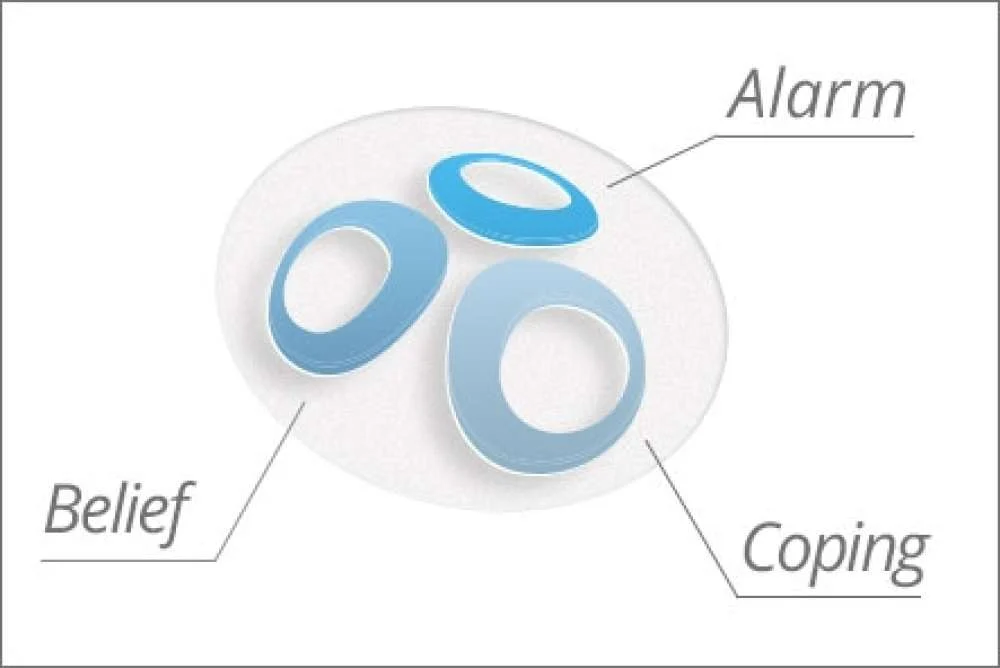
Anxiety, a fundamental human emotion designed by evolution to protect us from existential threats, remains one of the most misunderstood and mismanaged aspects of the modern experience. When the biological "alarm" of anxiety rings, many individuals find themselves paralyzed—not by the threat itself, but by a lack of emotional vocabulary to process it. To address this gap, mental health professionals are increasingly turning to a simplified, pedagogical framework known as the ABCtracker™: Alarm, Belief, and Coping.
The Main Facts: Defining the Anxiety ABCs
At its core, the ABCtracker™ is a cognitive-behavioral tool designed to help individuals transition from a state of reactive panic to one of conscious awareness. The framework operates on the premise that anxiety is not a monolithic "disorder" that happens to you, but a process that happens within you. By breaking down the experience into three distinct stages—the physiological Alarm, the cognitive Belief, and the behavioral Coping strategy—patients can begin to observe their triggers with clinical detachment rather than emotional immersion.
The primary objective of this method is to assist users in identifying the "false positives" that plague those with chronic anxiety. Just as a sensitive home security system might be triggered by a gust of wind, the human nervous system can be sensitized to perceive benign environmental cues as life-threatening events. The ABC framework serves as the sensory reset button.
A Chronological Breakdown: The Anatomy of a Panic Response
To understand the efficacy of the ABCtracker™, one must examine the timeline of an anxiety episode. The process is not random; it follows a predictable, albeit rapid, biological sequence.
Phase 1: The Alarm (A)
The sequence begins with the "Alarm." This is the primordial instinct of the "fight-or-flight" response. Physiologically, the amygdala—the brain’s alarm center—detects a stimulus. In our ancestors, this stimulus was a predator. In the 21st century, it is often an impending deadline, a social interaction, or even an intrusive thought. For individuals with generalized anxiety, this alarm is calibrated with hyper-sensitivity. The body releases cortisol and adrenaline, increasing heart rate and shifting blood flow to the muscles. The alarm is the "what" of the experience.
Phase 2: The Belief (B)
Seconds after the alarm sounds, the neocortex—the brain’s reasoning center—attempts to interpret the physiological surge. This is the "Belief" phase. The brain asks, "Why is my heart racing?" If the individual interprets the sensation as "I am having a heart attack" or "I am going to fail in front of everyone," the brain validates the alarm. This creates a feedback loop: the belief reinforces the alarm, which intensifies the physical symptoms.
Phase 3: The Coping Strategy (C)
Once the alarm is validated by the belief, the individual engages in a "Coping" strategy. This is the "how" of the response. Coping is the instinctive attempt to restore safety. If the coping strategy is adaptive—such as deep breathing, grounding exercises, or logical re-framing—the anxiety subsides. If the strategy is maladaptive—such as avoidance, substance use, or repetitive reassurance-seeking—it provides temporary relief but ultimately reinforces the fear, making the next "Alarm" more likely and more intense.
Supporting Data: Why Literacy Matters in Mental Health
Clinical data suggests that emotional literacy—the ability to identify and label emotional states—is a primary predictor of psychological resilience. According to studies in cognitive-behavioral therapy (CBT), individuals who can accurately label their emotions (e.g., "I am currently experiencing an anxiety-driven belief about my social status") show significantly lower levels of cortisol compared to those who label their emotions globally (e.g., "I am an anxious person").
The ABCtracker™ model functions as a form of "meta-cognition." By documenting the ABC sequence, patients move from the subjective experience of feeling "anxious" to the objective data of observing their "alarm, belief, and coping." This shift in perspective is often referred to as "de-centering." When a patient tracks these variables over several weeks, patterns emerge. They may discover, for example, that their alarm consistently triggers in the presence of specific authority figures, or that their belief is always a variation of "I will be humiliated." Once identified, these patterns can be dismantled with the guidance of a physician or psychologist.
Official Responses and Clinical Perspectives
The medical community has responded to frameworks like the ABCtracker™ with cautious optimism. Dr. Helena Vance, a clinical psychologist specializing in anxiety disorders, notes that while the ABC model is not a "cure-all," it is a vital entry point for patients who feel overwhelmed by the abstraction of their symptoms.
"Most patients arrive at therapy describing a cloud of ‘bad feelings,’" Dr. Vance states. "The ABC framework provides the scaffolding they need to organize that cloud. It transforms a vague, terrifying experience into a series of manageable, data-driven observations. Once a patient realizes they have agency over their Beliefs and their Coping mechanisms, the Alarm loses its power to dictate their life."
Health organizations emphasize that this tool is designed to work in tandem with professional care, not as a replacement for it. The professional healthcare provider acts as the "interpreter" of the data collected by the patient, helping them differentiate between healthy, protective anxiety and the maladaptive anxiety that characterizes clinical disorders.
Implications: The Future of Preventive Mental Health
The implications of widespread adoption of the ABCtracker™ and similar frameworks are far-reaching. If we integrate these tools into early education or general wellness programs, we could fundamentally change the trajectory of mental health outcomes.
The Shift from Reactive to Proactive
Currently, most individuals seek help only when their anxiety has become a debilitating obstacle. By teaching the ABCs of anxiety early, society could foster a proactive culture where individuals recognize the signs of an "over-sensitive alarm" before it leads to full-blown panic attacks or avoidance disorders.
Destigmatization
One of the most powerful aspects of the ABC framework is that it frames anxiety as a biological process rather than a character flaw. When an individual understands that their anxiety is simply an "alarm" functioning in an environment that no longer matches the threat level, the shame often associated with the condition begins to dissipate. It shifts the conversation from "What is wrong with me?" to "What is happening in my system?"
Long-Term Resilience
By consistently practicing the tracking of these three variables, users develop "cognitive flexibility." They learn to challenge their Beliefs—the most malleable part of the cycle—and replace Maladaptive Coping strategies with Adaptive ones. This process builds a long-term psychological armor, allowing individuals to face stressors with a regulated nervous system.
Conclusion: Mastering the Alphabet of Self-Regulation
The journey from understanding our ABCs as children to mastering our "Anxiety ABCs" as adults is a journey of maturation. It is a recognition that our internal world is just as complex and worthy of study as the external world we navigate every day.
The ABCtracker™ is more than just a template for tracking feelings; it is a pedagogical bridge between the biological reality of our nervous systems and the cognitive power of our minds. As we continue to advance in our understanding of mental health, the tools we use to navigate our inner lives must become as fundamental as the lessons we learned in our first classrooms. By mastering the Alarm, the Belief, and the Coping strategies, we are not just surviving our anxieties—we are learning to communicate with ourselves, to understand our triggers, and to lead lives defined by conscious choice rather than reflexive fear.