










THE HAGUE, Netherlands — As the maritime vessel operated by Oceanwide Expeditions cuts through the Atlantic toward the Spanish island of Tenerife, international health authorities remain on high alert. The ship, currently carrying over 140 passengers and crew members, has become the epicenter of a harrowing health crisis that has already claimed three lives and triggered a complex, multi-national containment operation.
With the vessel expected to dock early Sunday, the situation has evolved into a logistical and epidemiological challenge of significant proportions. As governments scramble to coordinate safe evacuations and medical triage, the mystery surrounding the origins of this outbreak continues to deepen, leaving experts to grapple with the unpredictable nature of the Andes hantavirus.
Main Facts: A Vessel in Crisis
The cruise ship, which departed Argentina on April 1, is now a focal point of international concern. While hantavirus is typically transmitted through contact with rodent droppings—making human-to-human transmission rare—the current outbreak has prompted intense scrutiny from the World Health Organization (WHO).
Although the WHO maintains that the risk to the general public remains low, the severity of the illness has necessitated a high-level response. Symptoms of the virus typically manifest between one and eight weeks post-exposure, creating a dangerous "window of uncertainty" for those who disembarked from the ship in the weeks prior to the public health alert. The current death toll stands at three, with several other individuals currently battling the infection in medical facilities across the globe.
Chronology: The Timeline of an Outbreak
Understanding the timeline of this health emergency is vital to grasping why international authorities are struggling to contain the fallout.
- April 1: The cruise ship departs from Argentina. Investigators suspect that a Dutch couple, who had recently participated in a bird-watching excursion, may have contracted the virus prior to boarding.
- April 24: In a move that would later complicate containment efforts, over two dozen passengers disembarked the vessel at the remote island of St. Helena. Among them was a Dutch woman traveling with the body of her husband—the first recorded fatality of the outbreak.
- May 2: Health authorities finally issue a formal confirmation that the illnesses on board are linked to hantavirus. By this time, the passengers who left at St. Helena had already dispersed to various international destinations.
- Early May: A secondary tragedy occurs when the Dutch woman, who had traveled from St. Helena to Johannesburg, is removed from a flight to Amsterdam due to severe illness. She later passes away, forcing South African and Dutch authorities to urgently trace her contacts.
- Present Day: The ship approaches Tenerife as multiple nations, including the United States and the United Kingdom, mobilize to extract their citizens under strict medical protocols.
The Mystery of Origins: Pinpointing the Source
Despite the urgency of the medical response, investigators are still searching for the "patient zero" and the specific point of origin. The Argentine Health Ministry has directed its focus toward Ushuaia, the nation’s southernmost city, as the likely location where the virus was first introduced to the passengers.
Officials plan to conduct an exhaustive survey of the region in the coming days. The difficulty lies in the nature of the Andes hantavirus; unlike other strains, it has demonstrated a capacity for human-to-human transmission in rare, documented instances. This biological quirk is precisely why authorities are acting with extreme caution, treating every contact as a potential new chain of infection.
Official Responses: A Logistical Hurdle
The coordination effort, led by Spanish authorities in collaboration with the cruise operator, Oceanwide Expeditions, is one of the most complex maritime health evacuations in recent memory.
The Tenerife Protocol
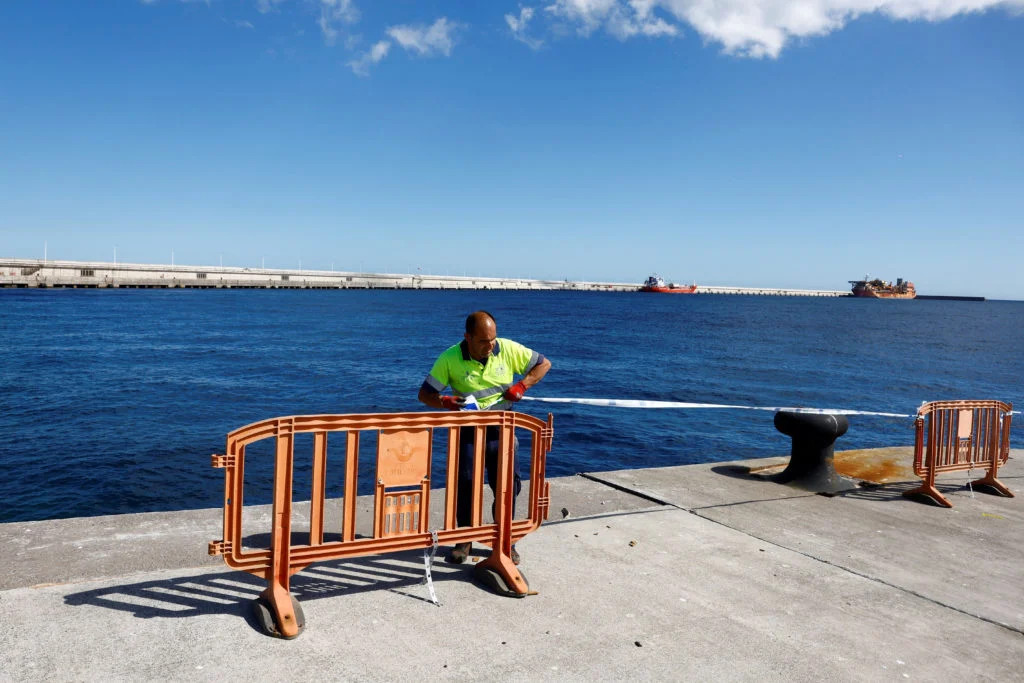
Virginia Barcones, head of Spain’s emergency services, confirmed that the docking procedure will be far from routine. "We are not dealing with a standard arrival," Barcones noted. Passengers will be transferred directly from the vessel to small boats, bypassing the main port to minimize potential environmental contamination. From the boats, they will be moved to awaiting buses and transported directly to designated quarantine or medical facilities, contingent upon their repatriation flight status.
International Cooperation
The response has been characterized by a mix of swift government action and lingering administrative gaps:
- United States: The U.S. government has committed to sending a dedicated aircraft to the Canary Islands to retrieve its citizens.
- United Kingdom: British officials are managing the fallout from passengers who disembarked at St. Helena. The U.K. Foreign Office is currently monitoring the health of an islander who was hospitalized with symptoms after contact with the cruise group.
- Medical Preparedness: Spain has formally requested the deployment of medically equipped aircraft for any passengers exhibiting symptoms, ensuring that critical care can be provided during transit.
Implications: Tracing the Unseen
The most significant challenge facing global health agencies is the "contact tracing" phase. Because the diagnosis was confirmed weeks after the initial disembarkation at St. Helena, the trail has gone cold in several jurisdictions.
The "St. Helena Effect"
The decision to allow passengers to leave the ship at St. Helena has created a logistical nightmare. Because those individuals were not considered infectious at the time, they were not subjected to the rigorous screenings that are now standard. Consequently, they traveled through multiple international transit hubs—including Johannesburg—potentially exposing hundreds of others.
Monitoring the Contacts
In South Africa, the search for those who came into contact with the late Dutch passenger is ongoing. A flight attendant who reported symptoms was recently cleared after testing negative, but health officials remain cautious. The sheer breadth of the exposure, spanning at least 12 countries, means that local health departments must maintain heightened surveillance for weeks to come.
Conclusion: The Vulnerability of Global Travel
This crisis serves as a stark reminder of the fragility of international travel in the face of zoonotic diseases. While the hantavirus is not as easily transmissible as airborne viruses like influenza, its high mortality rate and the complexity of its transmission route create significant anxiety.
As the cruise ship docks in Tenerife, the world watches. The primary concern is not just the immediate health of the 140 passengers, but the secondary and tertiary contacts who may currently be unknowingly carrying the virus. For now, the global health community remains in a defensive posture, relying on strict isolation, rapid testing, and international solidarity to ensure that this maritime tragedy does not evolve into a broader public health catastrophe.
Authorities have promised to release further information as soon as the passengers are secured, but for many, the lessons of this outbreak have already been learned: the speed of modern travel is a powerful tool, but in the face of an emerging pathogen, it is also a significant vulnerability.