

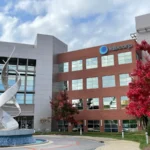










ATLANTA, GA — In an era defined by digital isolation and the rigorous academic pressures of higher education, an unexpected sound has begun to echo across the promenade of Clark Atlanta University: the rhythmic thwack of a jump rope hitting the pavement. What started as a personal antidote to boredom in a dorm room has evolved into Big Kids Inc., a burgeoning movement dedicated to reclaiming the concept of "play" as a vital tool for adult mental health and community resilience.
Founded by student leader Dominic Mimbang, the initiative seeks to dismantle the stoic barriers of adulthood, replacing them with the unbridled joy of the elementary school playground. As the mental health crisis among Gen Z continues to escalate, Mimbang’s "play-based" intervention offers a low-cost, high-impact blueprint for wellness that is gaining traction across the Atlanta University Center (AUC).
I. Main Facts: The Genesis of Big Kids Inc.
The core of Big Kids Inc. lies in a deceptively simple premise: the developmental benefits of play do not expire when a person reaches legal adulthood. For Mimbang, a student at Clark Atlanta University, the realization came during a moment of profound isolation within the walls of Heritage Commons Residence Hall.
"Sitting in my dorm room, bored and alone, I realized that the only thing keeping me there was myself," Mimbang reflects. "What I needed was fun, and if fun wasn’t going to find me inside Heritage Commons, I’d have to find it."
The solution arrived in the form of a colorful jump rope ordered online. By bringing this childhood staple to the university promenade—a central hub where students congregate—Mimbang inadvertently launched a social experiment. The "Promenade Experiment" quickly revealed a latent hunger among the student body for unstructured, joyful interaction.
Key Components of the Movement:
- The Catalyst: A single jump rope and the refusal to accept "boredom" as a standard collegiate experience.
- The Organization: Big Kids Inc., a startup designed to host "playful" events including field days, dodgeball tournaments, and community picnics.
- The Philosophy: Nurturing the "inner child" to mitigate the chronic stress, anxiety, and loneliness prevalent in modern university life.
- The Platform: Leveraging partnerships with organizations like Active Minds to advocate for "mental health mobilization."
II. Chronology: From Dorm Room Boredom to a Campus Movement
The Initial Spark
The journey began approximately one year ago. Mimbang, then a sophomore, found himself grappling with the common but rarely discussed "dorm room blues"—the feeling of being surrounded by thousands of peers yet feeling fundamentally disconnected. Unlike traditional social outlets, which often revolve around parties or organized clubs, Mimbang sought something more primal and inclusive.
The Promenade Transformation
Upon the arrival of the jump rope, Mimbang and a friend took to the Clark Atlanta University promenade. As they began to swing the long, colorful rope, the atmosphere of the campus underwent a psychological shift. The promenade, usually a transit point for students rushing to lectures, transformed into a space reminiscent of a 1990s schoolyard.
"For the first time in over 10 years, it felt like we were playing together at recess," Mimbang says. "The small joys reserved for kids in elementary school were ours again. We weren’t just ‘big kids’; we were young adults rediscovering a lost language of connection."
The Birth of Big Kids Inc.
The feedback was instantaneous. Fellow students did not just watch; they joined. Encouragement from the campus community served as the "proof of concept" Mimbang needed. Recognizing that the need for play was universal, he formalized the initiative into Big Kids Inc. Over the subsequent twelve months, the organization expanded its repertoire from simple rope-jumping to large-scale events designed to break down social hierarchies and academic stress.
Present Day: Junior Year and Beyond
Now a Junior in college, Mimbang has integrated play into his daily routine and professional identity. Big Kids Inc. has transitioned from a weekend hobby into a mission-driven startup, advocating for "playful wellness" as a legitimate pillar of mental health advocacy.
III. Supporting Data: The Science and Sociology of Play
The success of Big Kids Inc. is backed by a growing body of psychological research suggesting that "play" is a biological necessity for humans of all ages.
The Mental Health Crisis in Higher Education
According to the Healthy Minds Study, which surveyed over 96,000 students across 133 campuses, approximately 44% of college students reported symptoms of depression, and 37% reported anxiety. Furthermore, the U.S. Surgeon General recently issued an advisory on the "Epidemic of Loneliness and Isolation," noting that social disconnection is as dangerous to health as smoking 15 cigarettes a day.
The Physiological Benefits of Play
Psychologists argue that play—defined as activity that is intrinsically motivated and done for its own sake—triggers several positive physiological responses:

- Cortisol Reduction: Engaging in lighthearted games reduces the production of cortisol, the body’s primary stress hormone.
- Neuroplasticity: Play stimulates the production of BDNF (Brain-Derived Neurotrophic Factor), a protein that supports neuron growth and cognitive flexibility.
- Endorphin Release: Physical play, such as dodgeball or jumping rope, releases endorphins, the body’s natural painkillers and mood elevators.
- Social Oxytocin: Shared laughter and cooperative games facilitate the release of oxytocin, often called the "bonding hormone," which helps build trust and community cohesion.
The "Third Space" Concept
Sociologically, Big Kids Inc. provides what researchers call a "Third Space"—a social environment separate from the "First Space" (home) and the "Second Space" (work/school). For many college students, the lines between these spaces are blurred, leading to burnout. By introducing "recess" to the promenade, Mimbang created a temporary Third Space where the pressures of grades and career networking are suspended.
IV. Official Responses and Community Impact
The emergence of Big Kids Inc. has caught the attention of mental health advocates and campus leaders who recognize the power of peer-led initiatives.
Active Minds and Peer Advocacy
Mimbang’s work aligns closely with the mission of Active Minds, the nation’s premier nonprofit organization supporting mental health awareness and education for young adults. By serving on the Active Minds High School Advisory Board and continuing his advocacy into college, Mimbang has become a prominent voice in "mental health mobilization."
A spokesperson for the mental health advocacy community noted, "Dominic’s approach is revolutionary because it removes the clinical stigma from mental health. It doesn’t ask students to sit in a circle and discuss their trauma; it asks them to pick up a jump rope. The healing happens through the movement and the shared joy."
Student Testimonials
The impact on the Clark Atlanta student body has been palpable. "One student came over and told me how much they loved what we were doing and encouraged us to keep it up," Mimbang recalls. Others have noted that these events provide a rare opportunity to meet people outside of their specific majors or Greek life organizations, fostering a broader sense of "One AUC" (the collective identity of the Atlanta University Center).
Humanitarian and Policy Implications
Mimbang’s background as a Princeton Prize in Race Relations recipient and a Boys Nation Senator suggests that Big Kids Inc. is more than just fun; it is a form of social equity. In communities where "leisure" is often a luxury, reclaiming the right to play is a powerful statement of self-care and resilience.
V. Implications: Redefining Adulthood and the Future of Wellness
The rise of Big Kids Inc. signals a broader cultural shift in how Gen Z perceives adulthood. For previous generations, "growing up" was often synonymous with the abandonment of "childish" pursuits. Mimbang’s mission challenges this dichotomy.
Breaking the Fear of Rejection
A central tenet of Mimbang’s philosophy is overcoming the "fear of rejection" that often paralyzes adults. "Making friends on the playground seemed so simple as a child," he observes. "My goal is to bring the playground to young adults… Instead of letting the fear of rejection define my choices, I let the possibility of connection motivate me."
This mindset has implications far beyond the campus promenade. If young adults can learn to navigate social spaces with the openness of a child, the long-term effects on workplace culture, civic engagement, and interpersonal relationships could be profound.
Scalability and Global Potential
While Big Kids Inc. began in Atlanta, the model is highly scalable. The "low-tech" nature of the interventions—word searches in libraries, jump ropes, picnics—makes it accessible to any campus or community regardless of funding. Mimbang’s call to action is clear: he encourages others to share their mental health journeys and incorporate "bold play" into their routines.
Conclusion: Play as a Purpose
As Dominic Mimbang enters his final years of university, his perspective on "play" has shifted from a distraction to a life’s work. "I know more than ever that play is my purpose," he concludes.
The story of Big Kids Inc. serves as a reminder that the most effective solutions to complex problems like the mental health crisis are often found in the simplest places—like the bottom of a toy chest or a colorful rope on a sunny afternoon. By inviting adults to "come out and play," Mimbang is not just reliving the past; he is building a healthier, more connected future.
For those interested in contributing to the movement or sharing their own mental health journey, Active Minds provides a platform for student stories and "mental health mobilization" strategies. More information can be found at activeminds.org.