







Published May 6, 2026 | Originally appeared in Yoga Journal, July–August 1992
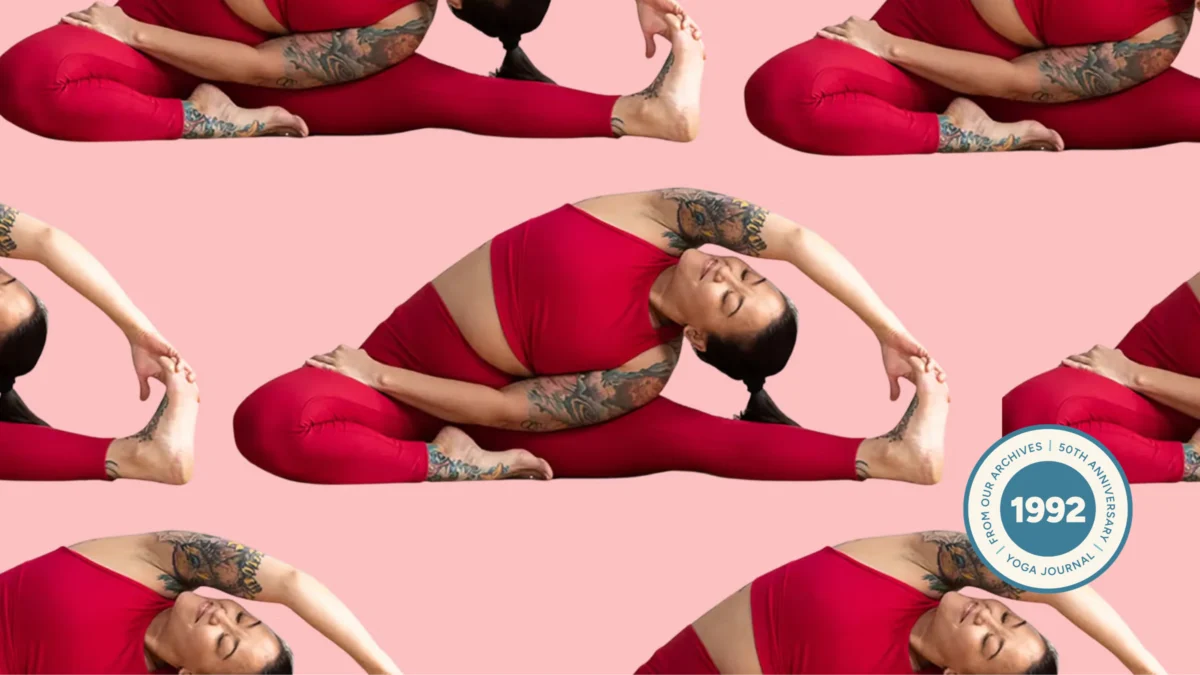
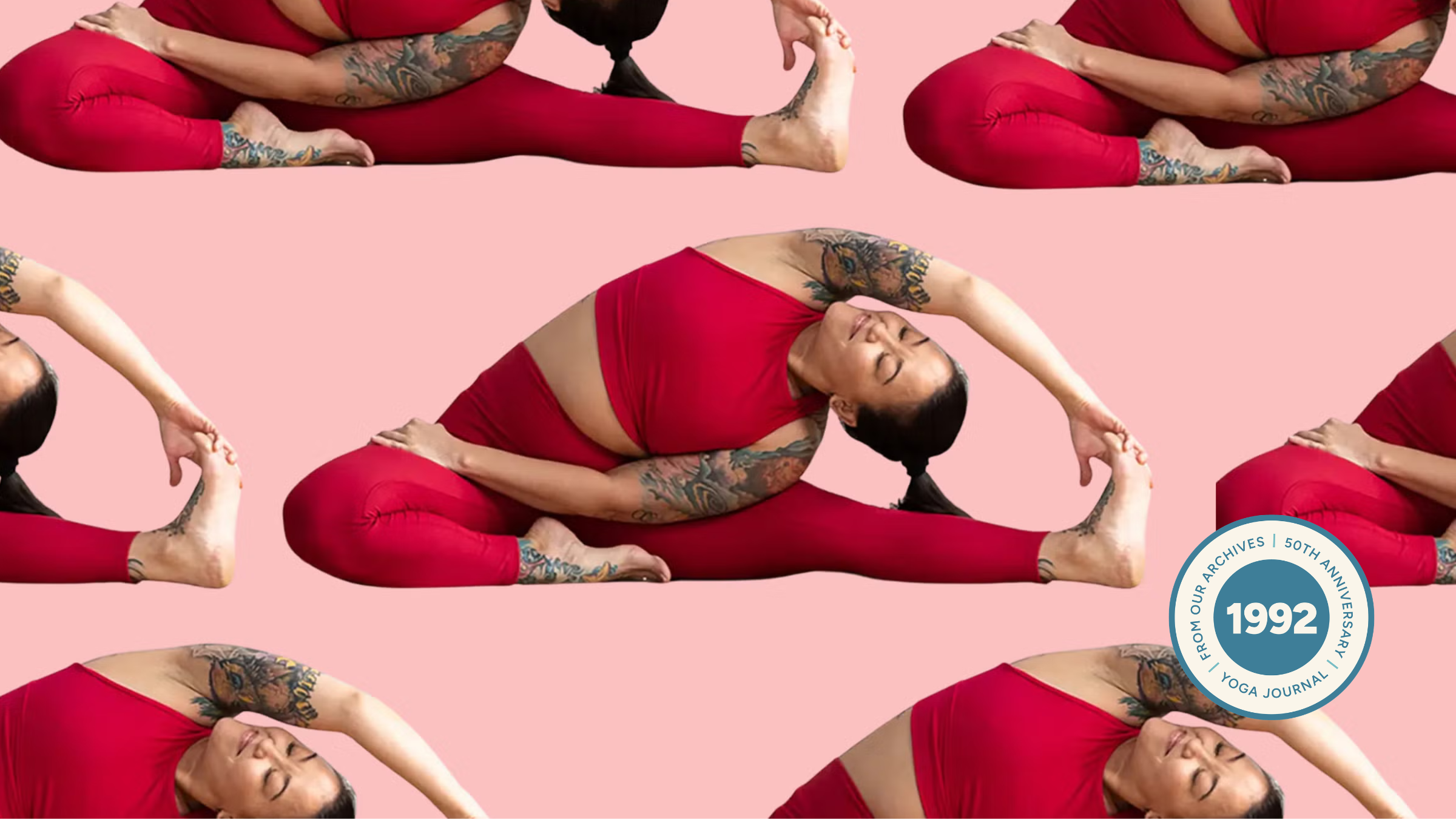
In the intricate landscape of yoga asana, few postures demand as much structural intelligence as Parivrtta Janu Sirsasana, or Revolved Head-to-Knee Pose. As part of our ongoing Archives series, we revisit a seminal 1992 exploration of this seated side bend. This practice is not merely a physical maneuver; it is a lesson in three-dimensional geometry, requiring the practitioner to harmonize multiple, simultaneous movements into a singular, fluid expression of grace.
Understanding the Anatomy of a Pose
Learning yoga asanas is akin to acquiring a new language. Just as American Sign Language utilizes a three-dimensional syntax that transcends the linear limitations of spoken words, the body in Parivrtta Janu Sirsasana speaks through a complex dialogue of alignment, breath, and kinetic awareness.
The pose is rarely a static destination. Rather, it is a collection of movements—swirling eddies and cross-currents—that mimic the flow of a river. By breaking these movements down into individual “phrases,” students can move beyond mere imitation and begin to master the “grammar of space,” kinesthetically understanding how the pelvis, rib cage, and spine relate to one another in the fullest expression of the pose.
Chronology of Practice: A Progressive Methodology
To achieve the full expression of Revolved Head-to-Knee, one must build a foundation of stability. The following progression, rooted in classical alignment principles, ensures the body is prepared for the deep, lateral extension required.
Phase 1: The Beginner’s Approach
Begin by grounding yourself in Dandasana (Staff Pose), maintaining a vertical spine with legs fully extended. Transition by bending the left knee and drawing the shin toward the thigh, allowing the leg to drop outward. Should the left knee hover above the floor, a folded blanket provides the necessary structural support.
Once positioned, rotate the torso to align with the extended leg. For those with greater flexibility, grasping the inner foot is ideal; otherwise, holding the inner calf serves as an effective anchor. The focus here is on the rib cage: lengthen both sides evenly to avoid collapsing at the waist. By reaching the left arm behind the back and turning the head to gaze over the shoulder, the student initiates the foundational twist.
Phase 2: Utilizing Prop-Based Stability
For students seeking to deepen their understanding of the upper back and shoulder girdle, the use of a chair against a wall is transformative. By bracing the feet against the chair’s back rung and pressing the hands into the backrest, the practitioner creates a leverage point that forces the spine to lengthen.
This variation highlights the "fiery" intensity of connective tissue stretching. Because the chair provides a rigid reference point, the student can focus on the specific sensation of the outer waist and hip, moving safely into the twist without the risk of overextending the lower back.
Phase 3: The Twisting Nuance
The twisting variation emphasizes the synergy between the shoulder blades and the sternum. By aligning the extended leg with the chair’s geometry, the student can use the chair to "hook" the shoulder, allowing the chest to open toward the ceiling. This relieves the common complaint of neck tension by using the chair’s seat to support the head, effectively allowing the upper body to "surrender" into the twist rather than fighting against it.
Supporting Data: The Mechanics of Alignment
The efficacy of Parivrtta Janu Sirsasana lies in the management of weight distribution. A common error is the tendency for the pelvis to "fall back" onto the sacrum. To correct this, the student must shift weight onto the sitting bone of the extended leg while pressing the bent knee firmly into the floor.
The Role of Counter-Pressure
When the torso begins to fall toward the outer leg, the posture loses its integrity. To regain balance:
- Hip Engagement: Roll the front hip bone toward the inner thigh to draw the waist forward.
- Shoulder Girdle: Release the shoulder blade toward the elbow. This simple anatomical adjustment broadens the upper back and prevents the compression of the cervical spine.
- The "Blanket" Modification: For those struggling with the reach, placing a rolled blanket along the inner leg acts as a physical barrier. It forces the shoulder to engage correctly, ensuring that the spine aligns over the extended leg rather than collapsing away from it.
Implications for Body Intelligence
The practice of Revolved Head-to-Knee is a gateway to "the simultaneity of awareness." When we practice with such heightened focus, we do more than stretch muscles or mobilize joints; we fundamentally recalibrate our nervous system’s perception of space.
The Science of Proprioception
As we organize the body in space, we increase our powers of proprioception. The ability to bring intelligence to disparate parts of the body—simultaneously keeping the knee grounded, the rib cage extended, the shoulder blade retracted, and the neck relaxed—creates a sense of wholeness.
Beyond the Mat
The implications of this training extend well beyond the yoga studio. By learning how to organize ourselves effectively in a complex pose, we develop a blueprint for how we hold ourselves in the world. The "grammar of space" learned through Parivrtta Janu Sirsasana becomes an internal compass, allowing for better posture, reduced tension, and a deeper integration of physical and mental faculties in daily life.
Conclusion: A Continuous Evolution
Whether you are a novice using a folded blanket for support or an experienced practitioner exploring the deeper twists, the goal remains the same: the quiet, steady observation of the body in motion.
The 1992 insights remain as relevant today as they were three decades ago. The "swirling eddies" of movement continue to guide us. As we continue to refine our practice, we are reminded that yoga is not about the final shape of the body, but about the quality of the journey—the way we breathe, the way we adjust, and the way we eventually find stillness in the midst of a complex, multidimensional challenge.
Through the careful study of these variations, the student moves from a state of mechanical effort to one of enlightened, conscious movement—a true mastery of the body’s internal language.