









As we navigate the sixth decade of life, the concept of "fitness" shifts. While the younger years are often defined by raw strength, explosive power, or endurance, the priorities for those over 60 transition toward a more nuanced, critical metric: functional balance. Balance is not merely the absence of a fall; it is a sophisticated, complex neurological and musculoskeletal dialogue that dictates your confidence, autonomy, and safety as you move through your daily environment.
For individuals over 60, maintaining optimal balance is synonymous with maintaining independence. It is the silent partner to every movement, from stepping onto an uneven sidewalk to reaching for a kitchen cabinet or reacting to a sudden change in direction. This article explores four foundational movement patterns—as identified by performance experts—that serve as essential benchmarks for assessing your physical integrity.
The Physiology of Balance: Why It Matters After 60
Balance is a multi-sensory experience. It requires the integration of your vestibular system (inner ear), visual input, and proprioception—the body’s ability to sense its position in space. After 60, these systems begin to face natural degradation. The nerves in your feet may become less sensitive, the inner ear may experience minor fluctuations, and muscle mass (particularly in the core and lower extremities) may naturally decrease.
However, balance is a "use it or lose it" skill. According to sports performance coaches, those who move with grace and stability share common markers: they can maintain a single-leg stance, pause mid-movement without losing postural integrity, and recover their center of gravity quickly when disrupted. These four tests are not just exercises; they are diagnostic tools to help you identify "weak links" in your kinetic chain.
1. The Single-Leg Stand (Eyes Open to Closed)
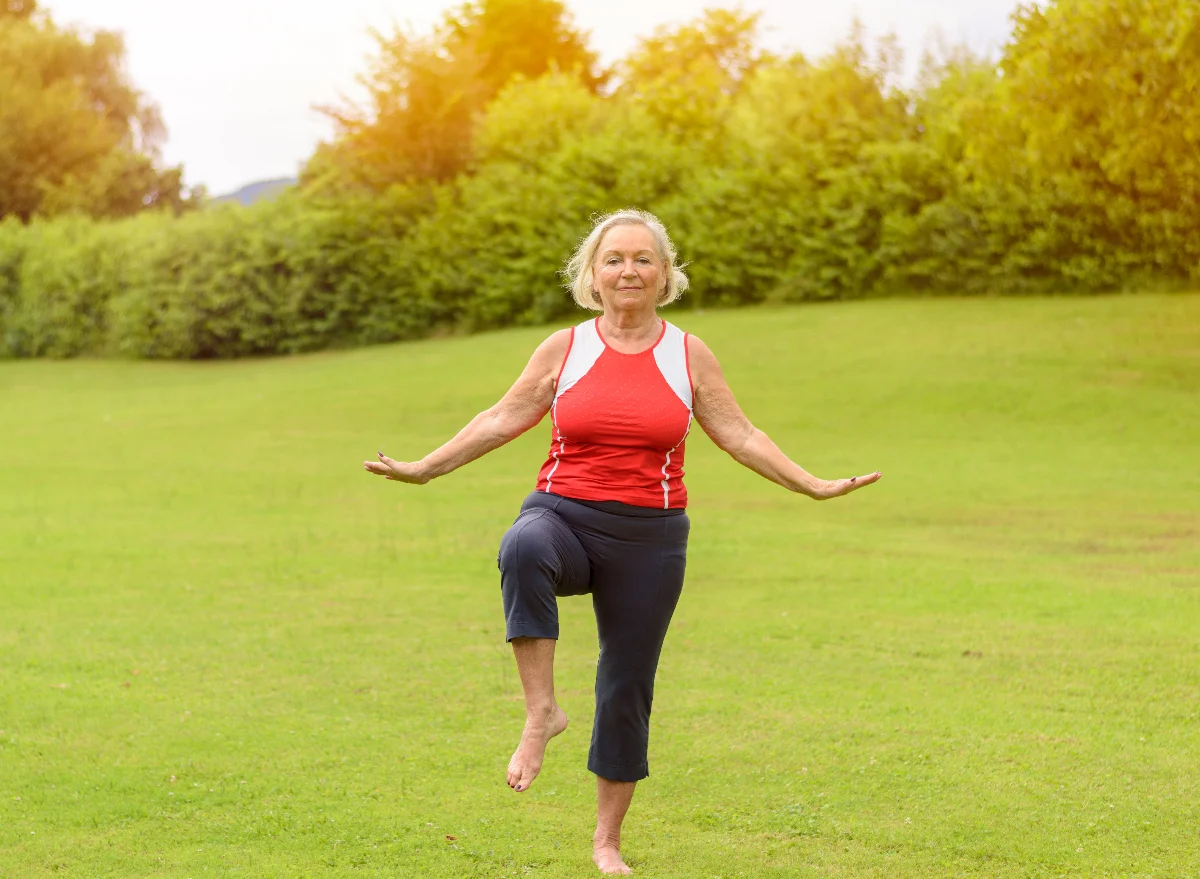
The single-leg stand is the "gold standard" for functional stability. It forces the foot, ankle, and hip stabilizers to operate in harmony. When you stand on one leg, your core muscles must fire immediately to prevent your torso from tilting, while the muscles of the lower leg engage in a series of micro-adjustments to keep you upright.
The Progression:
To perform this, stand near a wall for safety. Lift one foot slightly off the ground, keeping your hips level. Once you are comfortable with your eyes open, the real test begins: close your eyes. By removing visual input, you force your body to rely entirely on proprioception and the vestibular system.
- Muscles Targeted: Tibialis anterior, calves, gluteus medius, and transverse abdominis.
- The Goal: Aim for 2 to 3 rounds of 20 to 30 seconds per leg.
- Performance Indicator: If you find yourself "wobbling" excessively or needing to touch down frequently, your neuromuscular communication between your feet and your brain needs reinforcement.
2. The Stand and Reach Test
In daily life, we rarely stand perfectly still. We reach for grocery bags, move objects on shelves, or lean forward to open doors. The "Stand and Reach" test evaluates your ability to maintain your center of mass while your limbs are extended beyond your base of support.
The Execution:
Stand on one leg, then slowly reach your arms forward while keeping your spine neutral. The further you can reach without your torso rotating or your standing foot losing contact with the floor, the better your core-to-hip stability.
- Muscles Targeted: Gluteus maximus, hamstrings, and the entire core complex.
- The Goal: Perform 2 to 3 sets of 5 controlled reaches per side.
- Performance Indicator: A loss of balance here usually points to weak gluteal muscles, which are the primary stabilizers of the pelvis.
3. The Split Squat Hold
Walking is essentially a series of controlled falls from one leg to the other. The split squat hold mimics the "mid-stride" position of a gait cycle. By holding the bottom of a split squat—where your weight is distributed unevenly between a forward and back foot—you challenge your body to resist rotation and lateral shifting.
The Execution:
Take a staggered stance, one foot forward and one foot back. Lower your back knee toward the floor, stopping just before it touches. Hold this position, keeping your chest upright and your weight centered.
- Muscles Targeted: Quadriceps, glutes, and deep core stabilizers.
- The Goal: 2 to 3 rounds of 20 to 30-second holds per side.
- Performance Indicator: If you feel unstable or "shaky" during this hold, it indicates an imbalance between your left and right sides—a common precursor to gait asymmetries that lead to falls.
4. The Single-Leg Reach (RDL Pattern)
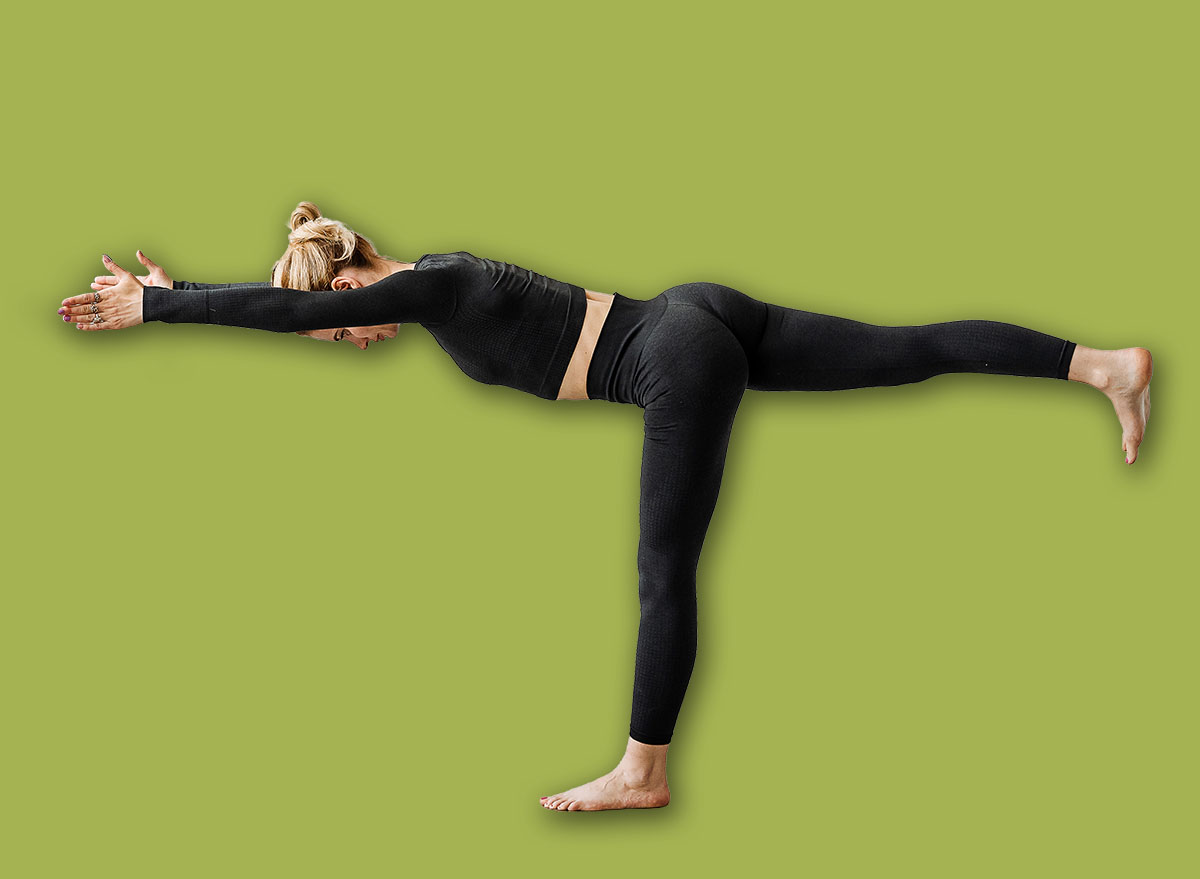
The Romaninan Deadlift (RDL) pattern is the ultimate test of posterior chain coordination. It requires you to hinge at the hips while balancing on one leg, keeping your back leg extended behind you for counterbalance. This is a complex movement that tests your ability to maintain a flat back and a steady core under tension.
The Execution:
Stand on one leg. Hinge at your hips, reaching your hands toward the floor while extending your free leg backward. Your body should form a "T" shape. Return to the starting position with control.
- Muscles Targeted: Hamstrings, glutes, and spinal erectors.
- The Goal: 2 to 3 sets of 5 to 8 slow, controlled repetitions per leg.
- Performance Indicator: If you struggle to keep your hips square to the floor, it suggests that your hips are tight or that your gluteus medius is under-active.
Supporting Data and Clinical Implications
Research published in journals such as the National Center for Biotechnology Information (NCBI) consistently highlights that balance training is one of the most effective interventions for preventing falls in the geriatric population. A study regarding single-leg standing time suggests that the inability to hold a single-leg stance for at least 10 seconds is correlated with an increased risk of mortality and mobility decline in older adults.
The implications are clear: these movements are not merely about aesthetics; they are life-extending. Improving your balance capacity has a direct, measurable impact on your "healthspan"—the number of years you spend in good health, free from disability.
Official Recommendations and Safety Protocols
When integrating these tests into your routine, keep the following guidelines in mind:
- Safety First: Always perform these near a sturdy surface, like a kitchen counter or a wall, that you can grasp if you feel unsteady.
- Quality Over Quantity: The goal is not to perform as many reps as possible, but to perform them with maximum control. If you are rushing, you are not training your balance; you are training momentum.
- Consistency is Key: Balance is a perishable skill. Performing these checks two to three times a week can yield significant improvements in your confidence within just a few weeks.
- Listen to Your Body: Minor "wobbles" are normal and are actually part of the training process—they indicate that your brain is learning to correct your position. However, sharp pain in the joints should be addressed by a physical therapist.
Conclusion: Measuring Your Progress
How do you know if you are in a "good place"? If you can complete these four movements with deliberate, controlled speed and without needing to "clutch" at external objects, you are in an excellent position.
If you find that one test is significantly harder than the others, don’t be discouraged. That specific exercise has just identified the exact area where your body needs extra support. By treating these movements as regular "check-ups," you are building a physical insurance policy. You are training your nervous system to stay sharp, your muscles to stay responsive, and your body to remain resilient, no matter what the terrain—or life—throws your way.
By prioritizing these movements today, you are ensuring that your 60s, 70s, and beyond remain active, mobile, and, most importantly, independent.