








The week began with a flurry of high-stakes developments, ranging from the chambers of the U.S. Supreme Court to the embattled front lines of Eastern Europe. As global leaders navigate shifting geopolitical alliances and domestic pressures, the convergence of legal challenges, international conflict, and humanitarian tragedies has placed the current administration at the center of a complex web of crises.
Supreme Court Extends Access to Mifepristone
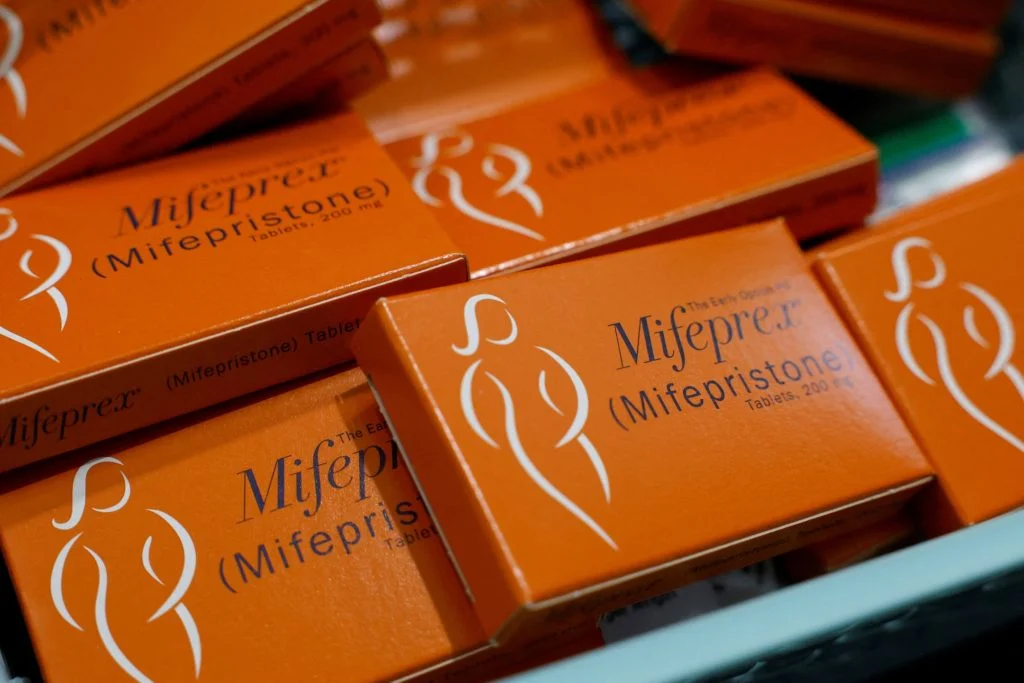
In a significant administrative development, the U.S. Supreme Court has issued a temporary stay, effectively extending access to the abortion medication mifepristone until at least Thursday. This judicial pause provides the high court with essential time to deliberate on an emergency request to overturn a controversial lower-court ruling that sought to severely restrict, if not entirely halt, the distribution of the drug.
The stay, issued following an initial temporary halt by Justice Samuel Alito, ensures that for the immediate future, health care providers retain the legal authority to prescribe the medication via telemedicine platforms and facilitate its delivery through the postal system. This ruling is a critical pivot point in the broader national debate surrounding reproductive rights, as advocates and opponents alike await a final decision that will likely define the parameters of medication-based abortion access for the foreseeable future.
Domestic Security: The White House Correspondents’ Dinner Attack
In federal court proceedings on Monday, Cole Tomas Allen, the individual charged in the attempted assassination of President Trump at last month’s White House Correspondents’ Dinner, entered a formal plea of not guilty.
Legal Complications and Conflict of Interest
The hearing was marked by a strategic push from Allen’s defense team, who formally requested the recusal of Acting Attorney General Todd Blanche and U.S. Attorney for D.C. Jeanine Pirro. Defense counsel argued that because both officials were present at the dinner during the incident, they may be classified as potential witnesses or victims, thereby creating an inherent conflict of interest that compromises the impartiality of the prosecution. Allen faces four federal counts related to the attack, and he is scheduled to return to court next month as the legal battle over the composition of the prosecution team continues.
Geopolitical Strains: The Russia-Ukraine Ceasefire
The fragility of international diplomacy was on full display Monday as a U.S.-brokered three-day ceasefire between Russia and Ukraine officially expired. The truce, intended to provide a window of stability during Russia’s "Victory Day" celebrations, failed to foster any meaningful de-escalation.
Accusations of Breach
Both Moscow and Kyiv have traded accusations regarding violations of the agreement. The Kremlin has claimed that Ukrainian forces breached the ceasefire over 1,000 times. Conversely, Ukrainian authorities reported ongoing Russian artillery and missile strikes targeting the Kharkiv and Kherson regions, resulting in at least two confirmed civilian deaths.
President Volodymyr Zelenskyy expressed deep skepticism regarding the utility of the pause, telling reporters that "there was no silence on the front line." He emphasized that the Russian military has demonstrated no intent to cease hostilities, and that Ukraine is actively fortifying its positions in anticipation of a new, more aggressive wave of attacks. Meanwhile, President Vladimir Putin, in a series of weekend remarks, insisted that Russia would ultimately prevail, signaling that despite the expiration of the ceasefire, neither side is currently prepared for substantive peace negotiations.
The Venezuela Question: Sovereignty and Statehood
In a development that has sent diplomatic ripples through Latin America, Venezuelan Acting President Delcy Rodriguez has issued a sharp rebuke to comments made by President Trump regarding the potential for Venezuela to become the 51st U.S. state.
During an interview on FOX News, President Trump stated that he was "seriously considering" the prospect of integrating the South American nation into the United States. Rodriguez, speaking from The Hague, rejected the suggestion outright. "Venezuela is not a colony; it is a free country," she stated, noting that her administration—which took power following a U.S. military operation that ousted former President Nicolas Maduro—is currently focused on building a framework of "cooperation and understanding" with Washington. The incident highlights the delicate and evolving nature of the current U.S.-Venezuela relationship.
Humanitarian Tragedy in Laredo
A grim discovery in South Texas has prompted an investigation into the risks associated with human smuggling and migration. Over the weekend, authorities found the bodies of six individuals—five men and one woman—inside a shipping container at a rail yard in Laredo, near the U.S.-Mexico border.
Environmental Factors and Identification
Medical officials have preliminarily attributed the deaths to heatstroke. Sunday’s temperatures in the region exceeded 90 degrees, creating lethal conditions within the unventilated metal container. Preliminary findings, based on mobile phone data and identification cards recovered from the scene, suggest the victims were migrants from Mexico and Honduras. While Laredo serves as a critical hub for international trade and has long been a focal point for immigration routes, local authorities have not yet officially confirmed if the incident was linked to a specific organized smuggling operation.
Economic Indicators and Market Performance
Despite rising global oil prices and ongoing geopolitical uncertainty, the U.S. financial markets showed resilience on Monday. Wall Street saw modest gains, with the Dow Jones Industrial Average climbing 95 points. The Nasdaq Composite added nearly 30 points, and the S&P 500 mirrored this upward trend. Analysts suggest that the market’s ability to absorb the week’s news reflects a cautious optimism among investors, though volatility remains a persistent concern as energy costs continue to fluctuate.
A Legacy of Advocacy: The Passing of Abraham Foxman
The week also saw the passing of a significant civil rights figure: Abraham Foxman, the former National Director of the Anti-Defamation League (ADL). Foxman, who served at the helm of the organization for nearly three decades, was widely recognized as a tireless advocate for the Jewish community and a vocal opponent of antisemitism.
A Career of Conscience
Foxman’s career was defined by his willingness to challenge powerful figures and institutions that engaged in or tolerated discriminatory speech. However, his approach was not strictly punitive; he famously championed the capacity for growth and apology. In his 2015 retirement address, he noted, "Some of my most satisfying moments as director of the ADL [were] witnessing people who did bad things and said vile things turn around and become better people."
Foxman, who was 86 at the time of his passing, leaves behind a legacy of institutional advocacy that shaped modern discourse on hate speech and civil rights in America. The ADL has expressed profound mourning, though no cause of death has been disclosed.
Implications for the Week Ahead
As the Supreme Court moves toward its decision on mifepristone and the situation in Eastern Europe remains volatile, the coming days will be defined by how the administration balances these domestic and international pressures. The combination of legal challenges, the ongoing investigation into the assassination attempt on the President, and the diplomatic complexities involving Venezuela suggests a week of intense legislative and executive activity.
For the international community, the expiration of the Ukraine ceasefire serves as a grim indicator that the conflict remains in a high-intensity phase. Domestically, the focus remains on the judiciary’s role in regulating public health and the state’s duty to ensure security and border safety. As the nation grapples with these disparate issues, the events of this Monday set a challenging tone for the remainder of the month.