











By Sree Roy
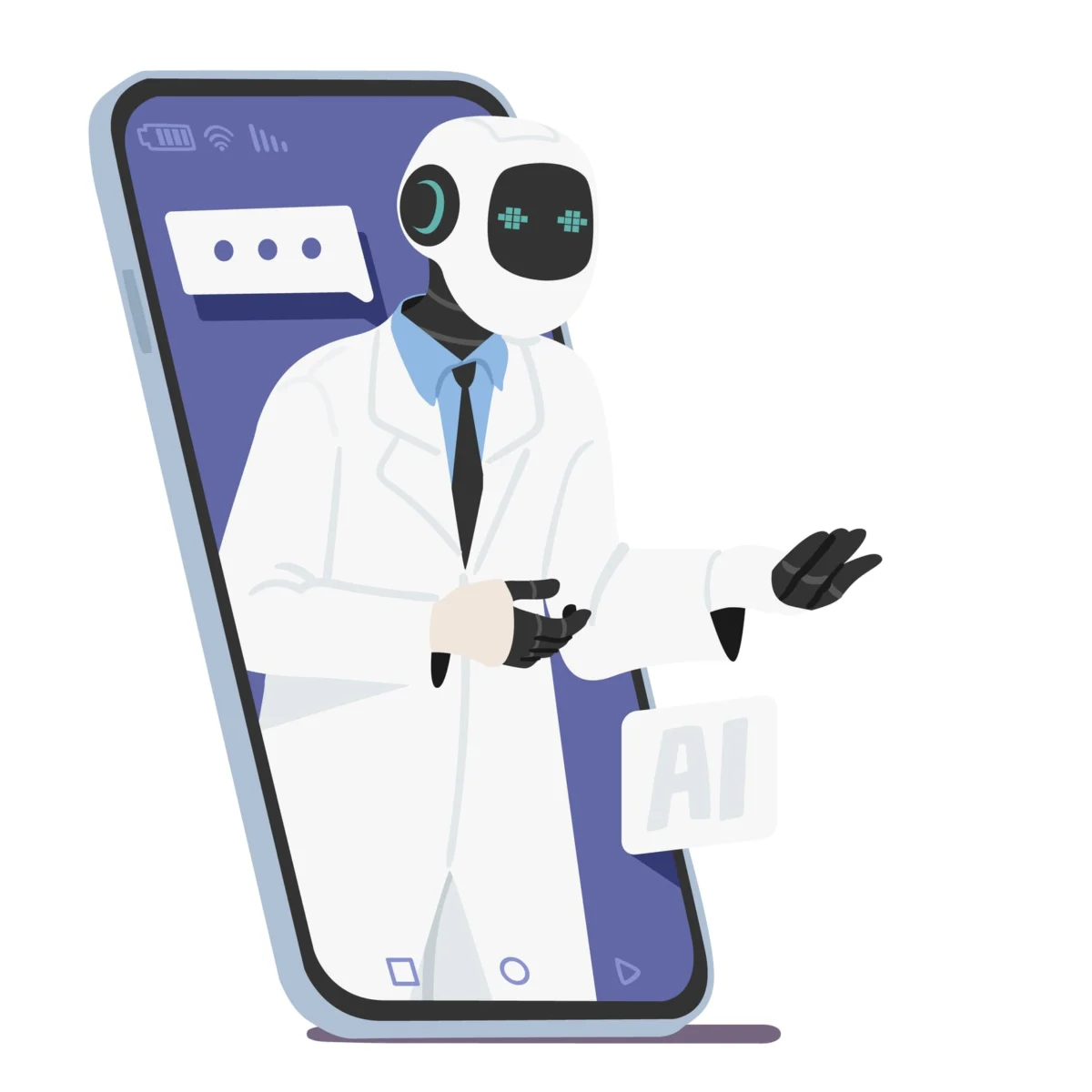
In the landscape of modern medicine, few fields are as ripe for disruption as sleep health. For years, the bottleneck in treating conditions like obstructive sleep apnea (OSA) and chronic insomnia has been the lack of scalable, real-time patient support. However, a new wave of artificial intelligence (AI) conversation bots—capable of operating 24/7—is stepping in to fill critical gaps in patient education, therapy adherence, and longitudinal follow-up care.
By offloading routine inquiries and providing instantaneous behavioral coaching, these digital tools are not just supplementing clinical work; they are fundamentally redefining the "stepped care" model in sleep medicine.
The Evolution of the Digital Assistant
For cognitive psychologist Dan Gartenberg, PhD, the impetus to integrate AI into his sleep wellness app, SleepSpace, was born of necessity. As the CEO of the platform, Gartenberg found himself inundated with an overwhelming volume of user inquiries regarding sleep hygiene, CPAP equipment, and the nuances of sleep science. The lag time between a user’s question and his expert response was often measured in weeks—a delay that, in the context of sleep deprivation, can be the difference between treatment success and abandonment.
Nearly a year ago, Gartenberg introduced "Dr. Snooze," an AI-driven chatbot designed to handle the heavy lifting of user engagement. The results were immediate. "It handles around 90% of my interactions with users that I used to have to do myself," Gartenberg notes. This shift highlights a critical truth in digital health: AI is not merely a tool for automation; it is a tool for accessibility. Because Dr. Snooze does not sleep, the app can now provide instantaneous, evidence-based guidance at the exact moment a user experiences a sleep-related query, regardless of the hour.
Chronology: From Static Information to Interactive Coaching
The journey toward AI-enabled sleep care has evolved rapidly over the last decade. Historically, patient education was front-loaded. On the day a patient was diagnosed with sleep apnea or insomnia, they were inundated with a firehose of information—manuals, instructional videos, and dietary advice—at a time when they were most sleep-deprived and cognitively taxed.
Will Kaigler, founder and CEO of sovaSage, argues that this traditional model is fundamentally flawed. "That’s not how people learn," Kaigler explains. "People learn by small, very focused, timely information that’s delivered in an easy way to consume, that answers their need at that point, and then perhaps reinforces it down the road."
The chronology of this shift can be viewed through the lens of recent technological milestones:
- The Static Era (2010–2018): Patients relied on static PDFs and generic manufacturer videos. If a CPAP mask leaked, the patient had to navigate a lengthy manual or wait days for a callback from a respiratory therapist.
- The Wearable Integration (2018–2022): The rise of high-fidelity sleep trackers allowed for better data collection but lacked the interpretive layer required to guide patients on what to do with that data.
- The Generative AI Era (2023–Present): With the integration of Large Language Models (LLMs) and specialized knowledge bases, bots like sovaSage’s "Jeanie" and SleepSpace’s "Dr. Snooze" now synthesize peer-reviewed research, equipment manuals, and behavioral therapy protocols into conversational, human-like responses.
Supporting Data and Evidence-Based Performance
The efficacy of these bots is increasingly backed by clinical research. At the SLEEP 2024 conference, researchers presented findings suggesting that chatbot-supported digital Cognitive Behavioral Therapy for Insomnia (CBT-I) significantly improves adherence and short-term sleep outcomes compared to standalone digital programs.
The data supports a "force multiplier" approach. For instance, while a single therapist might be limited to treating 20 to 30 patients a week, the integration of an AI layer allows that same clinician to oversee a much larger cohort. By automating the intake process—collecting sleep diaries, monitoring wearable-derived metrics, and flagging abnormal patterns—AI platforms allow human clinicians to focus their energy on the "human" aspects of medicine: empathy, complex case management, and emotional support.
Furthermore, these systems are built on robust training sets. Jeanie, for example, is trained on extensive manufacturer documentation. If a patient reports a specific issue—such as a persistent headache while using CPAP—the bot can parse through technical manuals to suggest specific adjustments, such as cleaning the exhalation port or modifying the humidifier settings, in seconds.
Official Responses and the Hybrid Model
Industry leaders are unanimous in one regard: AI is not a replacement for the human clinician. Instead, they champion a "hybrid model" of care.
"Here’s the key: It can’t just be a pure technology play," Kaigler emphasizes. "It has to be a hybrid where you’re enabling trained, talented coaches and respiratory therapists to intervene and problem-solve at the right time. In the end, it’s always going to be people intervening and providing that point of care when the patient most needs it."
Gartenberg echoes this sentiment, acknowledging that while AI excels at scalability and logic, it lacks the nuance of human empathy. In the proposed "stepped care" model, AI serves as the first line of defense. It handles the "low-level" troubleshooting—reminding a patient to remove a plastic insert from a new mask or suggesting they practice wearing their PAP mask while watching TV to reduce anxiety. If the bot fails to resolve the issue or if the patient’s data indicates a decline in health (such as a consistently high apnea-hypopnea index), the system is hard-coded to escalate the case to a live respiratory therapist or physician.
Implications for the Future of Sleep Medicine
The implications of this transition are vast, particularly regarding the democratization of sleep care.
1. Scaling CBT-I
CBT-I is the gold standard for insomnia, yet a chronic shortage of trained behavioral therapists prevents millions from receiving it. AI-supported CBT-I programs can provide the structure of the therapy while offering on-demand reinforcement, effectively keeping patients engaged during the difficult periods of treatment that typically lead to dropouts.
2. Longitudinal Maintenance
One of the most persistent failures in sleep medicine is the "set it and forget it" mentality. Once a patient starts CPAP, follow-up often drops off. AI creates a continuous loop of engagement. If a patient logs that they have been awake for more than 15 minutes, the bot can gently remind them of the core behavioral principles of sleep restriction therapy, acting as a "coach in the pocket" that prevents minor setbacks from turning into full-blown treatment failure.
3. Remote Patient Monitoring (RPM)
As these platforms work toward full HIPAA compliance, the role of the physician will shift toward data-driven oversight. Instead of seeing patients for routine check-ins, doctors will review AI-curated dashboards that highlight actionable patterns: sleep efficiency trends, circadian misalignment, and device usage metrics. This allows for a more proactive medical approach, where interventions happen before a patient decides to quit therapy.
4. Therapeutic Extensions
The future roadmap for these platforms includes allowing clinicians to "upload" their own expertise. A therapist could theoretically input their preferred guided relaxation tracks or hypnotherapy scripts into the AI, effectively extending their therapeutic reach beyond the constraints of a 50-minute clinical session.
Conclusion: A New Standard of Care
The integration of AI conversation bots into sleep medicine is not about replacing the clinician; it is about extending the clinician’s reach. By providing 24/7 access to information, troubleshooting, and behavioral support, these tools are addressing the critical friction points that have long hindered the efficacy of sleep therapies.
As the industry moves toward a more integrated, hybrid approach, the focus remains on the patient. Whether it is an AI bot like Jeanie helping a patient overcome mask anxiety or Dr. Snooze providing evidence-based sleep hygiene tips at 3:00 a.m., the goal is the same: to ensure that when a patient is ready to improve their sleep, the support they need is available immediately.
In the words of Kaigler, the technology is the engine, but the human clinician remains the driver. By leveraging the speed of AI and the empathy of professionals, the field of sleep medicine is entering an era where high-quality care is no longer limited by the clock or the caseload.
Reference
- Schade M, Roberts D, Gartenberg D, et al. Technology-assisted CBTi+, CBTi, and sleep hygiene. Sleep. 2024;47(suppl 1):A170-1.