











By Editorial Staff
Published May 8, 2026
The United States labor market is currently navigating a precarious period of transition, defined by a paradoxical combination of resilient headline employment figures and underlying structural weakness. According to the latest Bureau of Labor Statistics (BLS) report released this Friday, total nonfarm payrolls increased by 115,000 in April, maintaining an unemployment rate of 4.3%. While these figures managed to outperform initial economist expectations, a deeper dive into the sectoral data reveals a stark reality: the American economy is increasingly reliant on a single industry to prevent widespread job losses.
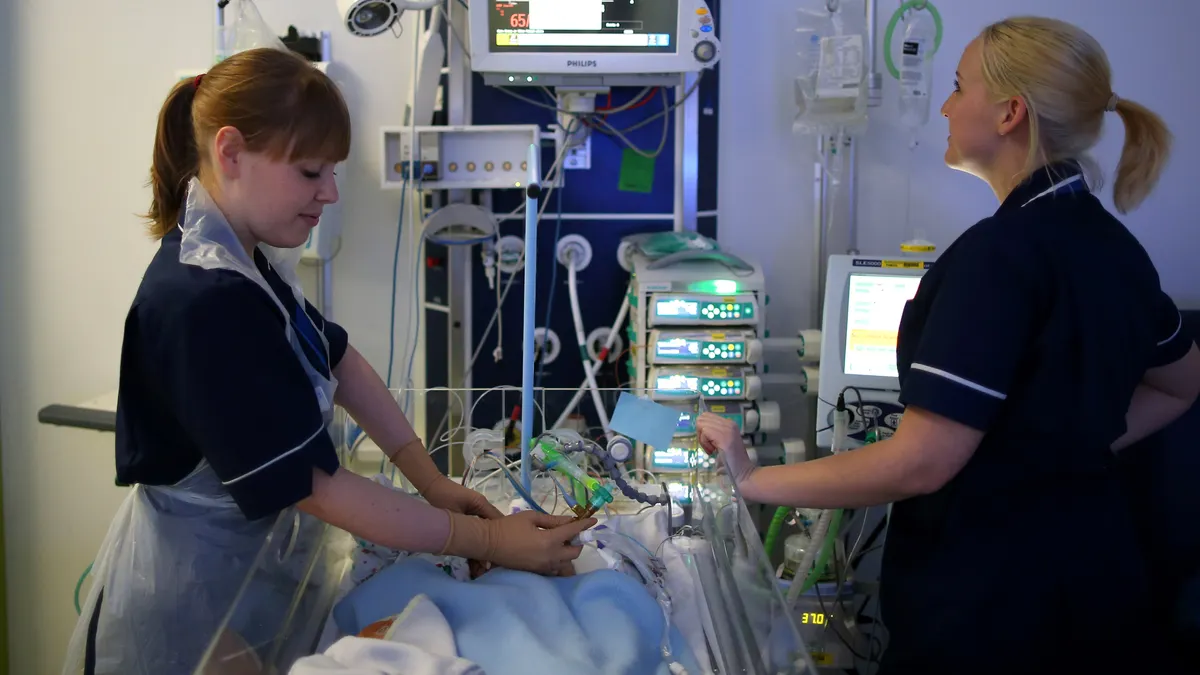
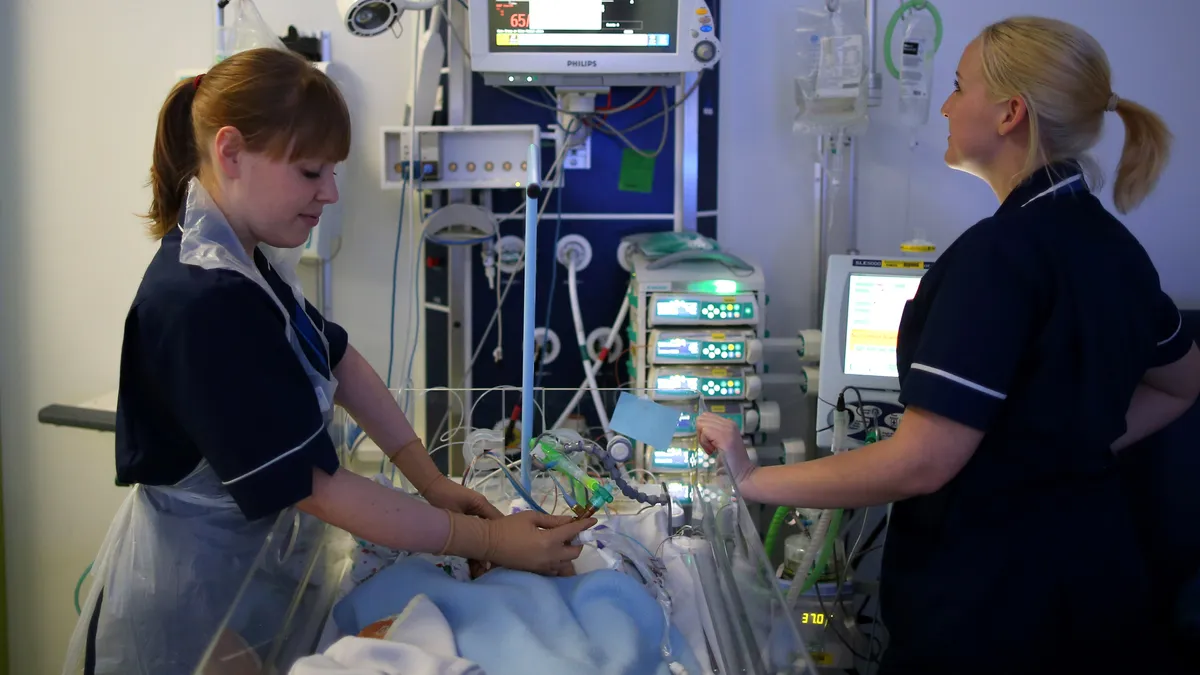
Healthcare, which added 37,000 jobs in April alone, has become the primary engine of national employment growth. Without this sustained surge in medical staffing, analysts warn that the broader U.S. labor market would be in a state of net contraction. This reliance on the healthcare sector exposes a significant vulnerability, particularly as global instability and rapid technological shifts begin to dampen corporate expansion plans across other industries.
The Core Data: A Sectoral Breakdown
The April jobs report highlights a growing divergence between the healthcare sector and the rest of the private economy. Of the 115,000 jobs added, more than 15,000 were concentrated in nursing and residential care facilities, while home health services accounted for over 11,000 new positions.
This hiring trend is not an anomaly but a continuation of a pattern that has defined the labor market for the past year. Cory Stahle, a senior economist at Indeed, highlighted the gravity of this trend in a recent statement. "Remove healthcare from the equation, and the US labor market is actually losing more than it is gaining—shedding employment in 10 of the last 12 months on a 3-month average basis," Stahle noted.
For policymakers and business leaders, this represents a "clear vulnerability." As other sectors—such as manufacturing, retail, and finance—struggle to gain momentum, the labor market’s health has become tethered to the aging demographic demands of the healthcare industry. When the "healthcare engine" eventually hits a capacity limit or undergoes a correction, the lack of secondary drivers in the economy could lead to a rapid deterioration in overall labor market health.
Chronology of Market Stressors
The current stagnation in non-healthcare hiring did not occur in a vacuum. A series of interconnected events over the last six months has fundamentally altered the calculus for American employers.
- Late 2025 – The AI Pivot: As corporations rushed to integrate generative AI and machine learning, capital expenditure shifted away from human labor. Surveys conducted earlier this year indicated that companies were choosing to invest in automation software rather than expanding their headcount, leading to a "wait-and-see" approach to hiring.
- Early 2026 – Global Geopolitical Volatility: The escalation of the conflict in Iran served as a major shock to global supply chains and energy prices. This uncertainty rippled through U.S. boardrooms, causing many firms to freeze hiring plans for non-essential roles.
- Q1 2026 – Erosion of Expansion Plans: By March 2026, data showed a clear decline in employer confidence. The cost of borrowing, coupled with the instability of international trade, effectively halted the expansionary hiring phase that had characterized the post-pandemic recovery.
- April 2026 – The "Selective" Shift: The latest report confirms that while hiring has not stopped, it has become increasingly precise. Employers are now prioritizing "execution-ready" candidates, signaling an end to the "growth-at-all-costs" hiring mentality.
The Rise of the "Selective" Labor Market
Ger Doyle, Regional President for North America at ManpowerGroup, characterizes the current environment as one where employers are becoming "increasingly selective." This shift marks a significant departure from the competitive, candidate-driven market of previous years.

"Employers currently hold more leverage in the labor market and are hiring with greater precision," Doyle explained. "They are concentrating demand in senior, specialized, and execution-ready roles."
This shift has created a significant hurdle for entry-level job seekers. While companies are willing to pay a premium for experienced staff who can immediately contribute to efficiency—a necessity in a period of economic tightening—they are less willing to invest in training or onboarding junior talent. Consequently, the "skills gap" is widening, as the barrier to entry for the workforce becomes increasingly difficult to overcome for recent graduates and those looking to transition into new industries.
Demographic Shifts and Structural Realities
Beyond the immediate economic pressures, long-term structural changes are exerting downward pressure on the total labor supply. Nicole Bachaud, an economist at ZipRecruiter, points to a "demographic recalibration" that is fundamentally changing how we define a "healthy" labor market.
"An aging population, a reduction in immigration, and a low birth rate are all contributing factors to the pullback in labor supply," Bachaud said.

This demographic contraction means that the number of jobs required to keep the unemployment rate stable is lower than it was in previous decades. When the labor force participation rate falls, headline unemployment figures can be misleadingly optimistic. Even with 115,000 new jobs, the labor market is not necessarily "stronger"—it is simply smaller. This shrinking pool of available workers, combined with an aging population that requires more healthcare, creates a feedback loop: the economy is forced to hire more healthcare workers to care for the retiring generation, leaving fewer workers available for other productive sectors of the economy.
Implications for Policy and Industry
The reliance on healthcare as a primary economic buoy carries several implications for the coming fiscal year:
1. The Risk of Over-Reliance
If the healthcare sector faces a labor shortage or a funding crisis, there is no current substitute to take up the slack in job creation. Economists suggest that the U.S. must diversify its economic drivers, potentially through revitalized investment in infrastructure or green energy sectors that have shown, thus far, a lack of consistent job growth.
2. The Changing Nature of Human Capital
With companies shifting toward "precision hiring," the burden of workforce development may fall more heavily on public-private partnerships. If the private sector is unwilling to train entry-level employees, vocational education and government-sponsored apprenticeship programs may become the only viable pathways to ensure a steady pipeline of skilled labor.
3. Monetary Policy and Market Resilience
The Federal Reserve faces a complex task. With the labor market cooling in most sectors but remaining robust in healthcare, traditional interest rate levers may have uneven effects. A tightening of monetary policy intended to curb inflation could inadvertently crush the sectors already struggling to survive, while potentially doing little to slow the growth in healthcare, where demand is largely inelastic.
Conclusion: A New Economic Normal
The April 2026 jobs report serves as a diagnostic tool for a maturing, and perhaps cooling, economy. The resilience of the U.S. labor market is currently a veneer—a thin layer of healthcare-driven growth masking deeper structural stagnation.
As geopolitical tensions continue to affect corporate strategy and demographic shifts permanently alter the labor supply, the market is entering a "new normal." In this environment, stability will be defined not by the sheer volume of jobs created, but by the quality, precision, and sustainability of the roles that remain. For job seekers, the message is clear: specialization and experience are now the currencies of the labor market. For policymakers, the warning is equally explicit: the current reliance on the healthcare sector is a fragile foundation upon which to build the future of the American economy.
Additional reporting by Emily Olsen.