








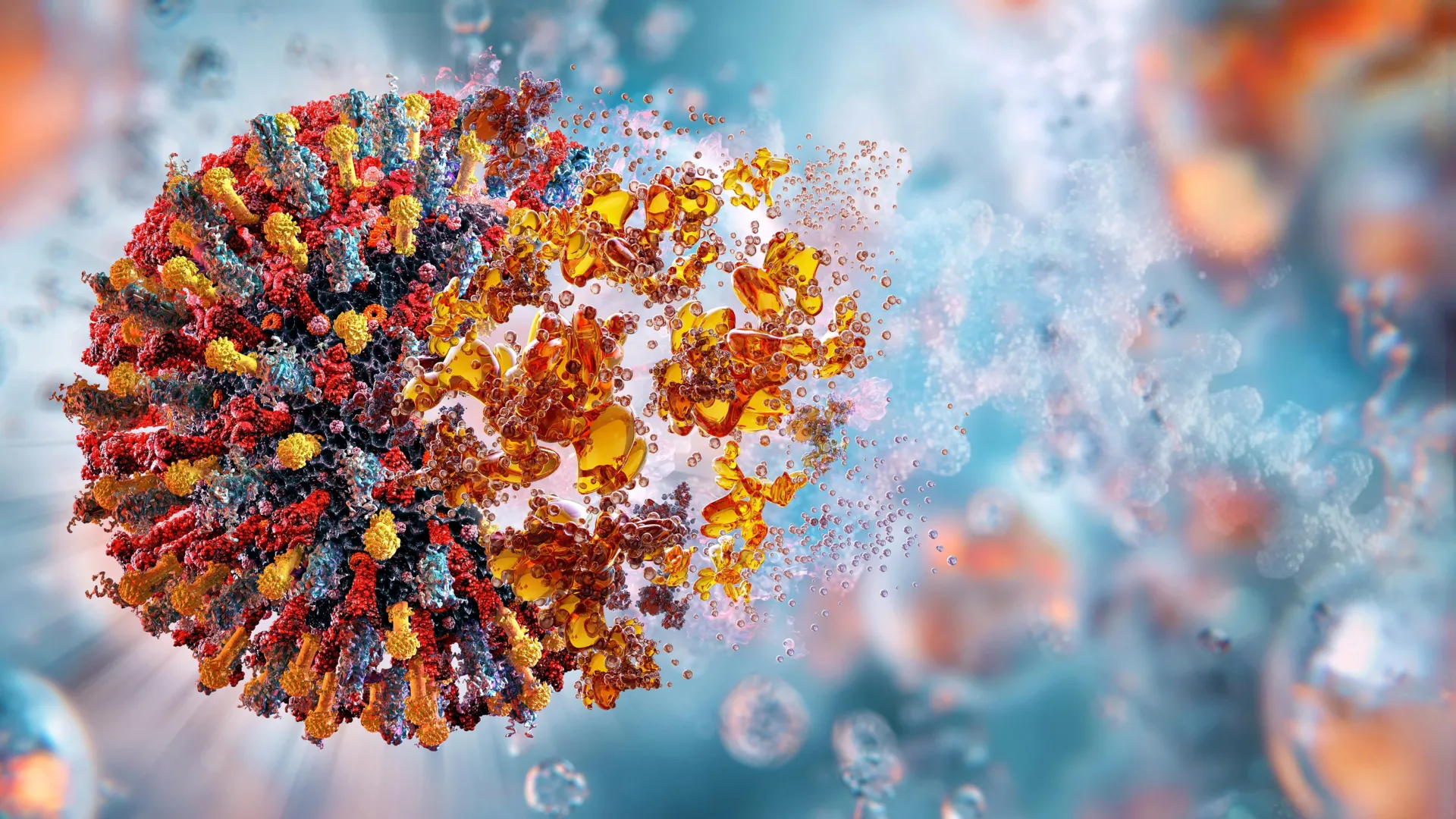
In a significant breakthrough for molecular virology, researchers at the University of Maryland, Baltimore County (UMBC) have decoded a fundamental biological "switch" that enteroviruses—a family of pathogens responsible for everything from the common cold to polio and myocarditis—use to hijack human cellular machinery. The study, published in the journal Nature Communications, provides the first high-resolution look at how these viruses initiate their replication process, a discovery that could pave the way for a new generation of broad-spectrum antiviral medications.
The Viral Menace: Understanding Enteroviruses
Enteroviruses represent a persistent global health challenge. While many infections remain mild, the family includes notorious pathogens such as poliovirus, enterovirus D68, and coxsackieviruses. These viruses are known to cause a spectrum of clinical conditions, including acute flaccid myelitis, encephalitis, and severe heart inflammation (myocarditis).
Despite their clinical impact, these viruses possess remarkably compact genomes. Unlike complex human cells, an enterovirus carries only a tiny strand of RNA that must perform dual, conflicting duties: serving as a blueprint for viral protein synthesis and acting as a template for copying its own genetic material. The UMBC team, led by Deepak Koirala, an associate professor of chemistry and biochemistry, sought to understand how the virus manages this delicate transition—a process that has remained a central mystery in virology for decades.
Chronology of Discovery: From Cloverleaf to Complex
The journey to this discovery began with earlier research from Koirala’s lab, which identified a unique, cloverleaf-shaped RNA structure at the terminal end of the viral genome. This structure was suspected to be the "control center" for viral replication.
In the latest study, Koirala and his team, including recent Ph.D. graduate Naba Krishna Das, advanced this work by capturing a detailed snapshot of how this RNA cloverleaf interacts with viral proteins. The research followed a meticulous, multi-stage timeline:
- Structural Identification: The team first utilized X-ray crystallography to visualize the spatial arrangement of the RNA cloverleaf and the viral protein 3CD.
- Binding Kinetics: Using isothermal titration calorimetry (ITC), the researchers measured the thermodynamic heat exchange when the protein bound to the RNA, providing precise data on the strength of the interaction.
- Temporal Tracking: Through biolayer interferometry (BLI), the team monitored the binding stability, allowing them to track how long these molecules remained coupled in real-time.
- Complex Assembly Analysis: By integrating these methods, the team confirmed that the 3C domain of the 3CD protein binds directly to the RNA, which then recruits a host protein known as PCBP2 to assemble the full replication machinery.
The Mechanics of Replication: A Molecular Switch
At the heart of the study is the 3CD protein, a fusion protein critical to the virus’s survival. The 3C portion functions as a protease, carving long amino acid chains into the specific proteins required for the virus to function. The 3D portion acts as an RNA polymerase, the enzyme responsible for copying the virus’s RNA genome.
"Human cells do not naturally contain this type of polymerase," Koirala explains. "The virus is essentially bringing its own specialized manufacturing equipment into the cell."
The team’s most striking finding is that this entire complex functions like a binary switch. When the 3CD protein is firmly attached to the RNA cloverleaf, the virus prioritizes the replication of its genome. When the protein detaches, the RNA becomes available for translation—the process of producing viral proteins. By controlling the attachment and detachment of these molecules, the virus efficiently cycles between building new parts and assembling new viral particles.
Settling the Scientific Debate: The Two-Molecule Model
For years, the scientific community has been divided over the exact composition of the replication complex. Some models suggested that a single fused pair of proteins handled the RNA, while others argued for different configurations.
The UMBC team’s high-resolution structural analysis finally resolved the debate. Their data showed that two full 3CD molecules, each carrying its own RNA polymerase, bind side-by-side on the viral RNA. While the specific evolutionary advantage of requiring two copies remains under investigation, the finding provides a clear, actionable template for researchers looking to interrupt the process.
Official Perspectives: The Genius of the Viral Genome
Dr. Deepak Koirala emphasizes that the study highlights the incredible efficiency of viruses. "Viruses are so, so clever," Koirala says. "Their entire genome is equivalent to about one mRNA sequence in humans, yet they are so effective. My lab has been really motivated to understand how RNA viruses produce their proteins inside the cell and multiply their genome to make more virus particles."
The collaborative nature of the study, combining biochemistry, structural biology, and biophysics, allowed the team to see past the static images of previous research. "We previously determined the structure of the RNA alone, and other groups determined the structure of 3C and 3D, but now we’ve captured the structure of the RNA and proteins together, so we know how they are interacting," Koirala added.
Implications for Future Antiviral Development
The most promising aspect of the research is the discovery that this replication mechanism is nearly identical across all seven enteroviruses tested by the team. This extreme conservation suggests that the RNA cloverleaf structure is essential to the virus’s survival; any mutation that significantly alters this structure would likely render the virus unable to replicate.
This vulnerability presents a major opportunity for pharmaceutical development. Currently, most antiviral drugs are designed to target a single, specific pathogen. However, because this RNA-protein interface is highly conserved across the entire enterovirus family, it could serve as a target for "broad-spectrum" antivirals.
A New Strategic Layer
"Drugs disrupting 3C and 3D activity are already in development, but now we have another layer to test," says Koirala. "What if we target the RNA, or the RNA-protein interface, so that we break the interaction? That is another opportunity. Now that we have high-resolution structures, you can precisely design drug molecules to target them."
By targeting the interface where the protein "plugs into" the RNA, scientists could potentially create a drug that stops the "switch" from turning on. If the virus cannot secure its replication complex to the cloverleaf, it cannot copy its genome, effectively halting the infection in its tracks.
Conclusion: The Path Ahead
The UMBC study serves as a masterclass in the importance of basic science. By investigating the fundamental mechanisms of how these pathogens operate at the molecular level, researchers are laying the groundwork for clinical applications that could one day treat or prevent a wide range of enteroviral illnesses.
As the team moves forward, the focus will likely shift to high-throughput drug screening, where the newly mapped structures will be used to test thousands of chemical compounds to see which ones effectively block the 3CD-RNA interaction. While the transition from the laboratory bench to the pharmacy shelf is a long and rigorous process, the clarity provided by this research has significantly narrowed the field, turning a once-nebulous viral mystery into a concrete target for future medicine.
For now, the work of Koirala, Das, and their colleagues serves as a potent reminder: even the most sophisticated and deadly viruses have structural weaknesses, and with enough precision, those weaknesses can be exploited to protect human health.