











As we cross the age of 55, the conversation around fitness often shifts from aesthetics to longevity and functional independence. Among the most critical areas to maintain is shoulder health. Your shoulders are the unsung heroes of your daily life—they are the hinges that allow you to reach for a glass on a high shelf, carry groceries, push yourself out of a chair, and maintain the posture that defines your physical presence.
Yet, shoulder strength is frequently overlooked until it begins to wane. A Certified Strength and Conditioning Specialist (CSCS) can confirm that the degradation of shoulder stability is not an inevitable byproduct of aging, but rather a result of neglected movement patterns. By incorporating targeted, dumbbell-focused training, individuals over 55 can reclaim their range of motion, enhance joint stability, and move with renewed confidence.
The Science of Shoulder Longevity
The human shoulder is a complex ball-and-socket joint that relies on a delicate balance of muscles, tendons, and ligaments. Research published in the Journal of Orthopaedic & Sports Physical Therapy and other clinical repositories highlights that as we age, the cumulative wear and tear on the rotator cuff and surrounding stabilizers can lead to diminished power output.
This decline affects more than just your ability to lift a heavy box; it impacts your proprioception—the body’s ability to sense its position in space. When shoulders become unstable, the brain compensates by tightening other muscle groups, which often leads to neck tension, back pain, and a guarded, hunched posture. Strengthening the shoulders is, therefore, a dual-action intervention: it builds muscle mass while simultaneously correcting the postural imbalances that often plague the over-55 demographic.
Why Dumbbells Outperform Machines
While gym machines offer a guided, fixed path for movement, they can sometimes mask muscular imbalances. If your left shoulder is slightly weaker than your right, a barbell or a fixed machine allows the stronger side to compensate, masking the deficit and potentially exacerbating the weakness over time.
Dumbbells offer a distinct advantage: they require each limb to work independently. This forces the smaller stabilizer muscles of the rotator cuff to activate, ensuring that your core, upper back, and arms remain engaged through the entirety of the movement. For the over-55 trainee, this added layer of control is essential. It ensures that you aren’t just moving weight from point A to point B, but are actively teaching your nervous system to coordinate joint stability.
Chronology of Progress: A Strategic Approach
Many individuals approach shoulder training as an afterthought, tagging a few half-hearted raises onto the end of a workout. To see true progress, training must be structured. The following five exercises represent a comprehensive system designed to hit every facet of shoulder functionality: pressing strength, lateral stability, and frontal control.
1. The Half-Kneeling Shoulder Press
The half-kneeling press is the gold standard for overhead stability. By performing the move while kneeling on one knee, you remove the legs as a potential base for momentum.
- The Benefit: It forces the core to brace, preventing the common mistake of arching the lower back. It requires the shoulder to move through a full range of motion while maintaining strict alignment.
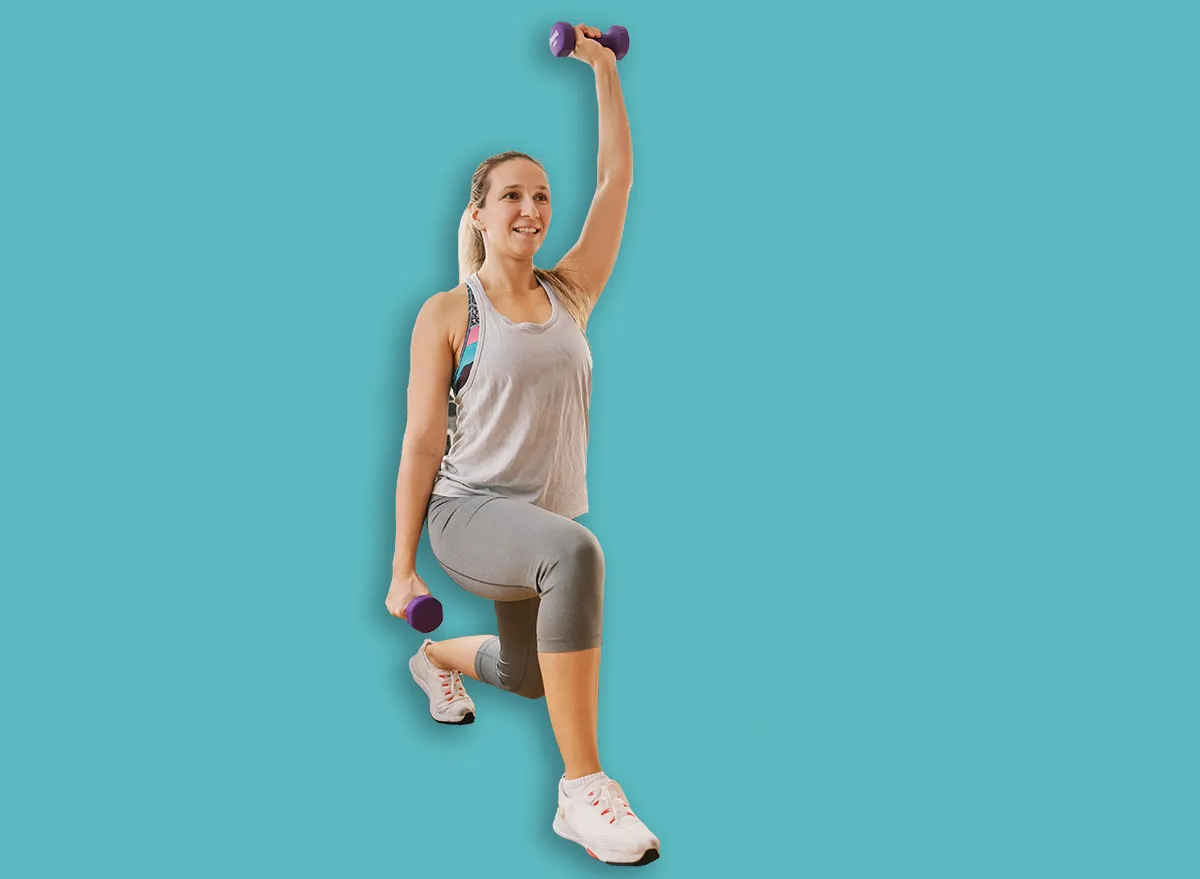
- The Execution: Begin in a half-kneeling position, with the knee opposite to the working arm on the ground. Brace your core, keep your ribcage tucked down, and press the dumbbell toward the ceiling.
2. The Seated Single-Arm Shoulder Press
Seated variations are excellent for those who want to isolate the upper body without the added challenge of balance.
- The Benefit: The seated position removes lower-body assistance, putting the entire load on the shoulder girdle and triceps. Performing this unilaterally (one arm at a time) reveals and corrects side-to-side strength disparities.
- The Execution: Sit tall in a chair or on a bench. Keep your torso rigid. Press the dumbbell upward, focusing on a smooth, controlled descent. Avoid leaning away from the weight.
3. Lateral Raises
The side (medial) deltoids are responsible for the aesthetic width of the shoulder and the functional ability to lift objects to the side.
- The Benefit: These do not require heavy weights. In fact, using excessive weight often recruits the traps, defeating the purpose.
- The Execution: With light dumbbells, stand tall. Leading with your elbows, lift the weights out to your sides until they reach shoulder height. Keep the movement slow and deliberate.
4. Seated Bilateral Shoulder Press
When you move to a standard seated press using both arms, the goal is to build power.
- The Benefit: This move mimics the functional motion of lifting heavy objects overhead. It engages the upper back to provide a stable base, protecting the joints during the press.
- The Execution: Sit on a sturdy bench with back support. Maintain a neutral spine. Press both dumbbells simultaneously, ensuring they move in a straight, vertical line.
5. Front Raises
Frontal raises target the anterior deltoids, which are essential for any task involving reaching forward.
- The Benefit: This is vital for maintaining the ability to place items on shelves or carry objects in front of the body.
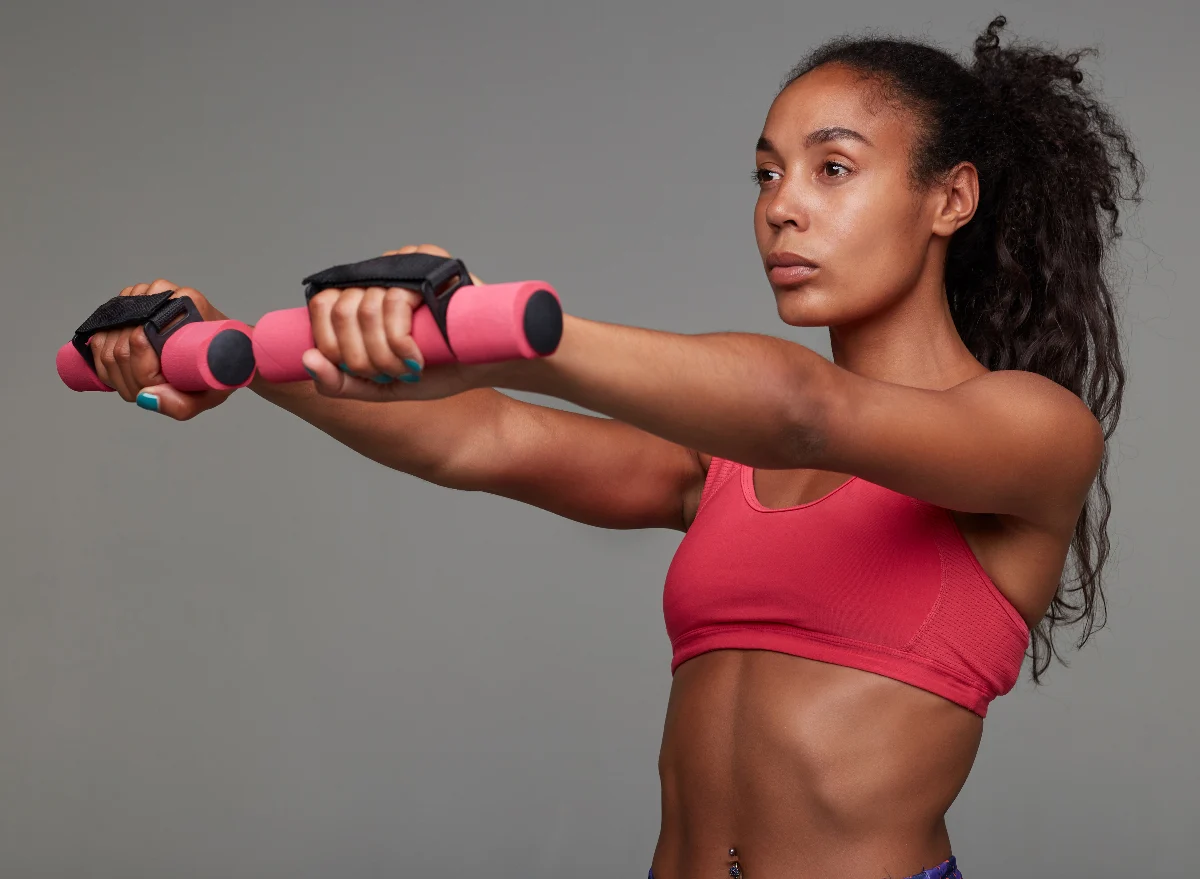
- The Execution: Stand with feet hip-width apart. Raise one or both dumbbells to shoulder height, keeping the palms facing down. Avoid swinging the weight using your torso.
Supporting Data: The Impact of Resistance Training
Clinical studies, including those highlighted in PubMed, consistently demonstrate that resistance training in older adults is the most effective tool for preventing sarcopenia (age-related muscle loss). In the context of the shoulders, consistent loading—even with modest weights—increases bone density in the humerus and strengthens the connective tissues surrounding the glenohumeral joint.
When these exercises are performed with a focus on "Time Under Tension," the muscle fibers undergo a metabolic stress that signals the body to repair and strengthen. By keeping the rep ranges in the 8–15 bracket and focusing on a controlled tempo (e.g., 2 seconds to lift, 3 seconds to lower), you maximize the training stimulus while minimizing the risk of joint inflammation.
Official Guidance and Professional Perspectives
Experts in sports medicine and physical therapy frequently emphasize that "clean movement" is the prerequisite for "strong movement." Before attempting these exercises, individuals with a history of shoulder injury should consult with a physician or a physical therapist.
The professional consensus for those over 55 is to prioritize:
- Warm-up: Always perform dynamic stretches, such as arm circles and band pull-aparts, to prepare the rotator cuff.
- Range of Motion: Never force a rep if you feel a "pinch" in the joint. Adjust your angle of pressing to find a pain-free path.
- Progressive Overload: Increase the weight only when the current weight feels light and your form is flawless.
Implications for Daily Life
The ultimate goal of this training isn’t to look like a bodybuilder; it is to ensure that your body remains a capable vessel. When your shoulders are strong, you are less likely to experience the "forward-rolled" shoulders common in sedentary populations. You gain the ability to lift a heavy suitcase into an overhead bin without fear of injury, and you maintain the functional capacity to perform home maintenance, gardening, or playing with grandchildren without restriction.
Furthermore, shoulder stability has a ripple effect. It improves your ability to perform push-ups, improves your rowing mechanics, and even makes walking more efficient by stabilizing the upper body during the gait cycle.
Conclusion: The Path Forward
Building stronger shoulders after 55 is an attainable goal that requires consistency rather than intensity. By committing to these five moves—half-kneeling presses, seated single-arm presses, lateral raises, bilateral presses, and front raises—you are investing in your long-term independence.
Remember the golden rule: Quality over quantity. If you rush, you lose the benefits. If you focus on the squeeze, the control, and the breath, you will find that your shoulders don’t just feel stronger—they feel more reliable. Start with manageable weights, stay dedicated to your form, and within a few weeks, you will notice the difference in every aspect of your daily life. Your shoulders are ready to work; give them the tools they need to stay strong for decades to come.