







In a breakthrough that could fundamentally reshape the landscape of oncology and gerontology, researchers have identified a critical vulnerability in "senescent cells"—often referred to as "zombie cells." By dismantling the biological shield that allows these cells to persist, scientists at the MRC Laboratory of Medical Sciences (LMS) and Imperial College London have discovered a strategy to trigger self-destruction in these harmful agents. This discovery offers a promising new avenue for enhancing the efficacy of cancer treatments and potentially mitigating age-related diseases.
The study, published in the prestigious journal Nature Cell Biology, represents a significant pivot in how we view the lifecycle of cells within the human body, particularly those that have reached a state of "senescence."
The Paradox of the Zombie Cell
To understand the magnitude of this discovery, one must first understand the paradox of senescence. For decades, cellular senescence was viewed through a largely positive lens. When a cell incurs damage, it stops dividing to prevent the propagation of potential mutations, effectively acting as a biological circuit breaker against tumor growth. In this light, senescence was a vital defense mechanism.
However, as the science of cellular biology has matured, a more sinister reality has emerged. While senescent cells do not divide—and therefore do not contribute to tumor mass directly—they remain metabolic powerhouses. They enter a state of permanent, "zombie-like" suspension, neither dead nor fully functional. In this state, they become highly active, secreting a cocktail of inflammatory proteins, growth factors, and enzymes that remodel the local tissue environment.
This "Secretory Phenotype" is problematic for two major reasons:
- Tumor Progression: The molecules released by these cells can encourage neighboring healthy cells to turn cancerous, promote the spread of metastasis, and recruit immune cells that actually protect the tumor rather than attacking it.
- The Chemotherapy Trap: Perhaps most ironically, standard chemotherapy—designed to stop the rapid proliferation of cancer cells—often forces healthy cells into senescence. Thus, in the process of treating the primary tumor, chemotherapy can inadvertently create a "nursery" of senescent cells that may eventually drive tumor recurrence or aggressiveness.
Chronology of the Discovery: A High-Throughput Search
The journey to this discovery was not a stroke of luck, but the result of a rigorous, systematic screening process involving 10,000 distinct chemical compounds.
Phase I: Identifying the Target
The team, led by postdoctoral researcher Mariantonietta D’Ambrosio and Professor Jesus Gil, sought to find "senolytic" drugs—therapies that specifically target and eliminate senescent cells while leaving healthy, functional cells untouched. Working in tandem with Imperial College London’s Department of Medicinal Chemistry, the team focused on "covalent compounds." Unlike standard drugs that bind weakly to proteins, covalent compounds form permanent chemical bonds, allowing them to effectively "lock" a protein, thereby inhibiting functions previously thought to be "undruggable."
Phase II: The Screening Process
The researchers applied these 10,000 compounds to an array of cell cultures. The screening process was designed to identify candidates that induced cell death specifically in the senescent population. After months of iterative testing, the list was narrowed down to four highly promising candidates.
Phase III: Uncovering the GPX4 Mechanism
Upon analyzing the four candidates, a recurring pattern emerged: three of the four compounds were targeting the exact same protein: GPX4 (Glutathione Peroxidase 4). This was the breakthrough moment. GPX4 is a critical survival protein that acts as an antioxidant shield, protecting cells from a specific type of programmed cell death known as "ferroptosis"—a death process driven by iron accumulation and reactive oxygen species.
Supporting Data: The Science of Ferroptosis
The discovery that senescent cells rely heavily on GPX4 to survive explains their "fragile state." These cells live under constant, high-stress conditions characterized by high levels of internal damage.
Researchers describe the senescent cell’s relationship with GPX4 as akin to an athlete running on a badly injured ankle while masking the pain with heavy medication. The underlying structural damage (the oxidative stress) is still present, but the "medication" (GPX4) allows the cell to continue its problematic activities.
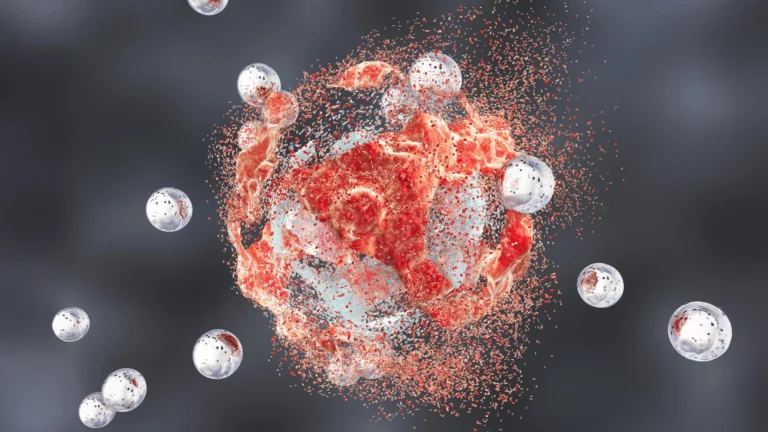
When the experimental drugs were introduced, they effectively inhibited GPX4. With their protective shield removed, the senescent cells were unable to manage the internal oxidative stress, causing them to succumb to ferroptosis—a catastrophic collapse of the cell’s internal architecture.
In preclinical mouse models, the results were striking:
- Tumor Reduction: The application of these senolytic agents significantly reduced the size of tumors in three distinct cancer models.
- Survival Rates: Treated mice demonstrated improved survival outcomes compared to control groups.
- Selectivity: The treatment demonstrated a high degree of specificity, sparing healthy, non-senescent cells from the triggered cell death.
Official Responses and Expert Perspectives
The research has garnered significant attention within the oncology community, as it addresses a long-overlooked aspect of cancer biology.
Mariantonietta D’Ambrosio, lead author of the study, highlighted the necessity of this shift in focus: "Senescence was considered for a long time to be positive, because senescent cells don’t proliferate. But with time you also see the negative side… they secrete a lot of factors that influence neighboring cells and induce even more proliferation, metastasis, and recruitment of bad parts of the immune system. For this reason, we tried to find some drugs that were able to kill the senescent cells."
Professor Jesus Gil, Head of the Senescence group at the LMS, emphasized that while the findings are robust, the path to clinical application requires further investigation into systemic effects. "In mouse models we saw that these drugs reduced tumour size, and improved survival," Gil stated. "Now we need to see the effect on the immune system. Is the improvement also awakening the ‘good side’ of the immune system—T cells and natural killer cells—that helps to kill the tumor?"
Gil added that the future of this therapy lies in personalization. "Once we know more, the next step is to understand which cancer cell types or specific patients might better respond to this treatment. For example, if a patient undergoing chemotherapy overexpressed GPX4, then you could use this approach in combination with existing drugs to improve efficacy."
Clinical Implications: The Future of Cancer Therapy
The potential implications of targeting GPX4 extend far beyond the laboratory. By integrating these senolytic agents into current standard-of-care protocols, clinicians may be able to "clean up" the tumor microenvironment during or after chemotherapy.
1. Augmenting Immunotherapy
One of the most exciting prospects is the potential for senolytics to "re-awaken" the immune system. If senescent cells are actively suppressing the body’s natural ability to hunt tumors, their removal could allow T-cells and natural killer cells to penetrate the tumor more effectively, thereby boosting the success rates of modern immunotherapies.
2. Treating Age-Related Disease
Because senescence is a primary driver of aging and age-related conditions like fibrosis, this discovery may eventually transcend cancer. By clearing senescent cells from aging tissues, researchers hope to mitigate the chronic inflammation that underlies many diseases of late life.
3. Precision Medicine
The ability to identify patients whose tumors are "senescence-heavy"—perhaps those who show high expression of GPX4—could lead to a new diagnostic biomarker. This would allow oncologists to tailor treatment plans, adding senolytic agents to a regimen only when the patient is most likely to benefit, thereby minimizing potential toxicity and maximizing therapeutic impact.
Conclusion
The identification of GPX4 as a point of vulnerability in senescent cells represents a sophisticated evolution in our fight against cancer. By moving beyond simply trying to stop the division of cells and instead targeting the "zombie" cells that manipulate the body’s defenses, researchers have opened a new front in medical science.
The collaborative effort between the MRC Laboratory of Medical Sciences, Imperial College London, the Institute of Oncology Research (IOR) in Switzerland, and the M3 Research Centre at the University of Tübingen underscores the global commitment to solving this complex puzzle. As the research moves toward clinical trials, the medical community remains hopeful that the "zombie cells" that have hindered progress for so long may finally be turned into the key to unlocking better outcomes for patients worldwide.