











By Editorial Staff
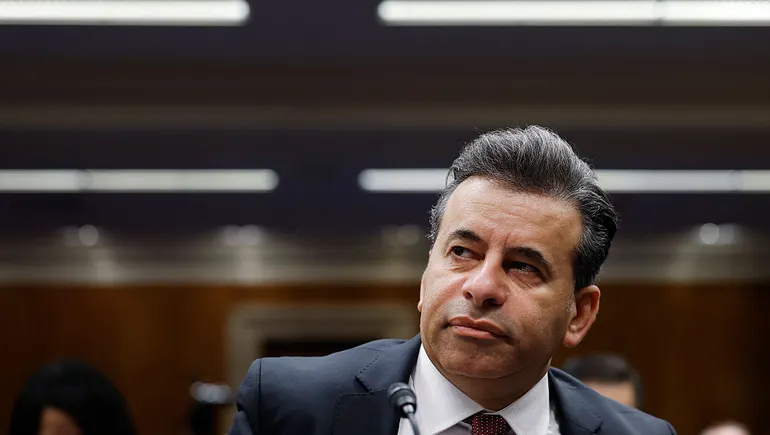
Marty Makary, the prominent medical researcher and surgeon who assumed leadership of the U.S. Food and Drug Administration (FDA) with a mandate to disrupt the status quo, has resigned from his post. His departure marks the conclusion of an intensely turbulent chapter for the nation’s top health regulator, characterized by ambitious reform efforts, massive internal restructuring, and a persistent atmosphere of institutional instability.
President Donald Trump confirmed the resignation during a briefing with reporters on Tuesday, describing Makary as a "wonderful man" and a personal friend, while acknowledging that his tenure had been fraught with difficulty. Kyle Diamantas, who previously served as the FDA’s deputy commissioner for food, has been tapped to serve as acting commissioner while the administration searches for a permanent successor.
The Rise of an Outsider: A Mandate for Reform
When President Trump first nominated Makary in November 2024, the choice was viewed as a deliberate attempt to inject a fresh, critical perspective into the federal bureaucracy. As a prolific author and researcher at Johns Hopkins, Makary had built a public persona around the critique of institutional "groupthink." His influential book, Blind Spots, resonated with a segment of the public and policymakers who felt that the public health apparatus had become sclerotic and resistant to necessary evolution.
During his confirmation hearing in March 2025, Makary sailed through the Senate, buoyed by his reputation as an expert on patient safety, healthcare economics, and surgical protocols. He entered the FDA with a clear, aggressive agenda: to modernize drug development, reduce the regulatory burden on pharmaceutical companies, and embrace emerging technologies.
Chronology of a Tumultuous Tenure
The trajectory of Makary’s leadership can be divided into three distinct phases: the ambitious launch of new policies, the descent into administrative chaos, and the final months of political pressure and high-level attrition.
- November 2024: President Trump nominates Marty Makary to lead the FDA.
- March 2025: Makary is confirmed by Congress with bipartisan support.
- May 2025: Vinay Prasad, a vocal critic of the FDA, is appointed to lead the office evaluating vaccines and gene therapies.
- November 2025: George Tidmarsh, the head of CDER, resigns amid an internal conduct probe.
- Late 2025/Early 2026: The agency experiences mass layoffs and significant turnover, leading to widespread concern among industry stakeholders.
- April 2026: Vinay Prasad departs the agency for the second time; Richard Pazdur, the veteran oncology leader, announces his retirement.
- May 2026: Makary resigns as FDA Commissioner.
Policy Ambitions vs. Operational Realities
Makary’s tenure was marked by a series of bold, high-profile policy initiatives intended to accelerate the delivery of medical products to patients. Among his most significant efforts was the introduction of a new national priority review voucher program and the implementation of a specialized approval framework for ultra-rare diseases. Furthermore, he aggressively pushed for the integration of Artificial Intelligence into the agency’s review processes to streamline decision-making.
Perhaps his most controversial policy was the push to require only one pivotal clinical trial for approval, a departure from the traditional two-trial gold standard. Proponents argued this would save years of development time and millions of dollars. Critics, however, warned that such a move could compromise the scientific rigor and safety profile of new therapies.
These initiatives were consistently hampered by a growing sense of unpredictability within the agency. Analysts at firms like Stifel noted that the FDA’s decision-making process had become notoriously opaque. A notable example was the agency’s erratic stance on a closely watched gene therapy for Huntington’s disease, which left investors and biotech executives scrambling to interpret shifting regulatory signals.
The Crisis of Internal Stability
The most damaging aspect of Makary’s tenure was the profound, persistent turnover in the agency’s leadership ranks. The FDA, which relies on institutional memory and scientific continuity, found itself in a state of flux that many industry observers described as alarming.
The saga of Vinay Prasad remains emblematic of this instability. Appointed to oversee vaccines and gene therapies, Prasad—a noted skeptic of standard regulatory practices—resigned just two months into his tenure, only to be rehired and then depart permanently in April 2026. Simultaneously, the resignation of George Tidmarsh, the former head of the Center for Drug Evaluation and Research (CDER), created a power vacuum that forced Makary to scramble for replacements.
The appointment and subsequent retirement of Richard Pazdur further exacerbated these tensions. Pazdur, a pillar of the FDA’s oncology group, reportedly clashed with Makary over the pace and safety of drug review acceleration. His departure signaled to many that the agency was losing its most experienced voices in favor of an ideological, fast-tracked approach that many veteran staff found unsustainable.
Official Responses and Industry Fallout
The Department of Health and Human Services (HHS) has remained largely silent regarding the fallout of the Makary era, declining to provide comment on the specific causes of the resignation or the status of ongoing internal probes.
The biotech industry, which had initially been hopeful about Makary’s deregulatory platform, eventually turned cautious. John Crowley, head of the Biotechnology Innovation Organization (BIO), issued a stark warning following the resignation of key personnel, noting that the sector requires stability above all else. "It is time to right the ship," Crowley stated, reflecting a growing consensus that the FDA’s unpredictability had become a drag on medical innovation rather than a catalyst for it.
Broader Implications: A Lesson in Regulatory Reform
The resignation of Marty Makary raises fundamental questions about the nature of the FDA and the feasibility of "outsider" reforms. The agency’s primary mandate—ensuring the safety and efficacy of the products it regulates—often exists in tension with the industry’s desire for speed and lower costs.
Makary’s tenure serves as a case study in the difficulties of balancing these competing interests. While his goals of fostering innovation and reducing bureaucratic bloat were well-received by many in the private sector, his methods created a friction that resulted in the loss of critical institutional talent.
As the administration looks to the future, the primary challenge for the next commissioner will be the restoration of institutional trust. The biotech and pharmaceutical industries are currently in a delicate recovery phase following a multi-year downturn. To maintain the competitiveness of the U.S. healthcare market, the agency must find a way to reconcile its need for rapid, modern approval pathways with the requirement for rigorous, predictable, and transparent regulatory science.
Whether the next leader will continue the path set by Makary or attempt to restore the more traditional, cautious pace of the agency remains the central question facing the U.S. health sector. For now, the resignation of Marty Makary brings to a close a tumultuous chapter that has left the FDA, its staff, and the industries it oversees in a state of necessary, yet uncertain, transition.