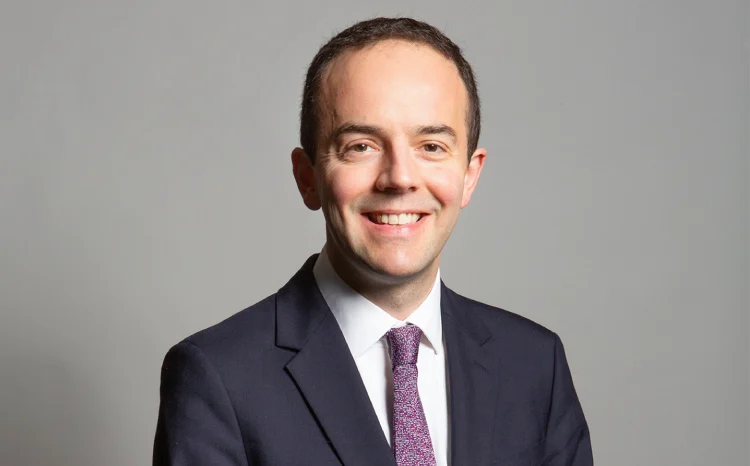
Executive Summary: A Ministry in Transition
In a seismic shift for the UK government, James Murray, the Member of Parliament for Ealing North, has been appointed as the new Secretary of State for Health and Social Care. The promotion comes at a moment of profound instability within the Labour administration, following the high-profile resignation of his predecessor, Wes Streeting.
Murray, who had been serving as the Chief Secretary to the Treasury since September 2025, steps into one of the most challenging portfolios in government. His appointment is widely seen as an attempt by Prime Minister Sir Keir Starmer to stabilize his cabinet amidst a growing rebellion within his own ranks. As the National Health Service (NHS) faces persistent pressures, Murray’s background in treasury management and urban development will be tested against the realities of a healthcare system in need of radical reform.
The Resignation of Wes Streeting: A Loss of Faith
The catalyst for this ministerial reshuffle was the abrupt departure of Wes Streeting, who had held the health portfolio since July 2024. Streeting’s resignation, tendered on 13 May 2026, was not merely a career move but a stinging indictment of the Prime Minister’s leadership.
In his resignation letter, Streeting cited a fundamental breakdown in his confidence regarding Sir Keir Starmer’s ability to lead the Labour Party into the next general election. Streeting wrote, “It is now clear that you will not lead the Labour Party into the next general election and that Labour MPs and Labour Unions want the debate about what comes next to be a battle of ideas, not of personalities or petty factionalism.”
The departing secretary emphasized that it would be “dishonourable and unprincipled” to remain in his post while harboring such deep-seated reservations. His call for a “broad” contest for the future of the party suggests that the Labour government is entering a period of internal soul-searching, with Streeting positioning himself as a key figure in the debate regarding the party’s future trajectory.
Chronology of a Political Crisis
The events leading to Murray’s appointment did not occur in a vacuum. The past week has seen a rapid acceleration of political volatility within the Labour Party:
- May 7, 2026: Labour suffers widespread losses in local elections, fueling internal discontent regarding the government’s policy direction and economic performance.
- May 11, 2026: Calls for Prime Minister Sir Keir Starmer to resign mount as backbench MPs express frustration over the administration’s lack of vision.
- May 12, 2026: Dr. Zubir Ahmed, the Health Innovation and Safety Minister, resigns his post. His departure is explicitly linked to the party’s disastrous performance in the 2026 Scottish Parliament elections and his loss of faith in Starmer’s leadership.
- May 13, 2026: Wes Streeting formally submits his resignation letter to the Prime Minister.
- May 14, 2026: Downing Street confirms the appointment of James Murray as the new Health and Social Care Secretary. Simultaneously, Lucy Rigby is named the new Chief Secretary to the Treasury, with Rachel Blake succeeding her as Economic Secretary.
The Rise of James Murray: A Profile
James Murray brings a wealth of administrative and legislative experience to the Department of Health and Social Care (DHSC). First elected as the MP for Ealing North in 2019, Murray has climbed the ranks of the Labour Party with a reputation for pragmatism and fiscal discipline.
Previous Experience
Murray’s career is characterized by a blend of local government expertise and national economic policy:
- Treasury Roles: Prior to his new appointment, Murray served as Chief Secretary to the Treasury. His earlier roles included Exchequer Secretary and Shadow Financial Secretary, giving him a robust understanding of the budgetary constraints that will inevitably dictate his approach to the NHS budget.
- Local Government and Housing: Murray served as an executive member for housing and development at Islington Council from 2010 to 2016. Furthermore, he acted as the Deputy Mayor of London for housing and residential development from 2016 to 2019 under Sadiq Khan. This focus on "housing and development" is significant; many analysts believe that the intersection of health outcomes and housing conditions will be a key pillar of Murray’s tenure.
Official Responses and Internal Dynamics
The transition of power has been marked by a mix of formal civility and underlying tension.
The Outgoing Minister’s Stance
Despite his criticisms of the Prime Minister, Streeting displayed professional decorum regarding his successor. Posting on X (formerly Twitter), Streeting wrote: “Congratulations to @jamesmurray_ldn on his promotion to Health & Social Care Secretary. He inherits a wonderful team and an important mission. He has my full support.”
The Prime Minister’s Rebuttal
Sir Keir Starmer, while accepting Streeting’s resignation, attempted to project stability. In his response, the Prime Minister expressed a hope that the two could "work together to show that Labour in power can address the problems our opponents exploit." However, political analysts suggest that the Prime Minister’s position remains precarious, as he seeks to prevent a domino effect of further cabinet resignations.
Implications for the NHS and Health Policy
The appointment of a former Treasury official to the top health job signals a potential shift in the DHSC’s strategic priorities.
1. Fiscal Tightrope
With the UK economy facing significant headwinds, Murray’s primary challenge will be balancing the insatiable demand for NHS funding with the fiscal conservatism he cultivated at the Treasury. Unlike Streeting, who often focused on structural reform and market-based solutions, Murray may prioritize efficiency audits and a forensic analysis of departmental spending.
2. The Integration of Social Care
Murray’s background in housing and local government may suggest a renewed focus on the integration of social care with the NHS. If the new Secretary can leverage his relationships with local authorities—developed during his time at Islington Council and City Hall—he may succeed where others have failed in creating a more seamless discharge process from hospitals into community care.
3. Political Stability
The most immediate implication is the survival of the Starmer government. By promoting a trusted loyalist like Murray, the Prime Minister is attempting to signal "business as usual." However, the departure of Dr. Zubir Ahmed and Wes Streeting within 48 hours of each other suggests that the government is dealing with a structural loss of morale that cannot be easily fixed by a cabinet reshuffle.
Supporting Data: The Context of Discontent
The dissatisfaction within the Labour Party is rooted in tangible electoral data. The 2026 local and Scottish Parliament elections served as a referendum on the government’s performance.
- Public Sentiment: Recent polling indicates that the electorate is increasingly concerned with the government’s handling of the cost-of-living crisis and public services.
- The "Innovation" Gap: The resignation of Dr. Zubir Ahmed highlights a specific concern regarding health innovation. Critics argue that the government has been too slow to adopt AI-driven healthcare solutions and decentralized safety protocols, leaving the NHS vulnerable to technological stagnation.
Looking Ahead: The Challenges Facing Murray
James Murray takes office at a watershed moment. The NHS is grappling with record waiting lists, a demoralized workforce, and the long-term demographic challenge of an aging population.
Murray’s tenure will be defined by three key performance indicators:
- Waiting List Reduction: Can he achieve the targets that Streeting struggled to meet?
- Party Unity: Can he maintain the support of backbenchers while implementing potentially unpopular fiscal decisions?
- The General Election: Can he restore public confidence in Labour’s ability to manage the health service before the next national vote?
As the dust settles in Whitehall, the political focus will inevitably shift toward how Murray handles his first 100 days. While he enters the role with the backing of the Prime Minister and a solid track record in financial management, he faces an uphill battle in a political climate defined by fragmentation, dissent, and high public expectations.
For now, the government remains on high alert. The appointment of Lucy Rigby and Rachel Blake to the Treasury ensures that the economic team remains aligned with the Prime Minister’s vision, but the question remains: is this a consolidation of power, or merely a temporary reprieve for a government in decline?
The coming weeks will reveal whether James Murray is the stabilizer the Starmer administration desperately needs, or if he has simply stepped into a role that has become, in the current political climate, a poisoned chalice.
This report was compiled using the latest briefings from Downing Street and analysis of the political landscape as of May 14, 2026.