










April 15, 2026 — Just as the dust settles on the protracted and contentious Fiscal Year 2026 appropriations process—a cycle that left the Department of Homeland Security in a precarious state of limbo well into the spring—Washington has already pivoted to the next fiscal battleground. On April 3, 2026, the White House unveiled its budget request for Fiscal Year 2027, signaling a renewed attempt to fundamentally reshape the nation’s public health infrastructure.
For stakeholders in mental health, substance use, and community recovery services, the document contains both familiar threats and nuanced departures from previous years. As the gears of the federal budget machine grind into motion, the document serves as a stark reminder that while the White House sets the tone, Congress ultimately holds the purse strings.
The Core Facts: A Blueprint for Consolidation
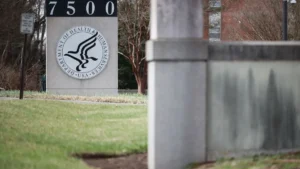
The President’s FY 2027 budget request is characterized by a bold, albeit familiar, ambition: the structural reorganization of the Department of Health and Human Services (HHS). At the center of this proposal is the total elimination of two pillar agencies: the Substance Abuse and Mental Health Services Administration (SAMHSA) and the Health Resources and Services Administration (HRSA).
In their place, the White House proposes the creation of a centralized entity dubbed the "Administration for a Healthy America." This proposal is not merely an exercise in nomenclature; it represents a significant consolidation of power and funding streams. Furthermore, the administration has explicitly called for the merger of three major block grants—the Substance Use Prevention Treatment & Recovery (SUPTR) block grant, the Mental Health Services block grant, and the State Opioid Response (SOR) grant.
Proponents of this consolidation argue that it reduces bureaucratic redundancy and creates a more agile, streamlined response to public health crises. Critics, however, fear that such a massive structural overhaul would destabilize existing delivery systems, potentially leading to a temporary paralysis of critical services at the state and local levels.
Chronology of the Budgetary Transition
The transition from FY 2026 to FY 2027 has been characterized by what many on Capitol Hill describe as "appropriations fatigue."
- Mid-February 2026: After months of legislative gridlock, Congress and the White House finalize the bulk of the FY 2026 budget. Notably, the Department of Homeland Security remains an outlier, lacking a long-term funding solution.
- Late January 2026: The President announces the "Great American Recovery Initiative" (GARI), intended to address systemic gaps in recovery and homelessness services.
- April 3, 2026: The White House releases the official FY 2027 budget request, outlining the proposed sunsetting of SAMHSA and HRSA.
- April 15, 2026: Industry analysts and congressional staffers begin the deep-dive review of the budget’s impact on specialized grant programs.
This compressed timeline leaves little room for advocacy groups to rest. As the FY 2027 cycle begins, the primary challenge remains the reconciliation of the White House’s executive vision with the established institutional preferences of the legislative branch.
Analyzing the Shifting Grant Landscape
One of the most granular elements of the FY 2027 proposal is the selective culling of the "Programs of Regional and National Significance" (PRNS). This is where the White House’s strategy shows the most variation from the previous year.
The Survival List
Unlike the FY 2026 proposal, which sought to strip funding from nearly all PRNS grant programs, the current budget suggests a more surgical approach. Programs that have been granted a reprieve include:
- Building Communities of Recovery (BCOR) grants: Vital for supporting grassroots, peer-led recovery efforts.
- The Peer Technical Assistance Center: Essential for training the workforce that supports individuals in recovery.
- The Recovery Community Services Program: A cornerstone for localized, long-term support.
The Targeted Cuts
Conversely, the administration has doubled down on its intent to zero out several programs that many advocates consider indispensable. On the list for potential termination are:
- Tribal Behavioral Health Grants: A critical resource for indigenous communities facing disparate health outcomes.
- Interagency Task Force on Trauma-Informed Care: A program designed to bridge the gap between various federal departments.
- Strategic Prevention Framework (SPF): A foundational model for data-driven prevention at the state level.
- Sober Truth on Preventing Underage Drinking (STOP) grants: A long-standing initiative focused on youth prevention.
- Drug Abuse Warning Network (DAWN): A vital public health surveillance system that tracks substance-related emergency department visits.
The selection of these specific programs for elimination suggests a philosophical preference for direct, outcome-oriented funding over broader, infrastructure-based surveillance and interagency coordination.
The "GARI" Disconnect: Promises vs. Appropriations
A notable point of contention in the FY 2027 budget is the "Great American Recovery Initiative" (GARI). When it was announced in January, the initiative was framed as a landmark investment in recovery infrastructure, including a $100 million "Streets" initiative targeted at assisting homeless populations in eight major cities.
However, a rigorous review of the budget documents reveals a significant gap between the political rhetoric of the initiative and its fiscal reality. There is no line-item funding specifically designated for GARI. Instead, the administration suggests that the initiative will function as a coordinating framework, effectively "meshing" existing, long-funded programs into a new narrative.
For lawmakers, this lack of new investment is a red flag. If a program is to be a national initiative, it typically requires dedicated funding rather than the re-labeling of legacy programs. This inconsistency has led to skepticism among congressional appropriators who are wary of "re-branding" exercises that do not provide additional resources to overburdened local governments.
Official Responses and Legislative Outlook
The reaction from Capitol Hill has been one of cautious resistance. During the previous fiscal cycle, Congress categorically rejected the administration’s attempts to eliminate SAMHSA and HRSA, opting instead to maintain funding levels that reflected the status quo.
"The legislative branch has historically been the guardian of these agencies," says a senior policy advisor on the House Appropriations Committee. "We understand the value of these institutions in a way that suggests they are not merely ‘bureaucracy’ to be trimmed, but the backbone of our national response to the opioid epidemic and the mental health crisis."
Conversations with staffers indicate that the appetite for a wholesale reorganization of HHS remains low. There is a general consensus that disrupting the current health infrastructure during a period of ongoing public health volatility is an unnecessary risk. Most observers expect that, as in the previous year, the final appropriations bills will bear little resemblance to the President’s request regarding the structural dissolution of these agencies.
Implications for Public Health
The potential implications of these budget recommendations are far-reaching. Should the White House succeed in its proposal to consolidate block grants, states would face a massive transition in how they manage federal health dollars.
- Administrative Burden: Consolidating three distinct block grants into one requires states to rewrite their internal accounting, auditing, and reporting mechanisms.
- Resource Allocation: While proponents claim consolidation offers flexibility, critics worry it will lead to "silo-jumping," where funding intended for specific, targeted mental health initiatives is diluted or diverted toward other, more politically expedient projects.
- Surveillance Gaps: The elimination of programs like the Drug Abuse Warning Network (DAWN) would leave the country with a "blind spot" in real-time data regarding the drug overdose crisis, hindering the ability of local health departments to respond to spikes in illicit drug activity.
The Path Forward
As the budget process moves into the committee markup phase, the focus will shift toward protecting essential services from the proposed cuts. The "hopeful" outlook expressed by stakeholders is predicated on the historical trend of congressional independence.
The next several months will be defined by rigorous oversight hearings. Agency heads will be called to defend the proposed cuts to Tribal Behavioral Health and the Strategic Prevention Framework, and legislators will demand clarification on the true nature of the Great American Recovery Initiative.
Ultimately, the FY 2027 budget is a statement of priorities. By signaling a desire to consolidate and cut, the White House has set the stage for a debate that will pit the desire for streamlined government against the established need for robust, specialized public health interventions. For the communities that rely on these grants, the upcoming months will be a period of intense advocacy, as the battle for the fiscal future of American public health begins in earnest.