


Years after the global declaration that the COVID-19 pandemic had subsided, the remnants of that era remain etched into the architecture of daily life. We see it in the permanent shift toward remote work, the casual acceptance of mask-wearing in public spaces, and the ubiquitous presence of hand sanitizer stations. Yet, beyond these tangible markers lies a more profound, invisible shift: a collective fracture in the foundational trust we once placed in science, governance, and the flow of information.
This psychological hangover has recently been thrust into the spotlight by a rare hantavirus outbreak aboard a cruise ship. Despite official reassurances from global health authorities that the risk to the general public remains negligible, the immediate, widespread alarm—coupled with a pervasive skepticism—suggests that the trauma of the pandemic has fundamentally altered how we perceive health threats.
The Cruise Ship Incident: A Microcosm of Modern Anxiety
The recent hantavirus outbreak serves as a stark case study in the modern "anxiety cycle." When reports first surfaced that passengers on a cruise ship had contracted the virus—a disease typically associated with rodent droppings rather than person-to-person transmission—the global reaction was swift and disproportionately fearful.
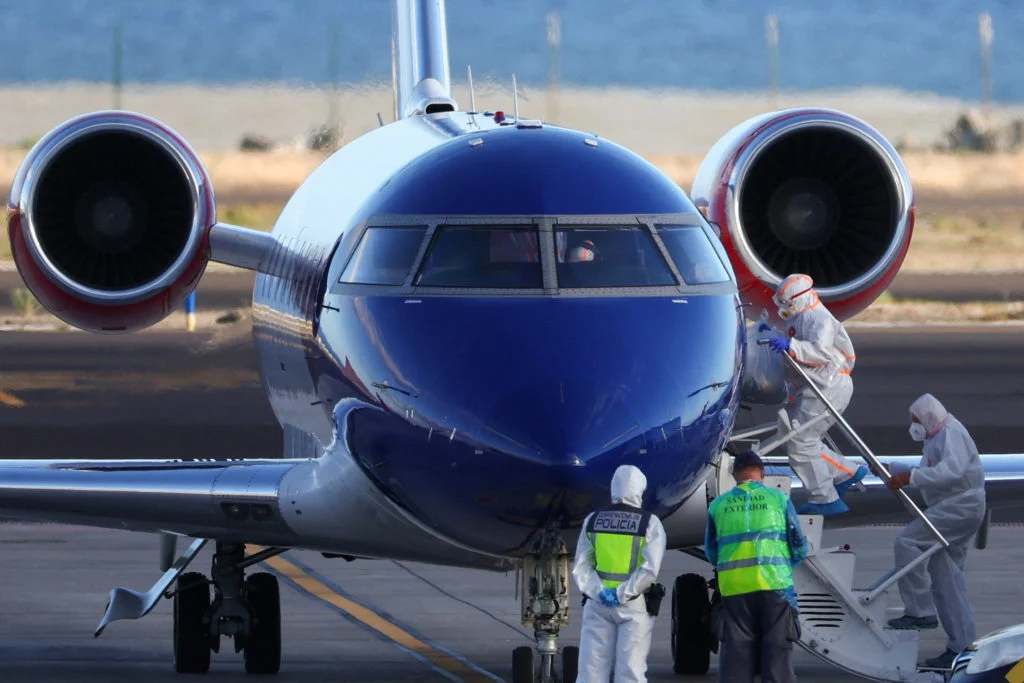
According to the World Health Organization (WHO), 11 cases have been linked to the cruise, with eight confirmed through laboratory testing and several deaths reported. Despite the clinical clarity of the transmission vector, the arrival of the ship in Tenerife, Spain, sparked protests and deep unease among local residents.
"We feel a bit unsafe. We don’t feel as though there are 100% security measures in place to welcome it," said Samantha Aguero, a local resident. "This is a virus, after all, and we have lived this during the pandemic."
Aguero’s sentiment is not an outlier; it is a manifestation of a society that has lost its ability to calibrate risk. In a pre-2020 world, such an event would likely have remained a localized medical curiosity. Today, it is viewed through the lens of a "what if" scenario, fueled by memories of lockdowns and global contagion.
Chronology of a Crisis: From Outbreak to Institutional Decay
To understand the current climate of apprehension, one must look at the timeline of the COVID-19 pandemic and its subsequent institutional erosion.
- Pre-2020: Outbreaks of localized diseases—such as West Nile virus, Legionnaire’s disease, or even past hantavirus clusters in South America—were generally handled by medical professionals with limited public panic. Science was viewed by the layperson as a repository of definitive facts.
- 2020–2022: The pandemic brought the scientific process into the public living room. For the first time, millions watched in real-time as hypotheses were tested, failed, and replaced.
- The Pivot: Because the public largely equated "science" with "infallible truth" rather than a "self-correcting process," the inevitable shifting of guidelines (on masking, transmission, and vaccines) was interpreted as deception or incompetence.
- Present Day: We reside in a "post-trust" environment where any new health announcement is filtered through a prism of cynicism. The cruise ship outbreak is simply the latest catalyst for this systemic doubt.
The Deconstruction of Scientific Literacy
Sociologists suggest that the damage done to the public’s perception of science is one of the most critical casualties of the last five years. Elisa Jayne Bienenstock, a research professor at Arizona State University, argues that the pandemic forced a collision between the scientific method and the public’s need for certainty.
"Most people don’t think of science as a process. In their mind, science is an answer; it’s a fact," Bienenstock explains. "When those facts showed that they weren’t 100% reliable, it started undermining trust. It showed that scientists don’t always have the answer. A lot of people in crisis don’t care what the answer is, as long as there’s a definitive answer. Science doesn’t provide that when it doesn’t know."
This disconnect has left a vacuum. In the absence of a trusted scientific voice, individuals are increasingly turning to non-experts, social media rumors, and echo chambers to "explain" how the world works.
Supporting Data: The Ripple Effects of Mistrust
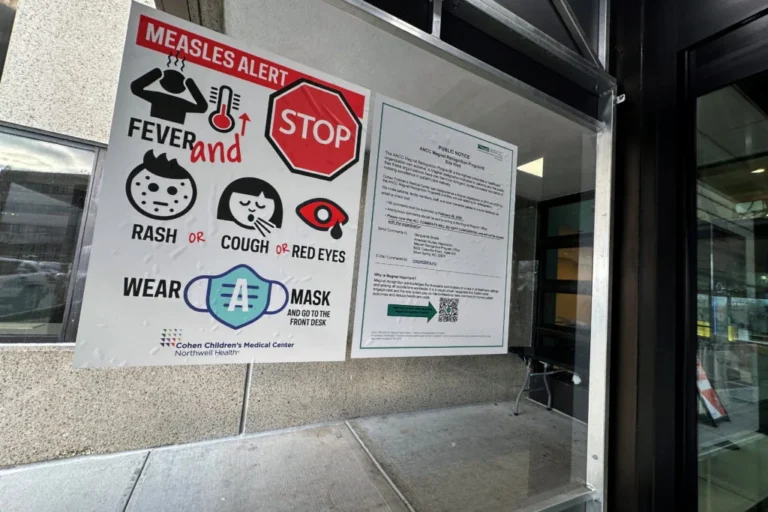
The consequences of this erosion are not merely theoretical; they are measurable. Public health officials have noted a steady decline in routine vaccination rates for preventable childhood diseases, such as measles.
Karlynn Morgan, a 76-year-old retired nurse-anesthetist, has watched this decline with profound concern. "I think people are far less trusting because people used to take their children and just get the vaccine," she says. "When I was a kid, there was no question you were going to go get your shot."
This trend is corroborated by data from health organizations globally, showing that the "vaccine hesitancy" born during the pandemic has metastasized into a general skepticism of clinical medicine. This has created a dangerous environment where people are hyper-sensitive to low-risk events (like a cruise ship virus) but under-responsive to high-risk health behaviors (like skipping standard immunizations).
Official Responses and the Role of Leadership
Health authorities have been tasked with the nearly impossible mission of communicating in a climate where their credibility is constantly under siege. The WHO and various national health departments continue to issue clear, data-driven guidelines, yet these messages are often drowned out by the noise of misinformation.
Michele Gelfand, a professor of organizational behavior at the Stanford Graduate School of Business, emphasizes that the burden of rebuilding this trust lies with leadership.
"They set the threat signal," Gelfand notes. "They determine whether people get accurate information about the level of danger or distorted information that serves a political agenda. When leaders send clear, honest signals, people can calibrate in the face of threat. When leaders manipulate threat for their own purposes, norms erode and trust collapses."
Implications: Can the Backbone of Society be Restored?
The implications of this distrust are far-reaching. Strong, reliable institutions are the "superpower" of modern civilization, allowing millions of strangers to cooperate, travel, and trade without needing to personally know one another.
"Without that institutional backbone, we lose the very capacity for collective action that has helped human groups survive for millennia," Gelfand warns.
If we are to navigate the future—whether it involves the next viral outbreak, climate change, or geopolitical instability—the rebuilding of institutional trust is paramount. This requires a two-pronged approach:
- Scientific Communication: Institutions must move away from presenting science as a static set of "answers" and instead cultivate a public understanding of science as an iterative, self-correcting journey.
- Institutional Integrity: Political and organizational leaders must resist the urge to weaponize fear for short-term gain. Accuracy, transparency, and a willingness to admit the limits of current knowledge are the only currencies that can purchase long-term public confidence.
As the cruise ship passengers eventually return home and the headlines shift, the hantavirus will fade from the news cycle. However, the psychological shadow it cast remains. We are a society grappling with the aftershocks of a global trauma, attempting to find our footing in a world where we can no longer agree on what is true. Rebuilding the bonds of trust is not merely a political necessity; it is a biological one. Without it, we are left to navigate a precarious, uncertain world alone, armed only with the very rumors and fears that make us most vulnerable.