









By Krutika Kuppalli
May 15, 2026
The current week has delivered a stark, dual reminder of our precarious position in the global landscape: a major Ebola outbreak is unfolding in the Ituri province of the Democratic Republic of Congo (DRC), while simultaneously, a high-profile hantavirus cluster is rattling the cruise ship industry in South America. These events are not merely coincidental headlines; they are symptoms of a systemic failure. The era of emerging infectious diseases is not a looming threat—it is the reality we inhabit.
As an infectious disease physician who has stood on the front lines of Ebola, mpox, and Covid-19, I have witnessed how quickly the veneer of stability can vanish. The world is currently less prepared for a major biological threat than it was at the dawn of the decade, a decline driven by a toxic combination of geopolitical fatigue, eroded institutional trust, and a fundamental misunderstanding of what "preparedness" truly entails.
The Anatomy of the Current Crisis: Facts on the Ground
The Ituri Ebola Outbreak
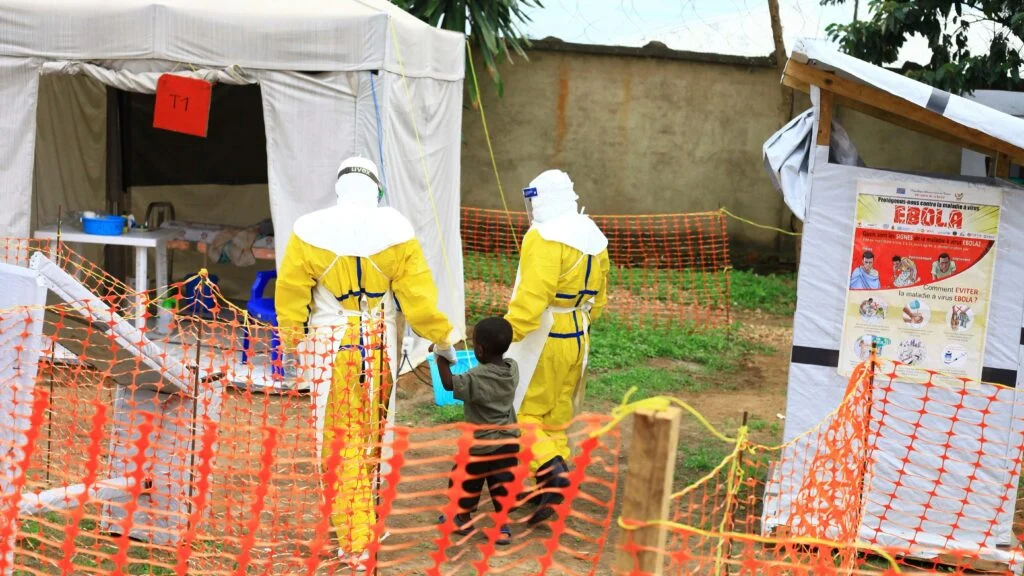
According to data released by the Africa CDC, the situation in the DRC is critical. As of mid-May 2026, the outbreak has resulted in 246 suspected cases and 65 confirmed deaths. Preliminary laboratory analysis has identified the culprit as a non-Zaire ebolavirus strain, complicating diagnostic and vaccine-related strategies.
The primary drivers of this transmission are systemic:
- Population Displacement: In regions destabilized by long-standing conflict, the movement of people renders traditional contact tracing nearly impossible.
- Health System Fragility: The intersection of violence and health care insecurity has left infection prevention and control (IPC) capacity dangerously low.
- Healthcare-Associated Transmission: In areas with limited resources, clinics often become secondary hubs for viral amplification rather than sites of healing.
The South American Hantavirus Cluster
While the Ebola outbreak is a tragedy of regional instability, the hantavirus outbreak in Argentina represents a different, equally urgent challenge: the vulnerability of global transit hubs. Emerging from a cruise ship environment, this outbreak has exposed the latency in detecting "unusual" illnesses. When a pathogen enters the ecosystem of international tourism, the timeline for containment shrinks from weeks to mere hours. The inability to quickly isolate, identify, and coordinate across borders in this instance highlights the systemic delays that still plague our international health architecture.
Chronology of a Vulnerable World
To understand why these outbreaks are unfolding with such momentum, we must look at the recent trajectory of global health:
- 2020–2022 (The Covid-19 Catalyst): The pandemic exposed the cracks in global supply chains, laboratory capacity, and political will. While it spurred a momentary surge in funding, the "post-emergency" phase saw a sharp decline in institutional commitment.
- 2023–2025 (The Erosion of Trust): We witnessed the politicization of scientific expertise. As trust in public health institutions plummeted, the effectiveness of basic interventions—such as vaccination campaigns and public education—was severely compromised.
- 2026 (The Current Turning Point): We are now operating in a period where the conditions for disease emergence are at an all-time high, yet the mechanisms to address them are increasingly fractured by geopolitical tension.
Supporting Data: The Drivers of Spillover
The frequency of outbreaks is not a statistical anomaly; it is a direct result of environmental and societal shifts.
1. The Climate-Pathogen Connection
Climate change is no longer a "future" threat to health security. It is actively altering vector ecology. As temperatures shift, mosquitoes, ticks, and rodents are migrating to new latitudes, bringing pathogens into regions with no prior immunological experience.
2. Urbanization and Encroachment
The rate of human encroachment into wildlife habitats has hit a record high. Every time a forest is cleared for agriculture or urban expansion, the "spillover barrier"—the distance between wild animal reservoirs and human populations—decreases. We are essentially forcing these interactions.
3. Geopolitical Fragmentation
The World Health Organization (WHO) and regional bodies like the Africa CDC rely on international cooperation. However, as geopolitical tensions rise, the "soft power" of global health is being weakened. When nations prioritize isolationism over data sharing, they are not protecting their borders; they are sabotaging their own early-warning systems.
Official Responses and the "Infrastructure Gap"
Public health authorities are currently scrambling, but their response is hampered by what I term the "infrastructure gap."
In the DRC, the response is being managed in an environment where health care workers themselves are at risk. In these settings, the biomedical response—vaccines and therapeutics—is only half the battle. The other half is logistics, security, and the ability to maintain the cold chain in a war zone.
In the case of the cruise ship outbreak, authorities are grappling with the international health regulations (IHR) that govern maritime travel. The challenge is clear: international law was designed for a slower, less connected world. Today’s pathogens, aided by jet engines and cruise liners, outpace the bureaucracy meant to contain them.
Implications: The Necessity of Proactive Security
We must move past the paradigm of "reactive" preparedness. Preparedness is not a press conference; it is not a plan written on paper. It is the boring, expensive, and sustained work of building systems when no one is looking.
The Pillars of Future Preparedness:
- Sustained Investment: Funding cannot be cyclical. We need permanent, dedicated funding for laboratory networks, surveillance, and workforce training that exists outside of emergency budget cycles.
- Decentralized Sovereignty: While international bodies are essential, they are only as strong as the national systems they support. We must invest in local laboratory capacity so that countries can detect and treat outbreaks without waiting for international reinforcements.
- Global Health as Collective Security: We must reframe the narrative. Supporting a country in an outbreak is not an act of charity—it is a self-interested act of global security. An outbreak left to fester in a remote province is a global risk that will eventually reach our own doorsteps.
The Looming Test: Mass Gatherings and Global Transit
As the world prepares for upcoming mass gatherings, such as the FIFA World Cup, the risk profile increases significantly. Large-scale events do not create pathogens, but they serve as "stress tests" for our systems. They expose every weakness in our surveillance and coordination.
If we have learned anything from the last several years, it is that the world is a single, interconnected epidemiological unit. The divide between "domestic" and "global" health is an illusion.
The question facing us in mid-2026 is simple: Have we learned enough? Are we capable of moving beyond the reactive cycles that have defined our recent past? Right now, the answer is frustratingly uncertain. We are living in an era where the next pandemic is not a possibility—it is a probability. The only variable remaining is the quality of our response.
We must choose to strengthen our institutions, restore the public trust, and commit to the long, difficult work of global health security. The alternative is a future defined by a perpetual state of crisis, where we are always one step behind the next pathogen.
Krutika Kuppalli is an infectious diseases physician in Dallas. Her work focuses on emerging infectious diseases, outbreak response, vaccine policy, and clinical care of complex infections. She has extensive experience with Covid-19, mpox, and Ebola, including working for the World Health Organization.