









In a recent development that has reignited debates over federal oversight of infant nutrition, the U.S. Food and Drug Administration (FDA) has released a summary of its latest testing initiative regarding commercial infant formula. However, the move has done little to quell the anxieties of parents, advocates, and food safety experts, who argue that the agency’s limited data set and narrow scope fail to address the systemic risks inherent in the infant formula supply chain.
As the "Make America Healthy Again" (MAHA) movement gains political traction, the quality and safety of infant formula—a product consumed by the most vulnerable population—have moved to the center of a national conversation. While the FDA asserts that products currently on the market are safe, the discourse is increasingly dominated by questions regarding microbial contamination, the presence of endocrine-disrupting chemicals (EDCs), and the ethics of industry marketing practices during product recalls.
Main Facts: The FDA’s Latest Assessment
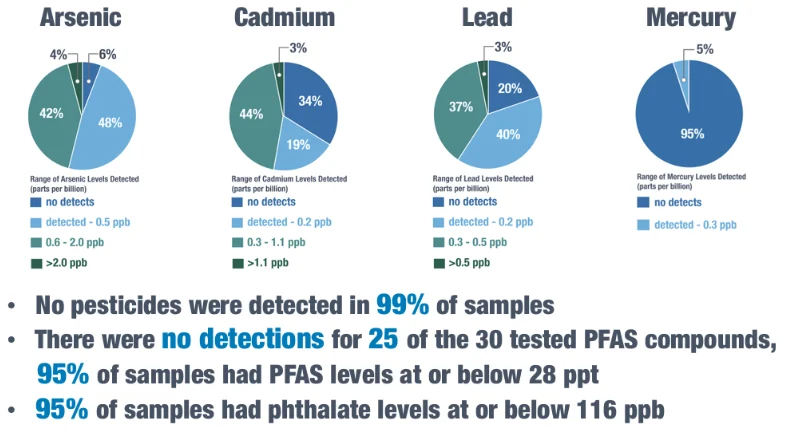
The FDA recently published a one-page summary documenting its testing of more than 300 samples of infant formula. The agency’s conclusion, based on this testing, is that the sampled products are safe for consumption. However, the brevity of the report has drawn sharp criticism from stakeholders who note that the document lacks the granular, peer-reviewed data necessary to instill full confidence.
Critics point out that "safe" is a relative term when applied to infant nutrition. While the FDA’s testing may confirm that products are within current regulatory bounds for specific pathogens or heavy metals, it does not necessarily account for the cumulative, long-term impact of exposure to micro-pollutants like PFAS (per- and polyfluoroalkyl substances) or the disruption of delicate endocrine systems. For many parents, the gap between "meeting regulatory standards" and "ensuring optimal health" remains wide.
Chronology of Crisis and Oversight
The path to the current state of affairs is marked by a series of recalls and legislative attempts to tighten the reins on manufacturers.
- Early 2026: Reports surfaced regarding significant contamination risks, specifically concerning Cronobacter and Salmonella. These pathogens, which can be lethal to infants, have long been the primary concern for food safety regulators.
- The ByHeart Controversy: A critical flashpoint occurred with the recall of ByHeart infant formula due to concerns over potential botulism contamination. Investigations later revealed that despite the recall, marketing campaigns—including influencer-led advertisements—continued to run for months, potentially putting infants at risk by encouraging parents to purchase or continue using tainted products.
- April 2026: Food safety advocate and attorney Bill Marler published a scathing assessment regarding the current state of infant formula safety, arguing that the industry requires a fundamental overhaul in testing transparency.
- May 2026: The FDA released its summary of the 300-sample test, followed shortly by intense pushback from investigative outlets like The Guardian, which highlighted contradictions between the FDA’s claims and the underlying data regarding chemical safety.
Supporting Data and The Pathogen Problem
The microbial safety of powdered formula remains a precarious issue. Unlike liquid formulas, which undergo a sterilization process during packaging, powdered formula is not sterile. It is produced in environments where Cronobacter—a bacterium that can survive in dry conditions for extended periods—can flourish.
The Senate has recently passed an infant formula bill, a long-awaited legislative milestone. The bill mandates that manufacturers:
- Conduct rigorous, frequent testing for Cronobacter and Salmonella.
- Report all positive test results to the FDA immediately.
This represents a significant shift from previous policies, which often relied on industry self-regulation. However, as Bill Marler has noted, reporting requirements are only as good as the enforcement behind them. Without consistent, third-party verification and strict penalties for failure to disclose, the industry remains prone to the same lapses that led to the devastating shortages and safety crises of previous years.
Official Responses and External Critiques
The FDA’s messaging has been criticized as being both dismissive and overly optimistic. By focusing on a narrow slice of testing, the agency has invited skepticism from scientific and advocacy circles.
- The Guardian’s Investigation: A notable critique published in May 2026 challenged the FDA’s findings, particularly regarding endocrine-disrupting chemicals. The reporting suggested that the FDA’s definition of "safe" ignores the current scientific consensus that for infants, there is no "safe" level of exposure to certain developmental toxins.
- Radical Moms Union: This grassroots advocacy group has been instrumental in calling out the moral hazard of infant formula companies. Their work highlights that the problem is not just the formula itself, but the corporate culture that prioritizes brand loyalty and marketing spend over immediate consumer safety. The group’s advocacy successfully brought to light the fact that even while thousands of cans were being recalled, marketing budgets for the same products remained active.
The Implications for Public Health
The broader implications of these events are profound. For parents, the confusion surrounding formula safety has led to a climate of fear. This has tangible public health consequences, including:
1. The Breastfeeding Dilemma
While experts like those at the American Academy of Pediatrics strongly advocate for breastfeeding, they acknowledge that for many, it is not an option due to physiological, social, or economic constraints. The current safety crisis places an undue burden on parents who rely on formula, effectively punishing them for needing a product that the government should be regulating more effectively.
2. The Move Toward Liquid Alternatives
For those who can afford it, the current consensus among food safety experts is to favor pasteurized liquid formula over powdered alternatives. The thermal processing involved in liquid manufacturing significantly lowers the risk of microbial colonization. However, liquid formula is substantially more expensive, creating a socioeconomic divide in child nutrition safety.
3. The MAHA Movement and Political Pressure
The rise of the MAHA movement indicates a growing distrust in the "official" health narrative. When the FDA fails to provide transparent, comprehensive data on products as sensitive as infant formula, it fuels a broader skepticism toward federal agencies. For these activists, the formula issue is a bellwether for a larger struggle to remove toxins from the American food supply.
Conclusion: A Call for Transparency
The situation regarding infant formula in the United States remains in a state of flux. While the recent Senate bill is a welcome "first step," it is insufficient if the FDA continues to adopt a "trust us" posture rather than an "open-data" policy.
To restore trust, the agency must do more than summarize 300 samples. It must:
- Release comprehensive data: Provide the public with raw, anonymized data from all safety testing.
- Standardize Testing: Move toward a universal, federally mandated testing protocol for all manufacturers that includes both microbial and chemical safety profiles.
- Enforce Marketing Ethics: Implement strict prohibitions on marketing activities for any product currently under a recall notice, regardless of whether the specific batch is suspected of contamination.
The safety of our children should not be a matter of industry self-policing or sporadic FDA snapshots. It requires a rigorous, transparent, and proactive regulatory framework. As the conversation continues, one thing remains clear: until the industry and its regulators treat infant formula with the caution required for a product that is the sole source of nutrition for a human being, parents will—and should—remain skeptical.
For now, the advice remains the same as it has been for years: breastfeed if possible, and if you must use formula, prioritize liquid, pasteurized options. But beyond individual choices, the systemic failure to guarantee the purity of our food supply must be met with legislative and institutional reform. Our babies deserve nothing less.