











By Joshua M. Sharfstein, M.D.
May 16, 2026
Joshua M. Sharfstein served as principal deputy commissioner of the FDA from March 2009 to January 2011.
On Tuesday, the Food and Drug Administration (FDA) faced another seismic shift as Commissioner Marty Makary announced his resignation. His departure leaves a gaping void at the helm of one of the world’s most critical regulatory bodies, compounding an ongoing crisis of personnel and institutional stability that has plagued the agency’s drug and biologics divisions for the better part of a year.
Makary’s exit is not merely a change in personnel; it marks the conclusion of a tumultuous chapter defined by an aggressive attempt to "disrupt" the federal scientific apparatus. His tenure, characterized by skepticism toward traditional public health consensus and a preference for centralized, top-down policy mandates, serves as a cautionary tale for any administration seeking to reshape the administrative state.
The Main Facts: A Tenure Defined by Discord
The vacancy left by Makary is the culmination of a broader, administration-wide effort to overhaul the federal health landscape. When Makary took the job, he inherited an agency already reeling from the "Department of Government Efficiency" (DOGE) initiatives, which had led to the mass dismissal of thousands of career scientists and civil servants.
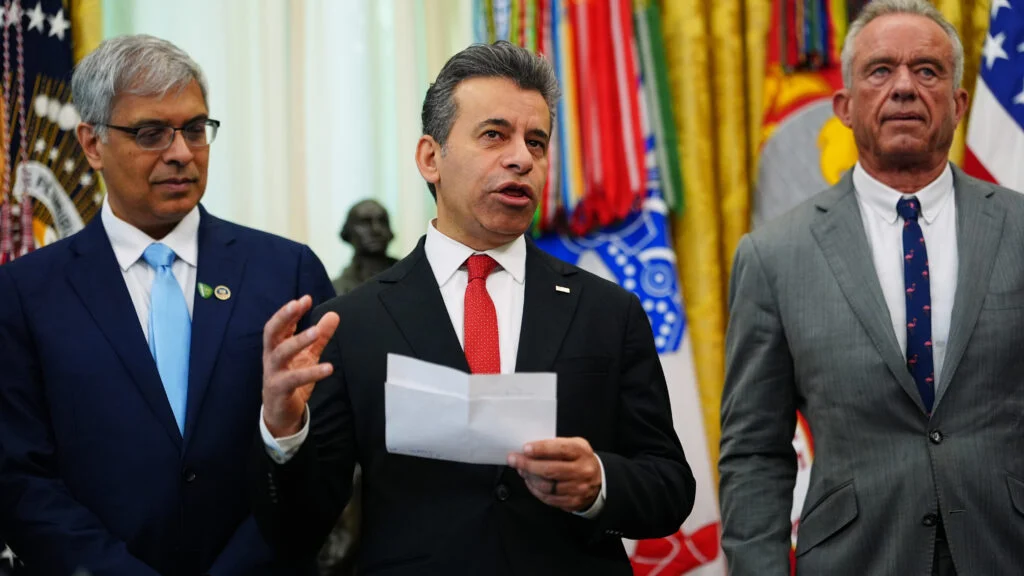
His tenure was effectively bookended by the administration’s ideological crusade against institutional expertise. Just one year ago, Makary appeared in a viral 58-second video alongside Health and Human Services (HHS) Secretary Robert F. Kennedy Jr. and National Institutes of Health (NIH) Director Jay Bhattacharya. In that moment of triumph, they announced that Covid-19 vaccines would no longer be routinely recommended for healthy pregnant women and children. The video was a manifesto for a new era—one where "common sense" would supposedly supersede the "deep state" bureaucracy that had long guided federal medical policy.
However, the reality of governing proved far more complex. By bypassing established regulatory protocols, ignoring the input of career scientists, and favoring political intuition over vetted data, Makary and his team fundamentally weakened the credibility of the FDA.
A Chronology of Institutional Erosion
To understand how the FDA reached this point, one must look at the systematic dismantling of its operational norms since early 2025:
- Spring 2025: The DOGE initiative begins, leading to the departure of thousands of experienced FDA and CDC staff. HHS leadership, under the direction of Secretary Kennedy, initiates a purge of officials perceived to be resistant to the administration’s anti-establishment agenda.
- Summer 2025: The CDC’s vaccine advisory committee is effectively neutralized. Public health grants across the board are suspended, and the agency begins hiring researchers whose work has been previously discredited by the mainstream scientific community.
- Fall 2025: Commissioner Makary and his deputy, Vinay Prasad, begin a pattern of overruling staff scientists on high-profile drug and vaccine approvals. These decisions are frequently announced via press releases or personal journal entries rather than through standard, peer-reviewed, and publicly vetted regulatory filings.
- Winter 2025-2026: Political interference becomes an open secret. The "Commissioner’s National Priority Voucher" program, intended to expedite drug reviews, is shunned by several major pharmaceutical companies, who cite concerns over the lack of scientific integrity and the high risk of future litigation due to politically tainted approvals.
- Spring 2026: Legal challenges mount, with courts vacating several administrative actions due to procedural violations. The resignation of Makary arrives as the agency’s reputation sits at a historic low.
Supporting Data: The Cost of Disruption
The administrative fallout is evidenced by a measurable decline in stakeholder trust. The FDA has historically relied on the "gold standard" of evidence-based medicine to maintain its authority. When that standard is compromised, the downstream effects are immediate.
For instance, the administration’s decision to break from pediatric vaccine recommendations did not lead to a national consensus; instead, it led to a splintering of public health practice. According to data from the Kaiser Family Foundation, trust in the CDC and FDA reached a nadir in early 2026. Furthermore, the American Academy of Pediatrics and the majority of private insurers have maintained their original, pre-2025 protocols, effectively ignoring the administration’s guidance.
The "Commissioner’s National Priority Voucher" program serves as a case study in failed policy. Intended to act as an incentive for innovation, it instead became a lightning rod for ethics complaints. Because the process lacked the transparency of standard FDA advisory committee reviews, industry leaders—fearful of products receiving "tainted" fast-track statuses—began withdrawing applications. This defeated the very purpose of the program, illustrating that in the highly regulated world of pharmaceuticals, predictability and integrity are more valuable than political shortcuts.
Official Responses and Administrative Reactions
The administration’s approach has been one of consistent, unapologetic confrontation. Secretary Kennedy and his team have maintained that the "deep state" was an obstacle to progress, arguing that their actions were necessary to restore the FDA to the people.
However, the internal reality was starkly different. My own experience in the Obama administration taught me that there is no "deep state" to displace—only a complex, institutional memory that ensures public safety. When I began my tenure at the FDA, I kept two lists: one for projects moving at a reasonable pace, and one for those I was struggling to move. The reality of federal management is that the second list is always longer. By attempting to solve this by firing experts, the current administration did not increase efficiency; it merely destroyed the mechanisms of accountability.
In the wake of Makary’s resignation, the White House has remained tight-lipped regarding a permanent replacement. The prevailing sentiment within the scientific community is one of exhaustion. As one former senior official noted, "We are not dealing with a policy disagreement; we are dealing with a total rejection of the scientific method as a prerequisite for governance."
Implications for the Future
The path forward for the FDA requires a total reset. Moving the agency toward a more productive future does not mean abandoning political leadership; it means redefining it.
The Path to Reform:
- Transparency as Policy: All regulatory changes must be subjected to public comment and reviewed by independent advisory committees. The "regulation by email" era must end.
- Respect for Expertise: The role of the Commissioner is to set goals—such as reducing chronic illness or accelerating rare disease research—but the methodology for achieving those goals must remain in the hands of qualified career scientists.
- Restoring Due Process: Decisions that carry the weight of law must be defensible in court. This requires adherence to the Administrative Procedure Act, which the current administration frequently bypassed.
The nomination of a more credible, public-health-focused candidate for the CDC director position suggests that the White House may be aware of the mounting pressure to stabilize the federal health infrastructure. If the administration continues to prioritize ideological litmus tests over the public good, the damage to the FDA’s reputation could take decades to repair.
However, there is still time. With over two years remaining in the current term, the administration has an opportunity to abandon its confrontational approach. By appointing a Commissioner who understands the necessity of working within the agency’s institutional framework—rather than attempting to dismantle it—the administration could yet achieve a legacy of genuine, lasting improvement in the health of the American people.
Regulation is not a zero-sum game between political will and scientific reality. True authority comes from the ability to show your work. Until the next leadership team recognizes this, the FDA will remain in a state of suspended animation, and the American public will be the ones who pay the price.