









In the high-stakes world of professional bodybuilding, the difference between a top-tier Olympia finalist and the rest of the pack often comes down to the meticulous, scientific application of training variables. IFBB Pro John Jewett, a multi-time Olympia finalist and the mastermind behind the "J3 University" coaching framework, has long been a proponent of evidence-based hypertrophy. Recently, the former powerlifting world champion and record-breaker pulled back the curtain on the exact methodology he uses to achieve his signature lower-body development.
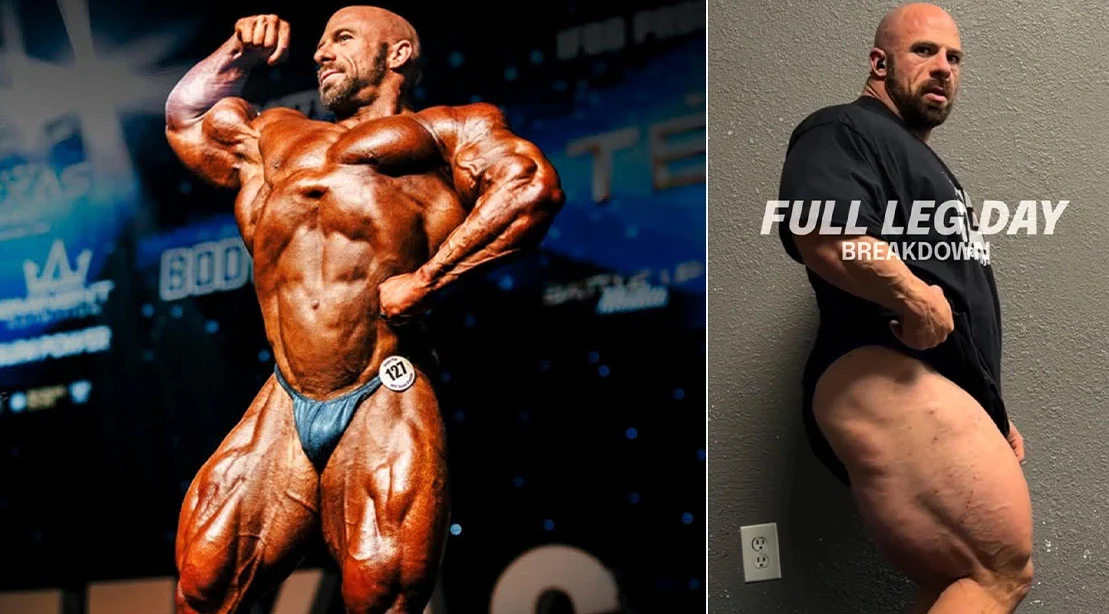
For Jewett, the goal is simple but demanding: achieving a side profile that resembles the massive, sweeping musculature of a "horse leg." In a recent breakdown shared with his 319,000 Instagram followers, Jewett detailed a high-intensity, low-volume approach designed to maximize muscle fiber recruitment while mitigating unnecessary systemic fatigue.
The Philosophy of Mechanical Tension
At the heart of Jewett’s training philosophy is the concept of "stimulus-to-fatigue ratio." As a coach, Jewett emphasizes that hypertrophy is not merely about moving weight from point A to point B; it is about creating enough mechanical tension and metabolic stress to trigger a growth response without destroying the central nervous system.
"This is how I structure my leg day to pull the most growth stimulus possible," Jewett explained in his training demonstration. His approach prioritizes unilateral work and specific movement patterns that bias both the lengthened and shortened positions of the muscle fibers, ensuring that the quadriceps, hamstrings, and calves are developed from every possible angle.
Chronology: The Execution of the Routine
Jewett’s leg day is not a marathon session; it is a surgical strike. He performs 2 to 3 sets per exercise, pushing each set toward technical failure in the 8-to-12 rep range. The following is the chronological breakdown of his session:
Phase I: Pre-Exhaustion and Activation
Jewett begins his session with single-leg lying hamstring curls. By placing hamstrings at the front of the workout, he ensures they receive the highest level of energy and focus. "Hamstrings can’t be big enough, so I train them first," Jewett states. The unilateral nature of the movement allows for better bracing, which permits a more controlled, focused contraction.
Interspersed with these curls are leg extensions. By alternating between the two, Jewett creates a superset-style flow that keeps the legs primed. He notes that the use of wrist straps during leg extensions can be a game-changer, allowing the athlete to stay fixed into the seat and avoid the instability that often limits the intensity of quad-focused movements.
Phase II: The Pendulum Powerhouse
The pendulum squat serves as the centerpiece of Jewett’s routine. He identifies this as his "number one quad movement, hands down." Unlike a traditional back squat, which can place significant strain on the lower back, the pendulum squat allows for deep hip flexion while keeping the torso relatively upright. "The key here is getting into that deep hip flexion position," Jewett advises. "That’s going to light up not just your quads, but your adductors too, which gives you that leg width for your front poses."
Phase III: Lengthened-Range Development
Following the pendulum squat, Jewett moves to the seated hamstring curl. This addresses the "lengthened" range of the hamstring, providing a complementary stimulus to the lying curl performed earlier. By hitting the hamstrings in both their shortened (lying) and lengthened (seated) positions, Jewett ensures complete structural development of the posterior chain.
Phase IV: Hip Stability and Quad Bias
The fifth exercise is the single-leg Rogers hip press. This movement is strategically placed to add volume to the quads without the heavy systemic fatigue associated with the pendulum squat. Because it is unilateral, it provides an added benefit of hip stability training. Jewett notes that by placing the feet more toward the center of the platform, an athlete can specifically bias the lateral head of the quadriceps—the "sweep" that defines a world-class physique.
Phase V: The Calf Protocol
Jewett concludes with standing calf raises. Recognizing that the gastrocnemius and soleus are notoriously stubborn, he trains them three times per week. He maintains variety by alternating between low and high rep ranges, ensuring the muscle is never allowed to adapt to a single stimulus pattern.
Supporting Data: Why This Methodology Works
The science behind Jewett’s programming is rooted in functional anatomy and biomechanical optimization.
- Unilateral Biasing: By training one limb at a time, athletes can bypass the bilateral deficit—a phenomenon where the force produced by two limbs is less than the sum of the force produced by each limb individually. This allows for better isolation and reduces the chance of a dominant leg compensating for a weaker one.
- The Lengthened Position: Research in sports science consistently shows that training a muscle in its lengthened state (e.g., the seated leg curl) results in superior hypertrophy compared to training only in the shortened state. Jewett’s inclusion of both variations demonstrates a sophisticated understanding of muscle architecture.
- Rest and Recovery: By limiting his sets to 2–3 per exercise, Jewett avoids "junk volume"—the extra sets performed beyond the point where the muscle is actually being stimulated. This allows him to recover faster and hit the legs with maximum intensity during his next session.
Official Responses and Industry Impact
Within the bodybuilding community, Jewett’s "J3 University" has gained a reputation for being one of the most rigorous educational platforms for aspiring competitors. His shift toward a more analytical approach has influenced a generation of bodybuilders who are moving away from the "more is better" mentality of the 1990s and toward the "smarter is better" approach of the modern era.
Fellow pros and coaches have noted that Jewett’s transparency on social media regarding his training blocks provides a rare look into the mind of an elite competitor. By explaining the why behind his movements—such as the hip stability benefits of the Rogers hip press—he is effectively democratizing high-level coaching principles.
Implications for the Everyday Athlete
The implications of Jewett’s protocol are clear: size is a byproduct of precise tension and consistent stimulus, not just moving heavy iron. For the average gym-goer, the primary takeaway is the importance of technical execution.
If a trainee wishes to implement this program, they must prioritize the following:
- Tempo: Control the eccentric (lowering) portion of every movement.
- Range of Motion: As Jewett emphasized with the pendulum squat, depth is non-negotiable for maximum fiber recruitment.
- Frequency: The inclusion of frequent, specific calf training suggests that for lagging body parts, volume must be spread out over the course of the week rather than condensed into a single "destruction" workout.
Ultimately, John Jewett’s leg day is a testament to the fact that professional bodybuilding is as much an intellectual pursuit as it is a physical one. By deconstructing the movement patterns and focusing on the specific mechanics of muscle growth, Jewett has created a blueprint that is both brutal in its intensity and sophisticated in its design. Whether one is a competitive bodybuilder or a recreational lifter, the principles of J3 University offer a proven path to achieving the elusive "horse leg" physique.
As Jewett continues his career on the Olympia stage, his training logs serve as an evolving textbook for those willing to put in the work. For those looking to mirror his success, the path is open, provided they are willing to embrace the discomfort of true, stimulus-focused training.