










By Medical News Desk
May 19, 2026
For millions of individuals suffering from urgency urinary incontinence (UUI)—a hallmark of overactive bladder (OAB)—the pursuit of a treatment that is both effective and non-intrusive has been a long, often frustrating journey. Standard care often involves systemic medications, which can carry burdensome side effects like dry mouth or cognitive fog, or more invasive surgical procedures. However, new clinical data presented at the American Urological Association (AUA) annual meeting suggests a potential paradigm shift in how urologists manage this pervasive condition.
Results from the pivotal INTIBIA study, a multicenter, randomized, double-blind, sham-controlled trial, indicate that an investigational implantable tibial nerve stimulation (ITNS) device offers significant improvements in quality of life for patients with OAB. While the final data on objective reduction of incontinence episodes are still pending, the initial quality-of-life metrics suggest that this device could offer a durable, patient-friendly alternative to current standards.
The INTIBIA System: A Technological Innovation
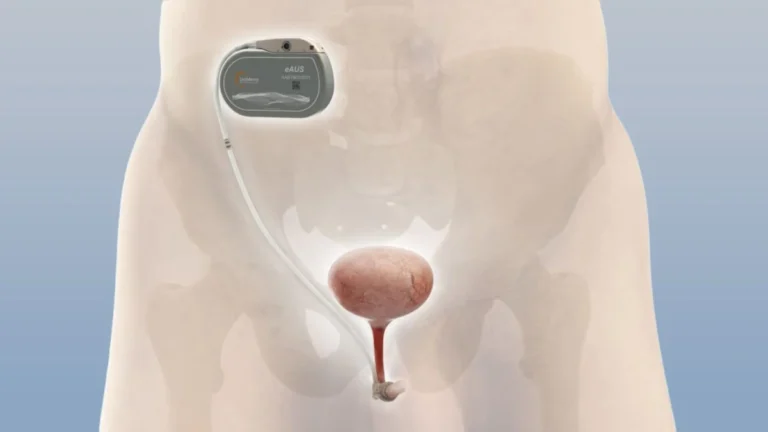
The Intibia system represents a significant engineering achievement in the field of neuromodulation. Unlike traditional, larger surgical implants, the Intibia device is a compact, battery-powered nerve stimulator designed for implantation just above the ankle. The procedure is minimally invasive, performed as an outpatient service under local anesthesia.
Once implanted, the device targets the tibial nerve, a key pathway for signals governing bladder control. The stimulation protocol is designed for ease of use: it delivers pulses in 30-minute sessions—daily for the first two weeks post-implantation, transitioning to a weekly maintenance schedule thereafter. With a battery life of approximately eight years, the device is designed to provide long-term symptom management without the need for frequent clinical visits or battery replacements.
Chronology of the Clinical Investigation
The INTIBIA pivotal study was a robust endeavor involving 208 participants across 23 clinical sites throughout the United States and the Netherlands. The study design was rigorous, utilizing a 2:1 randomization ratio where patients were assigned either the active ITNS device or a sham control.
The participants—with a mean age of 64 to 65 and an average of 4.3 to 4.5 daily UUI episodes—represented a cross-section of the population most affected by OAB. The study followed a strict timeline:
- Baseline: Enrollment and patient assessment, including symptom bother scores and quality-of-life surveys.
- The 3-Month Milestone: This marked the primary assessment point for the double-blind phase. Patients were evaluated using the Patient Global Impression of Improvement (PGI-I) scale and the Overactive Bladder Questionnaire Short Form (OABq-SF).
- The Unblinding Phase: Following the 3-month assessment, the study was unblinded. Crucially, participants in the sham control group were given the opportunity to have their devices activated, ensuring that all study participants eventually gained access to the therapeutic intervention.
- The 12-Month Follow-up: Long-term efficacy was measured, focusing on the durability of the improvement in quality of life and the persistence of symptom relief.
Supporting Data: Translating Patient Experience into Metrics
The strength of the INTIBIA trial lies in its focus on patient-reported outcomes (PROs), which often provide the most accurate reflection of a treatment’s clinical value. Dr. Catherine Matthews of the Wake Forest University School of Medicine, who presented the findings, highlighted that the device excelled in key categories.
PGI-I Results
On the Patient Global Impression of Improvement (PGI-I) scale, a standardized tool for assessing how a patient perceives their own progress, the results were stark. At the 3-month mark, 29.2% of patients in the device group reported feeling "much better" or "very much better," compared to just 13.4% in the sham group (P=0.0133). When considering any level of improvement—not just "much" or "very much"—the gap widened: 57.7% of the device group reported improvement compared to 31.3% of the control group (P<0.01). By the 12-month follow-up, an impressive 83% of patients reported overall improvements in their condition.
Symptom Bother and Quality of Life (OABq-SF)
The Overactive Bladder Questionnaire Short Form (OABq-SF) provided a granular view of how the device influenced daily life.
- Symptom Bother: Patients using the device saw a mean change of -18.5 from baseline on a 100-point scale (where higher scores indicate worse symptoms), compared to a -10.2 change in the sham group at 3 months (P=0.0068).
- Quality of Life (HRQoL): Health-related quality of life also favored the device, with a mean improvement of 17.2 compared to 7.2 in the sham cohort at 3 months (P=0.0007).
By the 12-month mark, 72% of patients met the "minimally clinically important difference" (MCID) threshold for OAB symptoms, and 74% met the MCID threshold for health-related quality of life improvements.
Official Commentary and Expert Perspectives
Dr. Matthews emphasized the importance of these findings, particularly in the context of disease management. "This is the first prospective multicenter randomized double-blind sham-controlled trial of an ITNS device," she stated during the AUA meeting. "And we see this really important improvement in quality of life, which is what our OAB patients care about."
She highlighted the struggle with patient compliance in traditional OAB therapies. Medications are often discontinued due to side effects or lack of perceived efficacy. "When we look at all three of these measures together, we see that there was a meaningful and sustained and improved quality of life… and in a disease state that we know suffers from compliance with therapy, seeing the sustained benefit at 12 months is important."
Regarding safety, Dr. Matthews provided reassurance to clinicians and patients alike. There were no reports of serious adverse events related to the procedure, such as vascular or nerve injuries, suggesting a favorable safety profile for the outpatient implantation process.
Implications for Future Practice
The results of the INTIBIA study represent a hopeful step forward, but the medical community is now awaiting the full data on the study’s co-primary endpoints. These endpoints, defined as a 50% or greater reduction in actual urgency urinary incontinence episodes at 3 and 12 months, will provide the objective data necessary for final validation.
Clinical Impact
If the reduction in episode frequency aligns with the current patient-reported improvements, the Intibia system could quickly move to the forefront of urological treatment algorithms. For patients who fail conservative therapy (such as pelvic floor exercises or bladder training) but wish to avoid the side effects of anticholinergics or beta-3 agonists, this device provides a middle ground—an "active" therapy that is physically unobtrusive.
Regulatory Path
Dr. Matthews confirmed that the data collected from this trial are currently being presented to the U.S. Food and Drug Administration (FDA). As the FDA evaluates the device for potential approval, urologists will be closely watching for the formal publication of the episode-reduction data. Should the device receive clearance, it would likely necessitate a change in how clinics train for minor surgical interventions, as the outpatient placement of the device is significantly less complex than traditional sacral neuromodulation surgery.
The Broader Context
OAB is a chronic, often debilitating condition that can lead to social withdrawal, sleep disturbance, and depression. By addressing the nerve pathways directly, the Intibia system targets the root of the "overactive" signal rather than just attempting to dampen the bladder muscle response through systemic drugs.
As the medical community awaits the final, comprehensive results, the INTIBIA study already stands as a testament to the power of well-designed, sham-controlled trials in establishing the validity of neuromodulation. If the device continues to perform as it has during the first year, it may well provide a long-awaited "gold standard" for non-pharmacological, long-term OAB management.