









13 May, 2026
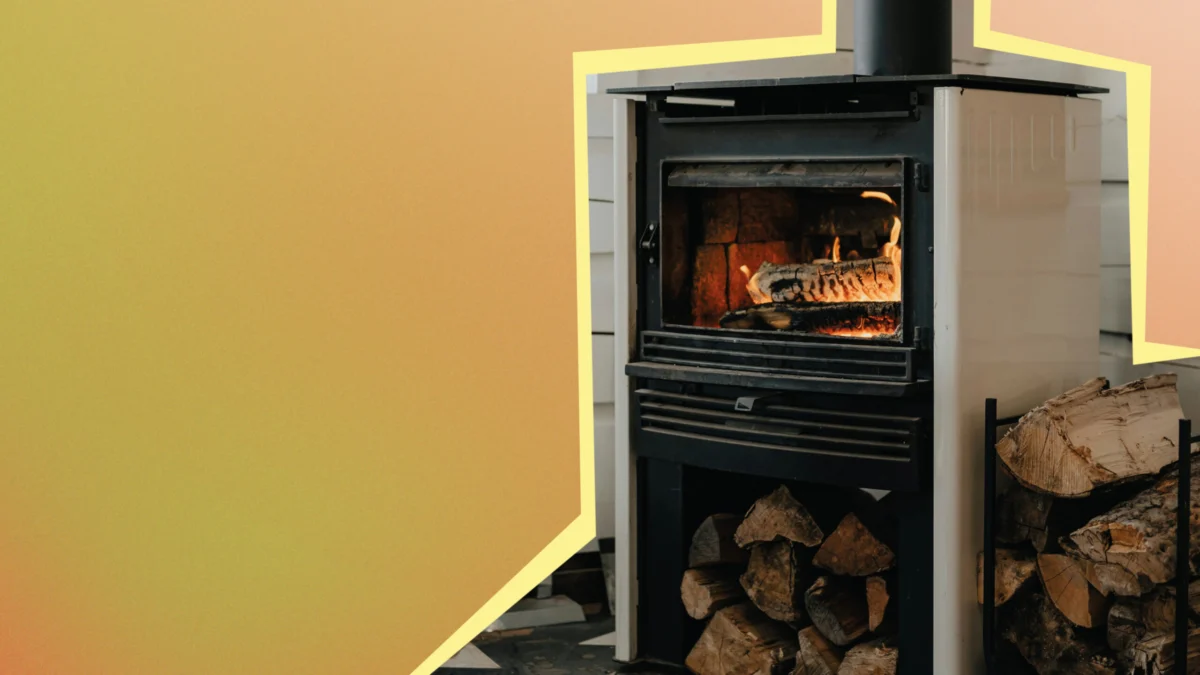
In the quiet corridors of local government across England, a battle is being waged over the air we breathe. It is a confrontation between the mandate of public health officials to warn citizens of invisible dangers and a well-funded industry determined to protect its commercial interests. A landmark investigation published today in the BMJ reveals that the wood-burning stove industry has systematically intimidated local councils, threatening legal action to silence public health campaigns regarding the health risks of wood smoke.
This revelation exposes a troubling reality: that the "cosy" image of a fireplace is being guarded by aggressive litigation and the selective dissemination of industry-funded research, creating a smoke screen that obscures the significant health burdens of fine particulate matter (PM2.5) pollution.
The Anatomy of Intimidation: Findings from the BMJ
The BMJ investigation, which utilized Freedom of Information (FOI) requests directed at the 50 English councils with the highest density of wood-burning stoves, paints a picture of systemic pressure. Nearly one-third of the responding councils confirmed that they had been lobbied or explicitly threatened with legal action by the Stove Industry Association (SIA).
The most high-profile instance occurred in 2023, when eight London boroughs launched a joint campaign titled "Careless, not Cosy." The campaign sought to educate residents on the dangers of wood smoke. The response from the industry was swift: the SIA initiated legal threats against the boroughs, arguing that the messaging was defamatory or misleading. While no legal proceedings were ultimately brought to trial, the chilling effect was palpable. Multiple council officials admitted to the BMJ that the mere threat of litigation made them significantly more hesitant to initiate future public health awareness campaigns, fearing the financial and administrative burden of a legal battle against a well-resourced trade body.
A Chronology of Conflict: From "Cosy" to Courtroom
The tension between air quality advocates and the stove industry has been escalating for years. To understand how we arrived at this impasse, one must look at the timeline of the industry’s defensive maneuvers:
- 2020–2022: As air quality regulations tightened, the stove industry pivoted to marketing "Eco-design" compliant stoves as a "green" alternative to fossil fuels, despite mounting evidence that even modern stoves emit significant amounts of PM2.5.
- 2023 (The London Crisis): Eight London boroughs release the "Careless, not Cosy" campaign. The SIA responds with legal threats, effectively forcing a cooling-off period in municipal public health communication.
- 2024: The Lancet Countdown on health and climate change highlights household wood burning as a growing contributor to mortality in northern Europe, contradicting the industry’s "carbon-neutral" narrative.
- 2025: The European Court of Auditors releases a report identifying residential solid fuel burning as the single largest source of PM2.5 in over half of European cities.
- May 2026: The BMJ investigation exposes the extent of industry lobbying and the use of unpublished, industry-funded literature reviews to influence council policy.
The Science of Selective Reporting: Manipulating the Evidence
Central to the industry’s defense is an unpublished literature review, funded by the stove industry, which claims there is "no scientific evidence" of harm from modern, certified stoves. When the BMJ obtained this document, they found it relied on a classic tactic of omission.
The review contained critical caveats—specifically acknowledging that a lack of definitive evidence in specific cohorts does not equate to an absence of risk, and that the World Health Organization (WHO) maintains that there is no safe level of particulate matter exposure. However, these crucial context-setting clauses were conspicuously absent from the promotional materials and letters sent by the industry to local councils.
By stripping the science of its nuance, the industry has successfully created a narrative that modern stoves are "clean." This is in direct opposition to the consensus of the medical community. PM2.5 particles are small enough to enter the bloodstream, with well-documented links to lung cancer, cardiovascular disease, strokes, and the exacerbation of asthma. Unlike traffic pollution, which is widely recognized as a public health hazard, wood smoke retains a "natural" aura that the industry is keen to exploit to prevent regulation.
Supporting Data: The Scale of the Problem
The health implications of wood burning are not merely speculative; they are backed by rigorous data. According to the 2025 report from the European Court of Auditors, residential solid fuel burning—wood and coal—accounts for approximately 62% of PM2.5 emissions across the European Union.
In many European cities, this is now the primary source of ambient air pollution, a trend that is becoming increasingly dangerous. As power generation and transport sectors have successfully reduced their emissions through technological shifts, the relative impact of household burning has surged. In northern Europe, the mortality rate associated with air pollution is now being driven, in part, by this "hidden" source.
The "carbon-neutral" label often touted by the industry is another point of contention. Under current EU accounting rules, wood fuel is classified as carbon neutral. This designation is based on the flawed assumption that the carbon released during combustion is offset by the carbon captured by new tree growth. However, this fails to account for the immediate, short-term impact of releasing massive amounts of CO2 and methane into the atmosphere—a critical oversight in the context of the climate crisis. This legislative loophole has been used as a shield, preventing health-focused policymakers from applying the same rigorous emission standards to stoves that are applied to industrial boilers or vehicles.
Official Responses and the Call for Independence
The implications of these findings extend far beyond the borders of England. Industry pressure tactics are being observed across the continent, where similar efforts to regulate chimney installations have been met with litigation. In Denmark, for example, the chimney sweeps’ association challenged a municipal ban on chimneys in new homes. Although the challenge failed, the case serves as a warning of the lengths to which industry groups will go to protect their market share.
Barbara Hoffmann, Chair of the European Respiratory Society (ERS) Advocacy Council, has been vocal about the danger this poses to public health. "The BMJ’s findings are a warning, not just for England but for Europe," Hoffmann stated. "When industry funds its own research and selectively presents the results, people lose access to accurate information about risks that affect their health every day."
Hoffmann emphasizes that this is not an isolated incident but a pattern. "We see versions of this across Europe—in lobbying on appliance standards, in the framing of wood burning as carbon neutral, and in the pressure on researchers and policymakers to soften their conclusions. Evidence-based public health communication must be protected. That is precisely why we are calling on European institutions and policymakers to defend independent science and ensure that health policy is driven by evidence, not by commercial interest."
Implications: The Future of Public Health Policy
The BMJ investigation marks a turning point in how society views the "cozy" wood stove. The facade of the innocent, traditional fireplace is crumbling under the weight of empirical evidence. However, the ability of the industry to stall progress through legal threats remains a significant hurdle.
If public health authorities are to effectively address the crisis of particulate matter pollution, they must be empowered to communicate risks without the fear of legal retribution. This requires a two-pronged approach:
- Legislative Protection: Policymakers must implement safeguards that protect local authorities from "SLAPPs" (Strategic Lawsuits Against Public Participation) when they engage in evidence-based public health advocacy.
- Scientific Transparency: There must be a stricter requirement for transparency regarding the funding and methodology of any research used to lobby for environmental or health standards. Industry-funded reviews should be subject to the same level of independent peer review as academic studies before they are presented to local government bodies.
The era of "wood smoke as natural" must end. As the evidence mounts, the responsibility lies with legislators to prioritize the respiratory health of their citizens over the commercial interests of the stove industry. The "Defend Science, Protect Public Health" campaign, spearheaded by the ERS and the European Lung Foundation (ELF), is currently mobilizing support for these exact protections.
As the findings of the BMJ continue to reverberate through the halls of government, one thing is clear: the air in our homes and our cities is not just a matter of comfort—it is a matter of fundamental public health. It is time for that reality to take precedence over the interests of those who profit from the smoke.