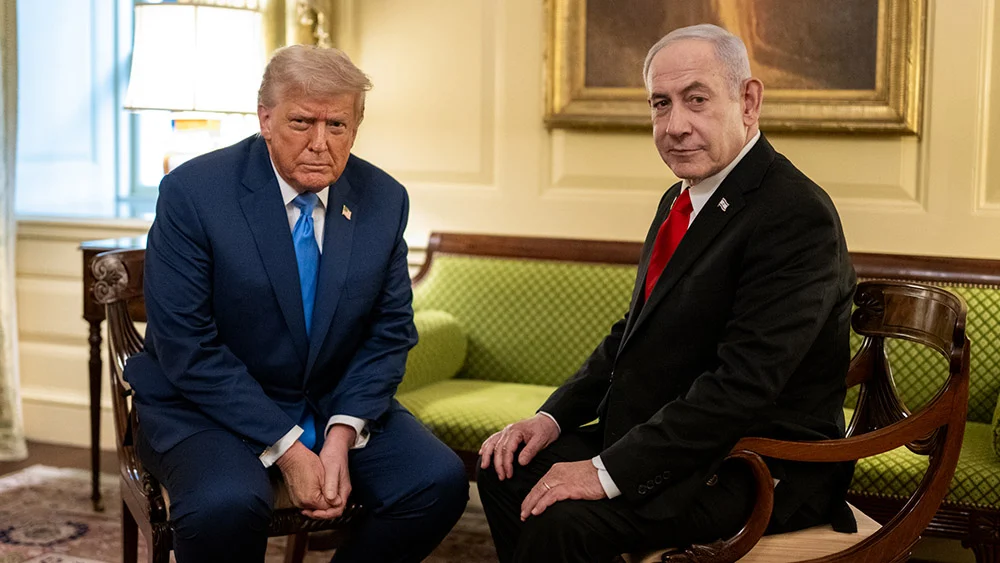
The Middle East stands at a precarious geopolitical crossroads this week as a dramatic rupture in strategy emerges between the United States and its primary regional ally, Israel. Following a series of high-tension communications, President Donald Trump has signaled a pivot toward a diplomatic resolution regarding Iran, effectively hitting the "pause" button on a highly anticipated military offensive—a decision that has left Israeli Prime Minister Benjamin Netanyahu visibly incensed.
The friction, which culminated in a nearly hour-long phone call on Tuesday evening, exposes a fundamental divergence in vision: President Trump appears intent on fulfilling his campaign pledge to avoid "endless wars" through high-stakes negotiation, while Prime Minister Netanyahu is reportedly pushing for a decisive military conclusion to degrade Iranian infrastructure and dismantle its regional influence.
The Chronology of a Shifting Strategy
The events of the past 72 hours have moved at a dizzying pace, shifting from the brink of kinetic conflict to the precarious stage of indirect negotiation.
Sunday: The Promise of "Operation Sledgehammer"
Reports from U.S. officials indicate that as recently as Sunday, the administration was moving toward a final green light for a robust military campaign dubbed "Operation Sledgehammer." The mission was designed to be a series of precision strikes aimed at neutralizing critical Iranian military assets. President Trump had initially briefed Prime Minister Netanyahu on this timeline, signaling that the U.S. was prepared to move forward early in the week.
Monday: The Diplomatic Intervention
The trajectory of the conflict shifted when regional partners—most notably Qatar, Saudi Arabia, and the United Arab Emirates—made an urgent plea to the White House. These Gulf allies, concerned about the potential for regional conflagration and the destruction of energy infrastructure, urged the administration to provide a window for a last-ditch diplomatic effort. The administration, sensing a potential for a historic deal, acquiesced.
Tuesday: The "Boiling Point" Call
The most significant development occurred Tuesday evening during a strained conversation between Trump and Netanyahu. When the President informed the Prime Minister that the military strikes were being delayed in favor of a "letter of intent" brokered by Qatar and Pakistan, the reaction in Jerusalem was immediate. According to a U.S. source briefed on the exchange, the Prime Minister’s frustration was palpable, with reports describing him as "hair on fire" over the sudden change in operational plans.
Wednesday: Public Posturing
By Wednesday, the discord had spilled into the public sphere. President Trump, addressing reporters at the White House, maintained a posture of calculated patience. "The only question is do we go and finish it up or are they gonna be signing a document," he remarked. "Let’s see what happens." Trump also made a pointed comment regarding the U.S.-Israel power dynamic, suggesting that Netanyahu "will do whatever I want him to do," a remark that underscores the administration’s belief that it holds the cards in the current standoff.
The Diplomatic Framework: Qatar and Pakistan’s Mediation
At the center of this diplomatic effort is a new proposal currently under review by Tehran. The document, reportedly spearheaded by Qatar and Pakistan, outlines a 30-day "negotiation window." The primary goals of this initiative are twofold: the establishment of a formal end to current hostilities and a long-term framework for the containment of Iran’s nuclear program, coupled with the security of the Strait of Hormuz, the world’s most critical maritime chokepoint for oil.
For the Iranians, the proposal is not being received as a mandate for capitulation. Foreign Ministry spokesman Esmaeil Baghaei has articulated a list of conditions for success, which include the cessation of what Tehran characterizes as maritime "piracy" against its vessels, the release of frozen financial assets, and a demand that Israel terminate its military operations in Lebanon. Iranian President Masoud Pezeshkian has been firm in his messaging, stating, "Dialogue does not mean surrender," and emphasizing that Iran will not compromise on its legal rights.
The Strategic Divide: War vs. Negotiation
The internal rift between Washington and Jerusalem is not merely tactical; it is strategic. Prime Minister Netanyahu remains deeply skeptical of the utility of these negotiations. Israeli sources suggest that the Prime Minister views the current military momentum as a rare opportunity to fundamentally weaken the Iranian regime by systematically destroying its key industrial and military infrastructure.
From the Israeli perspective, diplomacy with Tehran has historically been a tool used by the Iranian leadership to buy time and advance its nuclear ambitions. Netanyahu’s insistence on military action is driven by a belief that "Operation Sledgehammer" is the only mechanism that will provide long-term security for Israel.
Conversely, the Trump administration is weighing the long-term domestic and international costs of such a campaign. For a President elected on a populist platform of "America First" and a vow to disentangle the United States from foreign conflicts, a new, massive war in the Middle East represents a significant political liability. Trump has explicitly noted that he views the delay as a humanitarian choice: "If I can save people from getting killed by waiting a couple of days, I think it is a great thing to do."
Implications for the Region and U.S. Policy
The stakes of this decision cannot be overstated. Should the diplomatic path collapse, the return to a military option is likely to be swift. President Trump has warned that the two sides are "right on the borderline" of a decision, and that "if we don’t get the right answer, it could happen very quickly."
The Risks of Military Action
A failure of diplomacy and a subsequent launch of "Operation Sledgehammer" would almost certainly trigger a regional response. While such strikes would undoubtedly degrade Iran’s nuclear facilities and military command, they would also guarantee a retaliatory cycle targeting U.S. military bases in the Middle East and potentially destabilizing the global energy market. Furthermore, the absence of an "exit strategy" remains a core concern for U.S. military planners who fear a repeat of previous regional entanglements.
The Political Future of the Alliance
The current friction also raises questions about the future of the U.S.-Israel relationship. Sources indicate that Netanyahu is actively seeking a meeting in Washington in the coming weeks to attempt to realign the two nations’ strategies. Whether that meeting results in a renewed commitment to a joint military approach or a begrudging acceptance of a negotiated settlement will define the next chapter of the Trump-Netanyahu partnership.
Conclusion: A Test of Presidential Resolve
For the millions of voters who supported Donald Trump’s promise to end "endless wars," the next few days will be a critical test of his governing philosophy. The President is currently navigating a gauntlet between the institutional "war lobby" that seeks a decisive military victory and the diplomatic reality that a negotiated deal—however flawed—may be the only way to avoid a large-scale regional war.
As Iran reviews the updated proposal and the clock ticks down on the 30-day window, the world watches to see if the U.S. will maintain its current path of restraint or if the pressures of the region will force a pivot back toward conflict. One thing is certain: the era of clear, predictable alignments in the Middle East has ended, replaced by a fluid and volatile period where the threat of war and the promise of peace hang in a delicate, shifting balance.