







In the high-stakes world of neurointerventional surgery, time is not merely a resource; it is the fundamental determinant of life and death. For patients suffering from acute ischemic stroke, the "golden window" for intervention is measured in minutes. Yet, thousands of patients globally reside in "stroke deserts"—regions where specialized neurointerventionalists are unavailable, necessitating perilous, time-consuming transfers to comprehensive stroke centers.
A breakthrough in medical robotics is poised to dismantle these geographical barriers. Sentante, a pioneer in remote-access surgical technology, has officially secured the CE mark for its robotic platform, a milestone that signals the dawn of a new era in tele-robotic vascular intervention. By enabling specialists to perform complex procedures remotely with high-fidelity tactile feedback, Sentante is effectively extending the reach of elite stroke care to the most remote corners of the map.
The Core Innovation: Robotic Precision and Tactile Mastery
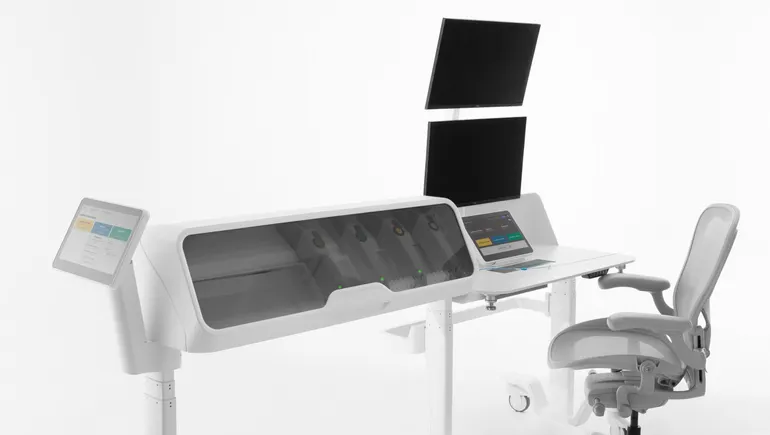
At the heart of the Sentante platform is a sophisticated architecture designed to replicate the nuances of manual vascular surgery. Unlike previous iterations of remote robotics that often felt disconnected or "numb," Sentante’s system provides the operator with authentic tactile feedback. This is a critical technical achievement; the ability to "feel" the resistance of a guidewire or the friction of a catheter against a vessel wall is essential for navigating the delicate, winding anatomy of the intracranial vasculature.
The system utilizes standard catheters and guidewires, allowing surgeons to operate over a secure, high-speed network. By digitizing the surgeon’s movements, the platform transmits instructions to a robotic interface at the patient’s bedside. The goal is simple yet profound: to eliminate the logistical delays inherent in long-distance patient transfers and bridge the gap created by the global shortage of neurointerventional specialists.
A Chronology of Progress: From Concept to Clinical Reality
The trajectory of Sentante’s development reflects the rigorous standards of modern medical device innovation. The company’s journey has been marked by strategic regulatory engagement and a steadfast focus on addressing the most urgent needs in stroke management.
September 2023: The FDA Breakthrough Designation
The regulatory landscape shifted in late 2023 when the U.S. Food and Drug Administration (FDA) granted Sentante’s system "Breakthrough Device Designation." This recognition was not merely a procedural badge; it was a formal acknowledgement by federal regulators that the technology addresses a critical, unmet clinical need. By designating the system as a potential solution for acute ischemic stroke, the FDA signaled its commitment to fast-tracking the development and review process for a technology that could fundamentally alter the standard of care for stroke patients in remote or underserved hospitals.
February 2024: The Pivot to Human Trials
By early 2024, Sentante had signaled its transition from laboratory validation to clinical implementation. The company announced it was actively preparing for first-in-human remote stroke trials. Simultaneously, Sentante joined the FDA’s Total Product Life Cycle Advisory Program (TAP). This program has been instrumental in helping the company define the complex regulatory pathway for an Investigational Device Exemption (IDE), specifically tailored for remote stroke thrombectomy.
Mid-2024: CE Mark and Market Entry
The recent attainment of the CE mark represents the culmination of years of engineering and validation. This certification allows Sentante to begin its initial market rollout within European jurisdictions. The company is currently shifting its focus toward clinician training programs, ensuring that the surgeons who operate the system are as proficient with the remote interface as they are with traditional manual techniques.
Supporting Data: The Case for Tele-Robotic Intervention
The necessity for such technology is supported by stark clinical data. In the United States and Europe, the burden of ischemic stroke is immense, yet the availability of thrombectomy—the mechanical removal of a blood clot—is unevenly distributed.
The Geography of Stroke Care
Studies have consistently shown that for every 30-minute delay in reperfusion, the probability of a favorable clinical outcome drops significantly. Currently, patients in rural hospitals often wait hours for ambulance or air transport to a tertiary stroke center. This delay often results in permanent disability or death.
Technical Efficacy
Sentante’s platform is designed to maintain the "standard of care" while adding a layer of virtual proximity. Because the platform uses standard catheters and guidewires, it minimizes the learning curve for experienced neurointerventionalists. The robotic system acts as a "digital extension" of the surgeon’s hands. Initial internal testing and pre-clinical data suggest that the latency in the secure network is sufficiently low to allow for real-time adjustments, effectively negating the physical distance between the patient and the physician.
Official Perspectives and Strategic Vision
Sentante’s leadership has been vocal about the company’s dual-pronged strategy. While the neurointerventional (stroke) application is the most headline-grabbing, the company is concurrently pursuing regulatory clearance for peripheral vascular indications. This diversification is strategic, ensuring that the platform’s utility extends beyond the brain to include procedures in the legs, kidneys, and other vascular beds.
In various public statements, Sentante executives have emphasized that the technology is not meant to replace the human specialist, but rather to empower them. "Our platform is a force multiplier," a spokesperson noted during a recent industry summit. "It allows one expert to potentially cover multiple hospitals, ensuring that a patient in a rural setting receives the same level of care as someone in a major metropolitan research hospital."
The involvement in the FDA’s TAP program has been particularly vital. By collaborating directly with regulators, Sentante is ensuring that its clinical trials are designed with sufficient statistical power to satisfy both safety and efficacy requirements, thereby reducing the risk of costly delays in the final stages of the IDE process.
Implications: The Future of Remote Surgery
The implications of Sentante’s success extend far beyond the operating room. If tele-robotic thrombectomy becomes the new standard, the healthcare system may witness a fundamental shift in how hospitals are structured.
1. The Decentralization of Specialized Care
Currently, stroke care is centralized in high-volume, urban medical centers. Sentante’s technology could enable smaller community hospitals to maintain their own vascular intervention suites, managed by remote specialists. This would reduce the burden on urban centers and allow for more localized, patient-centered care.
2. Economic and Logistical Efficiency
The cost of patient transfers—both in terms of ambulance/helicopter fees and the lost productivity of specialized staff—is astronomical. By removing the need for transfer, the healthcare system could potentially save millions annually, while simultaneously improving patient outcomes and quality-adjusted life years (QALYs).
3. The Ethical Imperative
Perhaps the most significant implication is ethical. The "postcode lottery" of healthcare—where one’s survival depends on their proximity to a major city—is a systemic failure. Sentante’s platform offers a path to democratizing access to life-saving technology. It presents a world where the expertise of a world-class neurointerventionalist is no longer confined to their physical location, but can be "beamed" to wherever a patient is in crisis.
4. Continued Development and Pipeline
While the CE mark is a major victory, Sentante remains in a phase of rapid development. The company’s focus on its product pipeline suggests that the current system is merely the first generation of a broader suite of remote surgical tools. Future iterations may include enhanced AI-assisted navigation, automated clot detection, and predictive analytics that help surgeons choose the optimal path through complex, tortuous arteries.
Conclusion: A New Horizon for Neurosurgery
As Sentante moves toward its first-in-human trials and begins its market rollout, the medical community will be watching closely. The technical hurdles of remote robotics—latency, tactile fidelity, and cybersecurity—are immense, but the potential rewards are incomparable.
The transition from manual to remote, robotic-assisted intervention represents one of the most significant shifts in vascular surgery since the invention of the stent. By combining the precision of robotics with the expertise of the human specialist, Sentante is not just creating a new device; it is building a bridge over the vast chasm that currently separates rural patients from the high-quality care they deserve.
The road ahead will undoubtedly involve further regulatory scrutiny and the demanding process of clinical validation. However, with the FDA’s backing and a newly acquired CE mark, Sentante is firmly positioned at the vanguard of the next medical revolution—one where geography is no longer a factor in the survival of a stroke patient. The future of surgery is not just robotic; it is borderless.