In the complex landscape of modern healthcare, the divide between medical innovation and patient accessibility is often bridged—or broken—by the timing of information. As pharmaceutical therapies, diagnostic breakthroughs, and clinical trial opportunities proliferate at an unprecedented rate, the traditional challenge for healthcare organizations has shifted from information scarcity to information fragmentation. Today, the frontier of patient engagement is no longer about the volume of communication, but rather the precision, context, and privacy-safe synchronization of that communication.
Artificial intelligence (AI) and advanced omnichannel technologies are currently orchestrating a paradigm shift, transforming how healthcare organizations deliver awareness messages. By moving away from invasive tracking toward aggregated, de-identified insights, the industry is entering an era of "precision awareness," where patients and clinicians are empowered by the right information at the exact moment it can influence health outcomes.
Main Facts: The Shift Toward Contextual Intelligence
The core premise of this evolution is that brand conversion and treatment adherence are not random events; they are functions of timing and environmental context. According to industry analysis, modern AI-enabled technologies allow healthcare stakeholders to identify clinical patterns across diverse patient populations without compromising individual privacy.
Rather than relying on intrusive personal data—a practice increasingly discouraged by both regulatory scrutiny and shifting consumer privacy preferences—modern outreach is guided by population-level insights. By analyzing aggregated trends, organizations can identify communities that would benefit most from education regarding specific therapies or diagnostic screening options.
This approach serves a dual purpose: it ensures compliance with rigorous data privacy standards while simultaneously increasing the relevance of information. When an awareness message is delivered—whether through a digital health platform, a clinical portal, or broader public media—it acts as a catalyst for informed decision-making rather than a disruptive sales pitch.
Chronology: The Evolution of Patient Engagement
The trajectory of healthcare communication has evolved significantly over the past decade, moving from broad, "one-size-fits-all" marketing to hyper-personalized, context-aware engagement.
- Pre-2015: The Era of Broadcast Outreach. Healthcare marketing and patient education relied heavily on mass media or generalized physician brochures. Communication was fragmented; patients and providers rarely operated from the same information baseline.
- 2015–2020: The Digital Transition. The adoption of Electronic Health Records (EHRs) and patient portals created centralized hubs for information. However, these systems often functioned in silos, separate from the broader digital experience of the patient.
- 2020–2023: The AI Integration. The COVID-19 pandemic accelerated the need for remote, precise communication. Healthcare organizations began deploying AI models to interpret large-scale data sets, allowing for the identification of care gaps and the delivery of targeted messaging.
- 2024 and Beyond: The Synchronized Experience. We are currently in the age of "Synchronized Communication," where AI bridges the gap between public health awareness and the point-of-care, ensuring that patients and clinicians are aligned in real-time.
Supporting Data: The Impact of Synchronized Care
The empirical evidence supporting this transition is robust. Research from industry leaders and academic institutions consistently demonstrates that mutual awareness between a clinician and a patient is a primary driver of successful treatment plans.
The Role of Population-Level Data
Studies highlight that population-level data analytics can identify "unmet needs" with remarkable accuracy. When clinicians are alerted to clinical updates or diagnostic availability at the point of care, and patients simultaneously receive educational support through accessible channels, the result is a measurable reduction in "information asymmetry."
Improving Adherence and Trust
Research published in the Journal of Medical Internet Research (JMIR) emphasizes that when patients and providers share a common context, patient satisfaction scores rise, and long-term treatment adherence rates improve. Fragmented communication—where a patient learns of a new therapy from a TV ad but their doctor remains unaware, or vice versa—is a leading cause of confusion and treatment abandonment. Integrated models mitigate this by ensuring that new medical information fosters collaboration rather than uncertainty.
Official Perspectives: Expert Insights on AI Integration
Aaron Noll, a data scientist with extensive clinical and technical experience, notes that AI serves as the ultimate "awareness accelerator." By continuously learning from new data streams, AI orchestrates the timing and placement of information.
"The goal is connection," Noll explains. "AI-driven methods focus on precision awareness by aligning content with context. Whether it is a sponsored segment on connected TV or an educational post on a health site, AI ensures the information appears in the right place at the right moment. It is about relevance without intrusion."
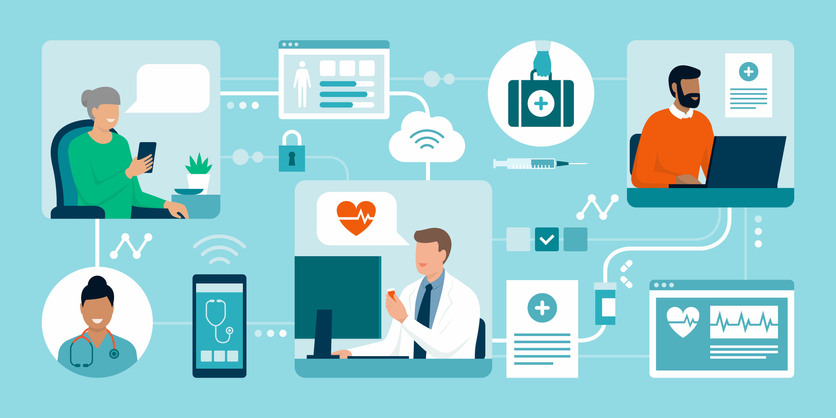
From a clinical standpoint, the integration of these systems into the EHR environment is transformative. By providing clinicians with the same relevant context that the patient encounters in their daily digital life, the "human moment" of the appointment is preserved. Instead of spending time clarifying basic information, providers can use the visit to discuss deeper clinical questions, treatment preferences, and personalized care strategies.
Implications for the Future of Healthcare Delivery
The shift toward AI-orchestrated engagement carries significant implications for the healthcare ecosystem at large.
1. The Redefinition of "Access"
Historically, access to care meant physical proximity to a facility. In the modern context, access is increasingly defined by "information access." If a patient is unaware of a clinical trial or a diagnostic test that could save their life, their physical access to a hospital is moot. Precision awareness bridges this "knowledge gap," ensuring patients are empowered to advocate for the latest care options.
2. Strengthening the Patient-Provider Relationship
Trust is the currency of the healthcare system. By moving toward privacy-safe, data-informed strategies, organizations can build environments where patients feel comfortable sharing personal health goals. When the information provided is consistently accurate, timely, and relevant, it bolsters the credibility of the entire care team.
3. The End of Fragmentation
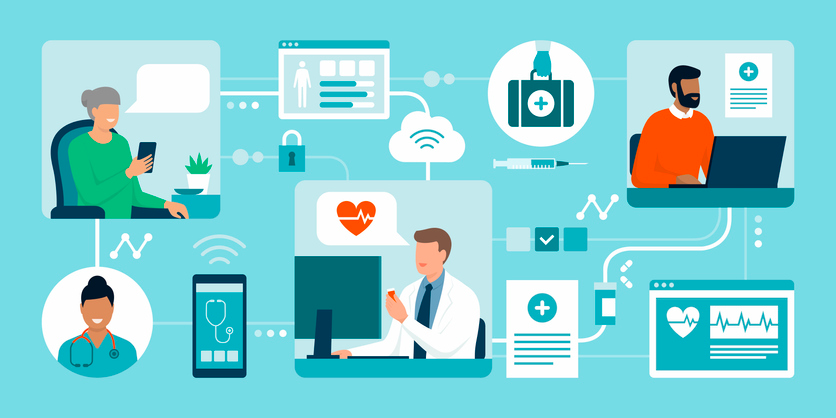
The greatest risk to modern treatment plans is fragmentation. When a patient journey is disjointed, outcomes suffer. The integrated model described here suggests that the future of healthcare communication is one of "orchestration," where disparate touchpoints—from social media feeds to EHR interfaces—are connected by a singular, intelligent thread.
4. Regulatory and Ethical Considerations
As AI becomes more deeply embedded in communication, the focus must remain on the "privacy-first" imperative. The success of this model depends on the ability of healthcare organizations to use data for the patient’s benefit without overstepping boundaries. Transparency in how AI uses population-level data to trigger outreach is essential to maintaining public trust.
Conclusion: The Human Moment
Technology is not a replacement for the clinician-patient relationship; it is a scaffold that supports it. The promise of AI-enabled, context-aware communication lies in its ability to strip away the "noise" that clutters the modern healthcare journey.
By ensuring that awareness is delivered with surgical precision, healthcare providers can reclaim the "human moment." When patients arrive at an appointment equipped with thoughtful questions, and clinicians are armed with the latest data-driven insights, the result is a move away from the traditional, top-down instruction model toward a collaborative partnership.
In this new era, the effectiveness of any medical intervention will be judged not just by its clinical trial data, but by how successfully that intervention is communicated to the people who need it most. Through the intelligent synchronization of information, the industry is moving closer to a vision of care that is, above all else, timely, relevant, and profoundly human.
About the Author:
Aaron Noll is a Data Scientist at OptimizeRx with a multidisciplinary background in medicine, bioinformatics, and applied statistics. His work focuses on leveraging data to improve patient outcomes through advanced communication technologies.