











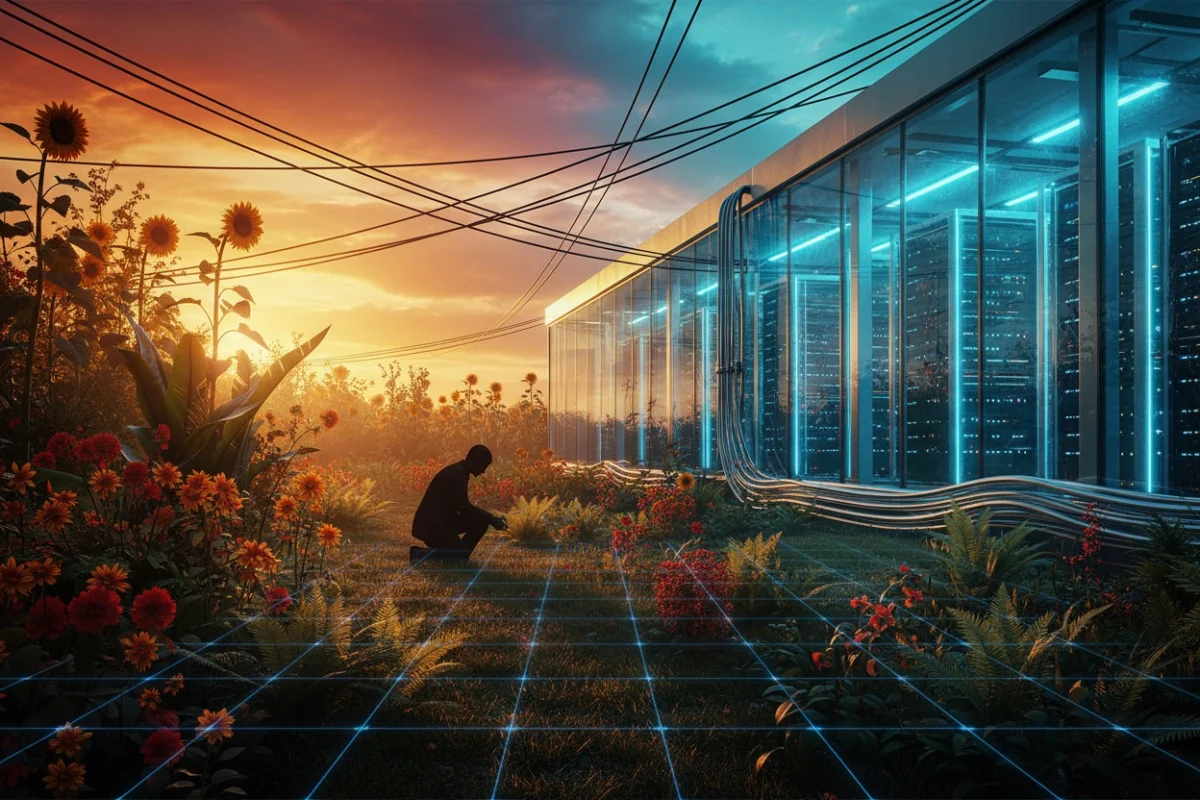
The modern landscape of global infrastructure is undergoing a seismic, and often invisible, transformation. What is being framed by policymakers as a necessary evolution toward a digital future is, according to a growing chorus of critics, a systematic dismantling of human autonomy. As data centers consume unprecedented amounts of electricity and artificial intelligence (AI) is woven into the fabric of daily governance, the conflict between human necessity and machine efficiency has reached a critical inflection point.
Main Facts: The New Resource Conflict
At the heart of the current debate is the competition for critical resources. As the "AI race" accelerates, the demand for electricity has skyrocketed, placing industrial-scale data centers in direct competition with residential power grids. The recent situation in Lake Tahoe, where Nevada Power proposed significant service disruptions to accommodate the energy requirements of a massive data center, serves as a flashpoint for this tension.
For many, this is not merely a logistical failure but a clear indication of a shifting hierarchy of values. When a utility company—an entity tasked with serving the public—prioritizes the processing capacity of an AI server farm over the basic heating and cooling needs of 50,000 households, the traditional social contract between the state and the citizen is effectively rewritten. This phenomenon is being replicated globally, as the infrastructure of the "Silicon Heartland" in regions like Ohio sees public-private partnerships funneling taxpayer-subsidized energy into private, corporate-controlled digital silos.
Chronology of the Digital Shift
The current state of technological centralization is the culmination of decades of strategic integration between government and the private sector:
- The Early 2000s: The rise of internet giants, often nurtured by initial funding from intelligence agencies, established the early infrastructure for mass data collection.
- The 2010s: The proliferation of social media platforms and "smart" devices created the first iteration of the digital surveillance state, turning user behavior into a tradable commodity.
- 2020–2023: The global push for digital transformation accelerated during the pandemic, leading to the rapid adoption of digital currencies and remote-first monitoring systems.
- 2024–Present: The AI boom has necessitated the construction of gargantuan data centers. The current phase is characterized by the integration of these centers into national power grids, effectively making the stability of the grid dependent on the uptime of AI models rather than the needs of the populace.
Supporting Data and The Infrastructure of Control
The "Data Center Heist," as it is described by skeptics, is characterized by the diversion of power from local communities to private entities. Data suggests that a single large-scale AI data center can consume as much electricity as a small city. When states offer tax breaks and land to these entities under the guise of "innovation" or "national security," they are effectively subsidizing the infrastructure of a digital surveillance state.
Critics point to the involvement of companies like Palantir and other intelligence-adjacent contractors in government operations as evidence that this infrastructure is dual-use. The same processing power used to optimize "movie recommendations" can, and often is, repurposed for predictive policing, social credit scoring, and the mass categorization of citizens. The expansion of these digital twins—simulated versions of real-world entities—is viewed by many as a precursor to a world where biological human agency is secondary to algorithmic output.
Official Responses and Corporate Narratives
The official stance from governments and major tech corporations remains consistent: the AI race is a matter of geopolitical survival. The narrative presented by the corporate media is that the United States must achieve dominance in AI development to prevent global adversaries, such as China, from establishing a technological hegemony.
Utility providers often justify the prioritization of data centers by citing "long-term economic growth" and the "unavoidable necessity of the digital transition." They argue that the energy grid is being modernized to handle the needs of the future and that short-term disruptions are necessary growing pains. However, these responses rarely address the fundamental question of who owns the data being processed and why private digital infrastructure is being granted "critical utility" status over residential needs.
Implications: The War on Consciousness
The long-term implications of this shift are profound, affecting everything from economic freedom to mental health.
1. The Erosion of Financial Sovereignty
The push for Central Bank Digital Currencies (CBDCs) represents the final stage of this transition. Unlike physical cash, which is decentralized and private, a CBDC would allow for the total integration of a citizen’s financial activity into a state-monitored ledger. This creates the potential for the "programmable" money—where the state could potentially restrict how, where, and when an individual spends their own funds.
2. The Mental Health Crisis as a Tool
The rise in anxiety, depression, and social fragmentation is, according to some researchers, a direct outcome of the digital environment. By engineering social media algorithms to maximize "engagement" through fear and division, platforms effectively manipulate human psychology. As predicted by Aldous Huxley in the mid-20th century, modern technology has moved beyond coercion to a form of psychological conditioning that bypasses the rational mind, rendering the populace more compliant and less capable of critical analysis.
3. The Digital Twin and the Soul
The concept of the "digital twin"—a virtual model of a physical object or human—is being touted as a breakthrough in efficiency. Yet, critics argue this is the first step toward the obsolescence of the human experience. If a human being can be fully simulated, modeled, and predicted, the intrinsic value of the "messy," unpredictable nature of human consciousness is diminished. This drive to digitize every aspect of existence serves to treat humans as assets to be managed rather than autonomous beings.
Reclaiming Autonomy: A Strategy for Resistance
Given the systemic nature of this shift, reliance on traditional political or judicial avenues is viewed by many as insufficient. The proposed solution is a strategy of radical decentralization:
- Decentralizing Energy: Investing in off-grid power solutions, such as solar, wind, and local micro-grids, to reduce dependence on centralized utility providers that prioritize corporate data centers.
- Economic Sovereignty: Moving away from digital-only assets and utilizing tangible, physical stores of value, such as precious metals, to hedge against the volatility and potential control inherent in digital ledger systems.
- Digital Hygiene: Recognizing that the mind is the final battleground. This involves limiting exposure to algorithmic feeds, opting for encrypted communication tools (such as Proton Mail), and utilizing alternative, independent media platforms that do not participate in the cycle of fear-based narrative management.
- Community Resilience: The return to localized production—specifically in food and goods—is seen as the ultimate form of rebellion. A community that can feed itself and generate its own energy is fundamentally unmanageable by a centralized technocratic system.
Conclusion
The technocratic movement operates on the premise that humanity is a problem to be solved by better machines. By prioritizing the "digital" over the "biological," they have set the stage for a world where freedom is an outdated concept. Resistance, therefore, is not merely a political stance but a necessity for survival. By reclaiming our attention, our resources, and our independence from the digital ledger, we preserve the one thing that can never be simulated: the human spirit. The decision to opt-out of the machine-centric future is the most significant choice an individual can make in the 21st century.