







By [Your Name/Journalistic Desk]
May 22, 2026
The American healthcare landscape is bracing for a period of profound financial volatility. Following the implementation of the 2025 tax law—a legislative cornerstone of the current administration—hospitals, behavioral health providers, dentists, and private practices are facing a seismic shift in how they are reimbursed for care.
While the industry had already begun preparing for the phase-out of elevated Medicaid reimbursements, the Trump administration signaled this week that it intends to aggressively accelerate the timeline for cutting “state-directed payments.” This move, which aims to align Medicaid compensation more closely with Medicare benchmarks, threatens to dismantle the financial foundation of many safety-net providers, sparking a high-stakes showdown between the federal government and the medical lobby.
The Policy Shift: From Commercial Rates to Medicare Parity
At the heart of the conflict is the concept of "state-directed payments." Under a policy framework established during the Biden administration, many states utilized federal waivers and supplemental payment programs to reimburse hospitals and physicians for Medicaid patients at rates often equivalent to commercial insurance levels.
For many rural hospitals and specialized behavioral health clinics, these payments were the difference between operational sustainability and insolvency. However, the One Big Beautiful Bill Act, signed into law in July 2025, fundamentally altered this landscape. The legislation mandates that the Centers for Medicare and Medicaid Services (CMS) gradually reduce these supplemental payments, beginning in 2028, until they are effectively tethered to Medicare rates.
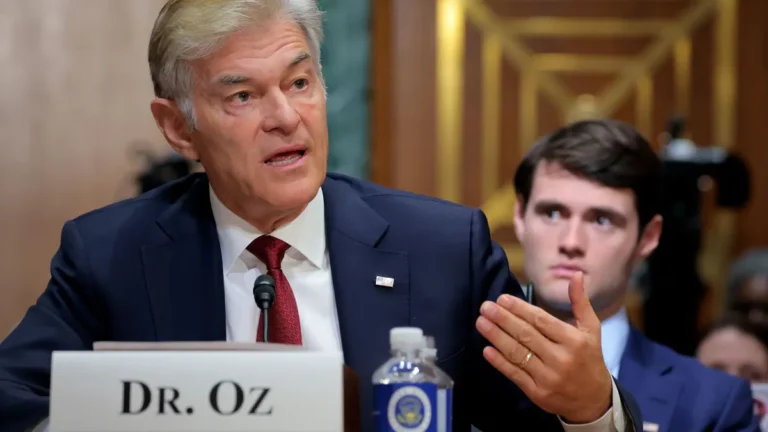
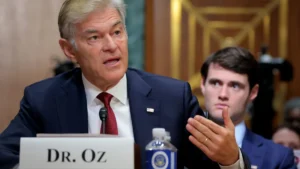
The recent signals from the Trump administration—led by HHS Secretary Robert F. Kennedy Jr. and CMS Administrator Mehmet Oz—suggest that the federal government is looking to tighten the screws even further, potentially bypassing state-level buffers to reach Medicare-level parity faster than the industry previously anticipated.
Chronology of a Fiscal Confrontation
To understand the current tension, one must examine the rapid evolution of federal healthcare finance over the last 24 months:

- 2024: The Biden-era framework reaches peak utilization, with states increasingly relying on supplemental Medicaid payments to keep safety-net hospitals afloat.
- July 2025: The One Big Beautiful Bill Act is passed. It serves as a major tax and spending overhaul, including provisions to curb federal spending on Medicaid supplemental payments.
- Early 2026: Providers begin internal audits, projecting significant revenue shortfalls starting in the 2028 fiscal year.
- May 18, 2026: President Trump meets with his healthcare leadership team, including CMS Director Chris Klomp, Secretary Kennedy, and industry disruptor Mark Cuban, to discuss aggressive cost-containment strategies.
- May 20, 2026: The Trump administration officially signals its intent to accelerate the reduction of directed payments, prioritizing federal budget deficit reduction over the previous "gradual" transition timeline.
Supporting Data: The Medicaid Funding Gap
The reliance on these supplemental payments is not merely a convenience; it is a structural necessity for the modern American safety net. Data from the American Hospital Association (AHA) and various state health departments highlight the potential impact of the proposed cuts:
- Revenue Exposure: On average, hospitals currently receiving directed payments see these funds account for 8% to 15% of their total Medicaid revenue.
- The Medicare-Medicaid Gap: Historically, Medicaid reimbursement rates have lagged significantly behind Medicare. In many states, Medicaid pays only 60-70% of what Medicare pays for the same procedure. The "directed payment" model served to bridge this 30-40% gap.
- Labor Costs: Behavioral health providers, which have been hit hardest by workforce shortages, rely on these payments to fund competitive wages. A return to base-level Medicaid rates would likely force a 15% reduction in staffing capacity across the sector.
- Rural Vulnerability: Nearly 40% of rural hospitals operate on razor-thin margins of less than 2%. For these facilities, the elimination of supplemental payments is projected to trigger a wave of closures or service-line cuts, particularly in obstetrics and emergency psychiatry.
Official Responses and Political Strategy
The administration’s stance is characterized by a "value-based" philosophy, championed by figures like Mark Cuban, who has been advising the White House on drug pricing and administrative efficiency.
"We are moving toward a system where quality is the primary driver of reimbursement, not arbitrary geographic or supplemental multipliers," said an unnamed CMS spokesperson during a briefing this week. "The previous administration’s reliance on these payments was a band-aid on a broken system. We are forcing the system to confront its true cost structures."
In contrast, provider groups are mobilizing in opposition. The American Medical Association (AMA) and the National Association of Rural Health Clinics have issued joint statements warning that "the administration is confusing fiscal austerity with health equity."
"You cannot simply slash revenue for the providers who take care of our nation’s most vulnerable citizens and expect the system to function," stated a representative from a major hospital lobbyist group. "If these cuts proceed, we are looking at an unprecedented desertification of care in both rural and urban areas."
Implications for Patients and the Healthcare System
The implications of this policy shift are vast, touching every corner of the healthcare ecosystem.
The "Desertification" of Behavioral Health
Behavioral health providers are particularly at risk. Because private insurance often offers low reimbursement rates for mental health services, these providers have become heavily reliant on Medicaid supplemental payments to keep their doors open. A reduction in these funds may force many to transition to "cash-only" models, effectively locking Medicaid patients out of the private network.

Dental Care and Access
Dentists, who have seen an increase in Medicaid participation due to the supplemental payment structures, are already threatening to drop Medicaid panels. The administrative burden of treating Medicaid patients is high; without the financial incentive of directed payments, the business case for accepting government-subsidized insurance collapses.
The Rise of Vertical Integration
As small practices and independent hospitals face financial ruin, the trend of vertical integration is expected to accelerate. Large, private-equity-backed hospital systems are better positioned to absorb these cuts through economies of scale and by leveraging higher commercial rates elsewhere. This will likely lead to further consolidation, reducing competition and potentially increasing the overall cost of care for the private sector.
A Test of Federalism
The conflict also sets up a constitutional and procedural battle between states and the federal government. Many states have built their entire Medicaid budgets around these supplemental payments. If the federal government forces a hard cap on these funds, states may be forced to either increase their own taxes to fill the hole or face massive service cuts, setting the stage for a series of lawsuits in the coming months.
Conclusion: A High-Stakes Gamble
The Trump administration’s decision to tighten the reins on Medicaid directed payments is a calculated gamble. By prioritizing fiscal discipline and attempting to force a normalization of healthcare costs, the administration is betting that the provider industry will find efficiencies that have thus far remained elusive.
However, critics argue that this is a dangerous experiment with human lives. As 2028 approaches, the window for negotiation is narrowing. Whether this showdown leads to a more efficient, streamlined healthcare system or a collapse of the safety net for the nation’s poorest patients remains the central, unresolved question of the 2026 legislative year.
For now, healthcare providers are left in a state of nervous anticipation, waiting to see if the administration’s rhetoric will translate into immediate, catastrophic policy or if there is room for a compromise that preserves access to care while curbing the costs of the American medical system.