









Introduction: The Paradox of Modern Healthcare
In an era where the healthcare industry is aggressively pivoting toward digitization, the patient experience remains caught in a disjointed limbo. We are promised seamless, high-tech journeys that mirror the efficiency of a global airport or a high-end retail experience. Yet, for many patients, the reality is a frustrating hybrid: the burden of redundant data entry combined with the cold, depersonalized interaction of clinical staff who seem more concerned with "box-checking" than bedside manner.
For Dr. Risa Jampel, a board-certified dermatologist and scholar of bioethics, a recent routine visit to an internal medicine specialty clinic for blood pressure management became a profound case study in the failures of human-to-human interaction in a clinical setting. What should have been a standard appointment for a 24-hour blood pressure monitor placement instead turned into an encounter so sterile and dehumanizing that it prompted a radical shift in her professional perspective: perhaps, in some clinical settings, the empathetic reach of a human is less desirable than the neutral, efficient precision of a chatbot.
The Chronology of an Appointment
Dr. Jampel’s experience began with the typical administrative hurdles of the modern patient. Having completed her online registration the day prior—meticulously inputting her demographics, extensive medical history, current medications, and allergy profiles—she arrived at the clinic expecting a streamlined process.
The Kiosk Mirage
Upon arrival, she was directed to a digital kiosk. However, the experience was immediately undermined by a lack of support. Unlike an airport, where kiosk self-service is bolstered by nearby agents ready to troubleshoot, the clinic’s kiosk was merely the first gate in a series of redundant checks.
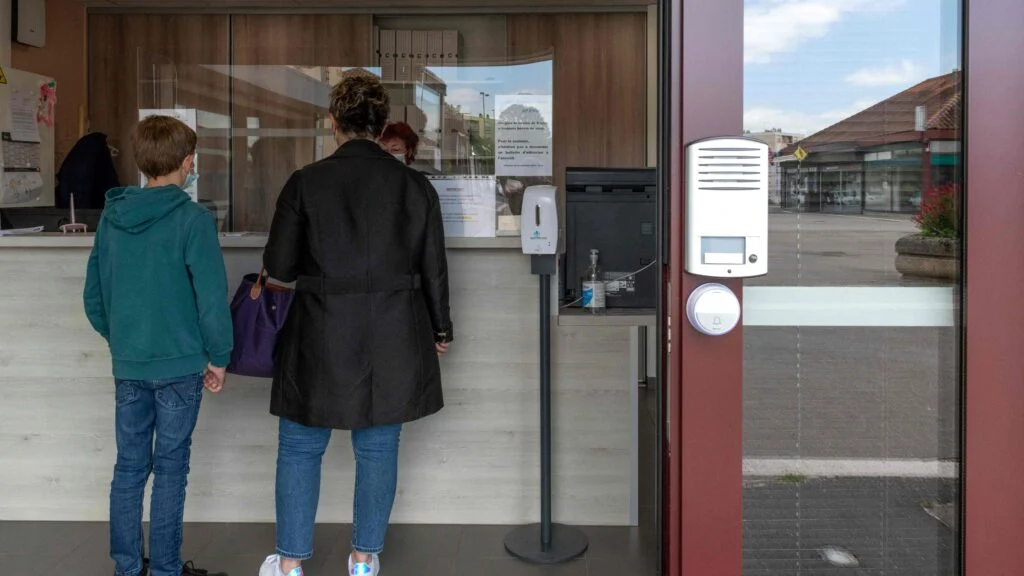
Following the kiosk interaction, she was required to report to the front desk. Despite having provided her data digitally, she was asked to recite her personal details—name spelling, date of birth, insurance information—and was queried on recent international travel. This redundancy, a common grievance among modern patients, served as the initial friction point.
The Encounter with "Sandy"
After being directed to a waiting area, Dr. Jampel was called by a staff member. The pronunciation of her name was incorrect, a minor but indicative oversight. When she stood to identify herself, she was met with a "blank stare." There was no name tag, no introduction, and no warmth. When prompted for her name, the assistant—hereafter referred to as "Sandy"—offered only a curt, "I’m going to do your intake."
The subsequent minutes were marked by a lack of basic social etiquette. Instructions were barked as imperatives: "Stand on the scale," followed by a blunt "Sit here," pointed toward a bench. "There was no ‘please,’" Dr. Jampel recalls. "I suddenly could relate to how a dog must feel when being ordered to sit."
The Clinical Disconnect
The technical aspects of the intake were equally fraught with professional oversights. During the blood pressure measurement, Sandy failed to ensure that Dr. Jampel was in an optimal, supported position—a fundamental requirement for accurate blood pressure readings in a specialty clinic.
This was followed by a series of scripted, emotionally vacant screening questions:
- Fall Risk: When asked about falls, Dr. Jampel struggled with the binary nature of the query. She had experienced minor trips associated with athletic activities like ice skating and hiking, but no falls related to gait or vision. The rigid questionnaire allowed no room for nuance.
- Mental Health: Sandy then transitioned to asking about feelings of worthlessness, depression, or suicidal ideation in the past two weeks. The lack of rapport made these sensitive questions feel intrusive rather than caring.
Supporting Data: The Efficiency Gap
Dr. Jampel’s experience highlights a growing disconnect between the promise of "patient-centered care" and the reality of clinical workflows.
- Administrative Burden: Studies suggest that redundant data entry is one of the leading contributors to patient dissatisfaction. When a patient spends time filling out online portals, only to be asked the same questions in the lobby, the perceived value of the digital infrastructure is effectively negated.
- The "Box-Checking" Phenomenon: Medical intake processes are increasingly driven by Electronic Health Record (EHR) mandates that prioritize data collection over interpersonal connection. When clinical staff are pressured to hit performance metrics—like asking mental health screening questions—without the training or time to build a therapeutic alliance, the questions become performative.
- Communication Errors: According to the Agency for Healthcare Research and Quality (AHRQ), effective communication is the cornerstone of patient safety. Errors in name pronunciation or a lack of introductions can cause patients to feel disengaged, potentially leading them to withhold vital information out of discomfort.
Official Responses and Industry Trends
While the specific clinic involved has not issued a statement, the broader medical community is currently in a heated debate regarding the role of technology in patient intake.
Proponents of AI argue that the "Sandy" scenario is exactly why automation is necessary. If a task requires no clinical judgment or emotional support, why risk a negative human interaction?
"We are seeing a trend where clinics are testing ‘digital front doors,’" says a consultant for health systems architecture. "The goal is to offload the repetitive, non-clinical tasks to AI to free up human staff to perform the high-value emotional work that patients actually need."
However, critics remain wary. Dr. Jampel notes that her background in bioethics initially made her skeptical of replacing human interaction with algorithms. "My automatic reaction to the replacement of humans by AI—rather than augmentation—has always been ‘no, not for me,’" she explains. But the "Sandy" interaction flipped that narrative. If a human is acting with "emotional vacancy," the human element is not just redundant; it is actively damaging the patient experience.
Implications: The Case for a Digital Transformation
Dr. Jampel proposes a restructuring of the clinical intake process that mirrors the efficiency of modern self-service industries, but with a focus on patient dignity.
The Proposed Model
- True Self-Service: Patients would complete all registration, including ID and insurance scanning, via an intuitive kiosk or app.
- Automated Vitals: The kiosk would guide the patient to a private vitals station, providing clear, gentle instructions on how to use automated equipment. Data would feed directly into the EHR, eliminating human error in transcription.
- Personalized Screening: Instead of a "one-size-fits-all" questionnaire, the AI could curate questions based on the patient’s specific visit reason.
- Privacy and Reflection: Sensitive questions regarding mental health could be answered in a private, digital format, allowing for true self-reflection rather than the pressured, performative "no" that occurs when answering a stranger in a hallway.
Bioethical Considerations
From a bioethical standpoint, the shift toward AI in intake is not a move toward abandoning care; it is a move toward protecting the sanctity of the patient-provider relationship. By using an algorithm trained to gather straightforward information in a neutral manner, clinics can ensure that the limited time a patient has with a nurse practitioner or physician is reserved for meaningful, human interaction.
"Sandy was not neutral; she was downright unpleasant," Dr. Jampel observes. "The use of AI in clinical medicine is inevitable. If we can use it to handle the mundane, we might actually save the human element for when it matters most."
Conclusion: Reclaiming Humanity
The irony of Dr. Jampel’s experience is that a failed human interaction became the strongest argument for technological intervention. When staff are inadequately trained or suffering from "compassion fatigue," they can inadvertently create a barrier to care.
In the modern clinic, the goal should not be to replace humans, but to ensure that when a patient finally sits down with a clinician, the interaction is built on mutual respect and clarity, rather than the residual irritation of a poorly executed intake. If the choice is between a cold, unpleasant human interaction and a polite, efficient, and private digital one, the future of healthcare may very well lie in the hands of the chatbot.