







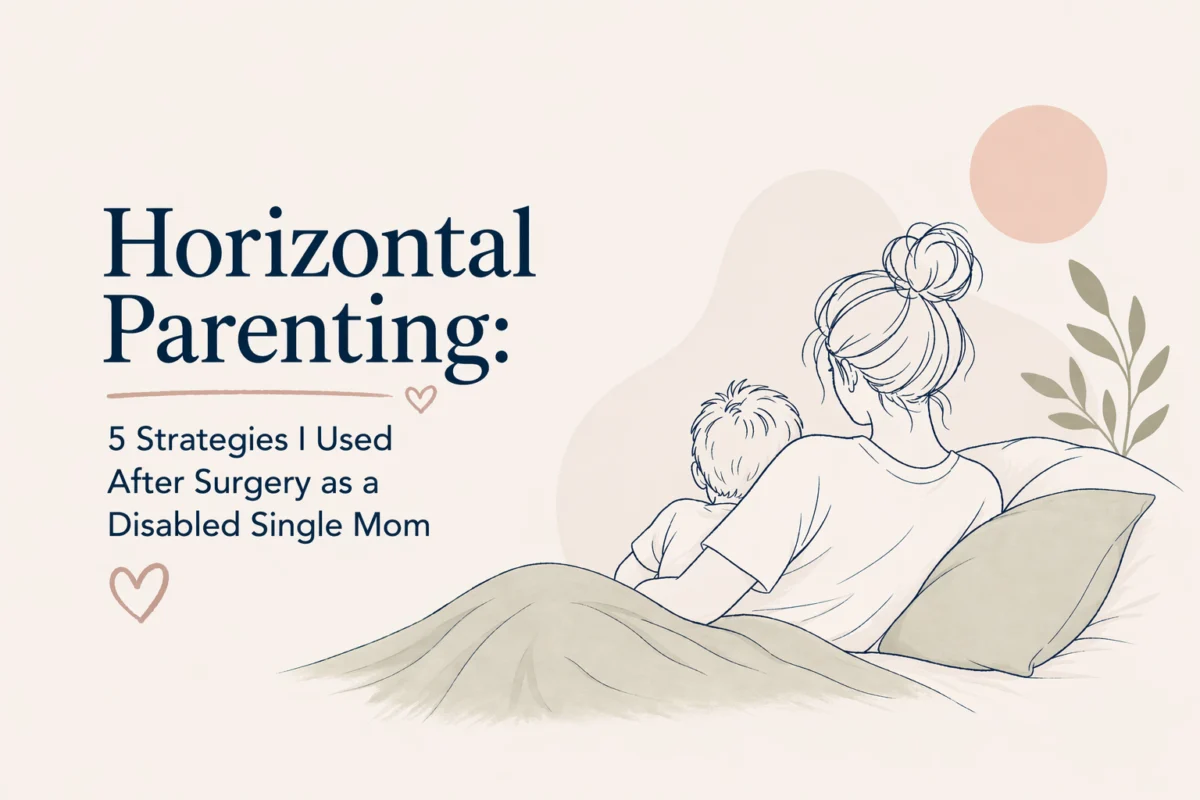
For many parents, the milestones of raising a child are marked by physical activity: chasing a toddler through a park, lifting a child into a high chair, or sitting on the floor for hours of block-building. But for Katie Zinno, a single mother living with a complex constellation of chronic conditions—including Ehlers-Danlos Syndrome (EDS), Postural Orthostatic Tachycardia Syndrome (POTS), mast cell activation syndrome (MCAS), and Sjögren’s—the traditional "playbook" of parenthood was never an option.
After undergoing more than 40 surgeries, including intensive spinal fusions and brain surgery, Zinno has pioneered a practice she calls "Horizontal Parenting." Her experience offers a roadmap for disabled parents navigating the intersection of surgical recovery, single motherhood, and the necessity of radical adaptation.
The Chronology of a Medical Odyssey
Zinno’s journey into motherhood was fraught with medical volatility from the outset. Her son was born 11 weeks premature, requiring a 63-day stay in the Neonatal Intensive Care Unit (NICU). The family was discharged into the isolation of the COVID-19 pandemic, a time of unprecedented societal shutdown.
Just eight months after bringing her son home, Zinno faced a life-altering medical intervention: an occipitocervical fusion. This complex spinal surgery required her to remain in a rigid neck brace for an extended recovery period. "There was no manual for recovering from this kind of major surgery with a small baby during a global lockdown," Zinno explains. "I had to write the one I wish I’d had."
The timeline of her life became a series of surgical interventions layered over the developmental milestones of her child. From recovering from a traumatic birth and emergency kidney stone surgery to managing the aftermath of brain surgery, Zinno’s narrative is one of constant recalibration—shifting her expectations of what "parental success" looks like in a body that requires constant medical maintenance.
Supporting Data: The Prevalence of Disabled Parenting
While often overlooked in mainstream parenting discourse, disabled parenting is a reality for millions. According to the National Research Center for Parents with Disabilities, nearly 7 million children in the United States have parents with disabilities. Despite this, the medical and social support systems are often designed with able-bodied, two-parent households in mind.
Zinno’s strategies—which prioritize energy conservation and environmental modification—align with the principles of "Universal Design," a concept usually applied to architecture but increasingly relevant in domestic caregiving. By treating the home as a functional workspace that must accommodate limited mobility, parents with chronic illness can mitigate the "burnout" cycle that often accompanies invisible disabilities.
Five Pillars of Horizontal Parenting
Zinno’s approach is built upon five foundational strategies designed to preserve the parent-child bond while managing physical limitations.
1. Presence Over Performance
The most significant hurdle for many parents with chronic illness is the guilt associated with not meeting the "standard" of a traditional household. Zinno advocates for a shift in perspective. "Being a ‘good’ parent doesn’t mean having a clean home or a four-course meal," she asserts.
Her framework was solidified during her time in the NICU, when a lactation consultant offered advice that would become her mantra: "He won’t remember breastmilk or formula; he will remember whether you were present." By releasing the pressure to perform household labor, parents can redirect their finite energy toward emotional connection.
2. Engineering the Environment
To parent from a prone position—a necessity during her recovery—Zinno restructured her living space. "Horizontal parenting" involves strategically placing toys, books, and essentials at floor level. By minimizing the need to stand, reach, or lift, she reduced the strain on her spine and managed her POTS symptoms, which are often exacerbated by vertical movement.
3. Designing for Autonomy
As her son grew, fostering his independence became a survival mechanism. This was particularly complex given her son’s neurodivergence. By creating a "yes space"—an environment where the child can safely navigate and access his own needs—Zinno ensured that her physical limitations did not stifle his development. Teaching a child to retrieve their own snacks or organize their toys reduces the physical demands on the parent while empowering the child.
4. Radical Honesty: Explaining Illness Early
Zinno emphasizes that children are intuitive and often interpret a parent’s fatigue or physical limitations through their own developmental lens. Without clear communication, children may internalize a parent’s absence as a personal failure or a cause for anxiety.
Zinno advocates for age-appropriate, honest communication. By explaining her illnesses and surgeries early on, she helped her son understand that her limitations were medical, not emotional. She notes that the most critical part of this process is self-regulation: "I learned it was best for our family to lead with honesty and to pause and regulate myself before responding to his frustration."
5. Building an Intentional Village
For a single mother, the "village" is not a luxury; it is a vital component of medical care. Zinno stresses that one should not wait until they are "well" to ask for help. "The pandemic stripped away whatever village I had," she says. "I had to build mine intentionally." This involves connecting with neighbors, local support groups, and other parents, and being transparent about the need for assistance.
Implications for the Future of Caregiving
The implications of Zinno’s approach extend beyond individual households. Her story highlights a significant gap in our healthcare and social support systems: the failure to adequately prepare, support, and resource disabled parents.
Medical and Societal Responses
Healthcare providers are increasingly recognizing the "patient-parent" as a distinct demographic with unique needs. There is a growing movement toward "accessible postpartum care," which considers the physical needs of mothers who are recovering from surgery while simultaneously managing the demands of an infant.
Furthermore, the rise of telehealth and adaptive technology has made it easier for parents with chronic illnesses to maintain a connection to their children’s schools and social circles, even when they are physically unable to leave their homes.
Challenging the Stigma
Zinno’s narrative serves as a powerful counter-narrative to the stigma surrounding disabled parents. The prevailing societal myth is that disability and effective parenting are mutually exclusive. However, as Zinno demonstrates, the challenges of chronic illness often foster a unique set of skills: resourcefulness, resilience, and a profound, intentional focus on emotional connection.
Conclusion: The New Definition of "Enough"
The journey of a disabled parent is rarely linear. It is a path marked by the constant negotiation between one’s health and one’s parental responsibilities. As Katie Zinno’s experience illustrates, the goal is not to replicate the parenting style of an able-bodied individual, but to create a sustainable, loving environment that fits the specific reality of the family.
"There is no perfect version of disabled parenting," Zinno concludes. "The fact that you struggle with ‘not being enough’ only proves how deeply you care. The goal is presence, not performance. The fact that you keep showing up, even from the floor, is what your child will remember."
Disclaimer: This article reflects the personal experiences of the author and is intended for informational and supportive purposes only. It is not medical, parenting, or professional advice, nor does it endorse any specific products. Caregivers should always use appropriate supervision and ensure safety when applying any strategies described. Readers should consult their healthcare providers before making decisions related to their health, treatment, or caregiving practices.