









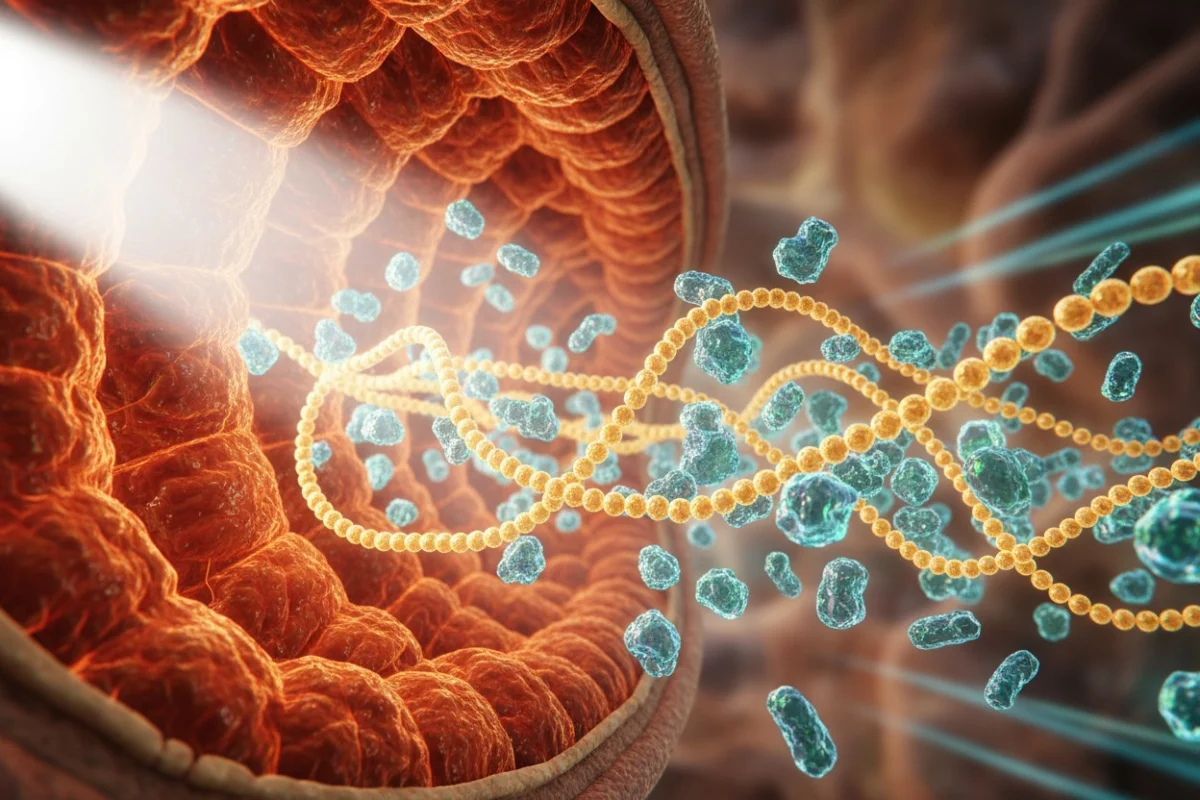
In a breakthrough that bridges the gap between ancient culinary tradition and modern environmental toxicology, South Korean researchers have unveiled a compelling potential solution to the global nanoplastics crisis. A study published on Monday, May 18, in the journal Bioresource Technology reveals that a specific probiotic strain derived from kimchi—the traditional Korean dish of fermented vegetables—may possess the unique ability to bind to nanoplastics within the human intestine, facilitating their safe excretion from the body.
The study, conducted by the World Institute of Kimchi (WiKim) under the South Korean Ministry of Science and ICT, identifies the strain Leuconostoc mesenteroides CBA3656 as a potent biological tool. As nanoplastics increasingly infiltrate our food supply and drinking water, this discovery offers a glimmer of hope for mitigating the long-term health risks associated with the silent accumulation of synthetic polymers in human tissue.
The Invisible Threat: A Primer on Nanoplastics
To understand the significance of the WiKim study, one must first grasp the pervasive nature of the threat. Nanoplastics, defined as plastic particles smaller than one micrometer, are the result of the physical and chemical degradation of larger plastic waste. Unlike microplastics, which can often be seen with the naked eye, nanoplastics are insidious; they operate on a cellular level, capable of bypassing the body’s primary biological barriers.
Recent data paints a startling picture of our exposure. A landmark 2025 study highlighted that an average liter of bottled water contains approximately 240,000 plastic particles, with a staggering 90% categorized as nanoplastics. Once ingested, these particles do not simply pass through the digestive tract; they have been documented in the bloodstream, the brain, and various vital organs.
The medical community has grown increasingly alarmed. Emerging research links the chronic ingestion of these particles to severe health outcomes, including an elevated risk of stroke, heart attack, Parkinson’s disease, and various forms of dementia. As the primary route of entry is the digestive system, the search for a way to intercept these particles before they translocate into the bloodstream has become a primary focus of modern clinical research.
A Chronology of the Research
The discovery of Leuconostoc mesenteroides CBA3656 did not happen by chance. It is the result of a deliberate, multi-year investigation into the microbial diversity of traditional fermented foods.
- Initial Screening (2022–2023): Researchers at WiKim, led by Drs. Se Hee Lee and Tae Woong Whon, began an extensive screening process of various kimchi-derived microorganisms. Their hypothesis was that the robust, acid-tolerant bacteria found in fermented environments might possess surface properties capable of interacting with environmental contaminants.
- Laboratory Benchmarking (2024): The team established a comparative framework, testing several strains against polystyrene nanoplastics (PS-NPs). The goal was to find a strain that remained stable and active in the harsh, acidic environment of the human stomach and the complex chemistry of the small intestine.
- Simulated Intestinal Trials (Early 2025): The researchers utilized bioreactors to replicate the conditions of the human gut. It was here that the L. mesenteroides CBA3656 strain demonstrated its superiority, maintaining high adsorption rates where other strains failed.
- In Vivo Validation (Late 2025): The final phase involved germ-free mouse models, providing the "smoking gun" evidence needed to prove that the probiotic not only binds to nanoplastics in a lab dish but actually facilitates their transit out of a living organism.
Performance Metrics: Why the Kimchi Strain Succeeds
The efficacy of L. mesenteroides CBA3656 lies in its resilience. In initial laboratory tests under standard, neutral conditions, the strain achieved an adsorption efficiency of 87%. For context, this was compared against a high-performing reference strain, Latilactobacillus sakei CBA3608, which clocked in at 85%.
However, the true test of any probiotic is its performance in the human body. When the conditions were adjusted to simulate the human digestive tract—introducing bile salts, fluctuating pH levels, and digestive enzymes—the performance gap widened dramatically.
The reference strain, L. sakei, saw its adsorption efficiency plummet to a mere 3%. In stark contrast, the kimchi-derived L. mesenteroides CBA3656 maintained a binding level of 57%. This suggests that the surface proteins or the structural architecture of the CBA3656 cell wall are uniquely suited to "capture" nanoplastics in the specific chemical environment of the human gut, preventing the particles from adhering to or crossing the intestinal lining.
Evidence from the Mouse Models
To validate these laboratory findings, the team utilized germ-free mice, which provide a clean slate for testing the impact of specific microbial additions. The methodology was straightforward: the test group was administered the CBA3656 probiotic, while a control group was not.
Upon analyzing the fecal matter of both groups, the researchers discovered that the mice treated with the probiotic excreted more than double the amount of nanoplastics compared to the control group. This is a critical finding, as it indicates that the bacteria are not just binding to the plastic but are actively shepherding it through the digestive process for elimination. By increasing the "fecal burden" of nanoplastics, the probiotic effectively reduces the net amount of plastic that remains in the gut available for absorption into the body’s systemic circulation.
Official Perspectives and Scientific Implications
Dr. Se Hee Lee, the lead researcher of the study, emphasized the broader implications of the findings during a press conference following the publication. "Plastic pollution is increasingly recognized not only as an environmental issue but also as a public health concern," Dr. Lee noted. "Our findings suggest that microorganisms derived from traditional fermented foods could represent a new biological approach to address this emerging challenge."
The study is part of a larger, growing body of evidence that suggests our diet may be our first line of defense against the Anthropocene’s pollutants. A recent comprehensive review of dietary interventions suggested that a combination of probiotics, high-fiber intake, and antioxidants could serve as a protective barrier against the systemic inflammation and cellular damage caused by microplastic exposure.
However, the team at WiKim remains cautious. While the results in animal models are statistically significant and highly promising, they represent only the first step. The researchers noted that human clinical trials are the necessary next phase to determine dosage, safety, and long-term efficacy in the human digestive ecosystem.
Future Directions: Beyond the Lab
The success of L. mesenteroides CBA3656 has opened a new frontier for the World Institute of Kimchi. Their research agenda now includes:
- Exploration of Microbial Diversity: Investigating other strains within the kimchi ecosystem that may have synergistic effects when combined with CBA3656.
- Product Development: Exploring the viability of creating specialized, high-potency probiotic supplements designed specifically for those living in high-exposure areas or those concerned about their "plastic footprint."
- Human Clinical Trials: Partnering with clinical researchers to design double-blind, placebo-controlled studies to assess if the same excretion-promotion effect occurs in human subjects.
- Environmental Applications: Studying whether these bacteria can be used in wastewater treatment plants or other environmental cleanup efforts to "pre-filter" plastics before they enter the water supply.
As humanity grapples with the reality that plastic has become a fundamental part of the global food chain, the realization that a traditional, fermented food source—a staple of the Korean diet for centuries—might provide a natural antidote is nothing short of profound. While we are years away from a "kimchi-based" nanoplastic treatment protocol, this study provides a concrete, evidence-based pathway for integrating traditional wisdom with high-tech biotechnology.
In a world where we are increasingly defined by the synthetic materials we consume, the L. mesenteroides CBA3656 discovery serves as a reminder that nature often provides the tools to address the problems we create—if we are only willing to look closely enough at the microscopic life forms we have been cultivating for generations.