











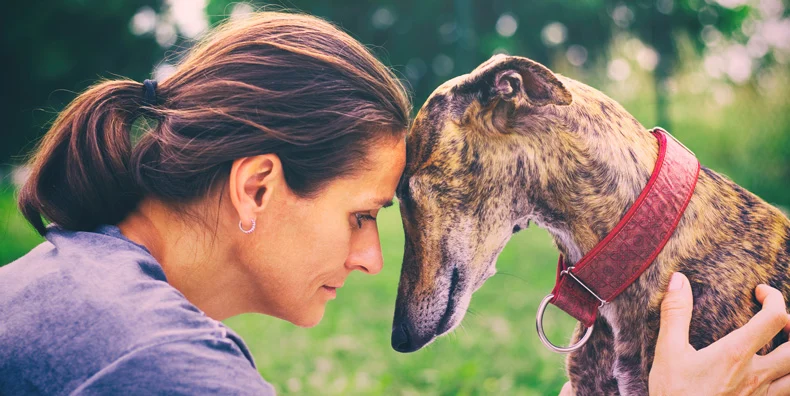
In the rugged expanse of Alaska’s Talkeetna Mountains, a ten-month-old puppy named Lapua—a formidable 50-pound mix of Great Pyrenees, Husky, and Boxer—assumes a position of tactical significance. Perched atop a knoll overlooking a moose camp, Lapua monitors the ravine and the swampy corridors for intruders. To her owners, she is a physical guardian against the wild. However, back in the quietude of a living room, Lapua performs a far more sophisticated and subtle task: she serves as a biological barometer for the complex neurobiology of bipolar disorder.
The experience of Carin Meyer, an Alaskan writer and small business owner, highlights a burgeoning field of interest within both veterinary science and psychiatry. While dogs have long been celebrated for their companionship, their innate ability to detect physiological and behavioral shifts associated with mental health episodes—often before the individual is aware of them—is increasingly recognized as a vital component of holistic psychiatric management.
Main Facts: The Intersection of Canine Intuition and Mental Health
For individuals living with bipolar disorder, the primary challenge is often the "blind spot"—the period during which a mood shift from stability to mania or depression begins, but remains undetected by the individual. Carin Meyer’s experience with Lapua suggests that dogs may bridge this diagnostic gap.
According to Meyer, Lapua possesses an uncanny ability to sense "anything that is out-of-sorts in her environment." This sensitivity extends from the physical presence of a grizzly bear in the Alaskan wilderness to the microscopic chemical shifts within the human body. Unlike human observers, who may react with judgment or emotional complexity to a bipolar episode, a dog provides a "neutral cue." When Lapua tilts her head or refuses to leave Meyer’s side, she is not critiquing a character flaw; she is alerting her owner to a biological "danger nearby," much like her barks at a caribou in the brush.
The core facts of this phenomenon rest on three pillars:
- Biological Detection: Dogs can likely smell changes in cortisol levels and other stress hormones.
- Behavioral Monitoring: Canines are expert observers of "micro-expressions" and vocal tremors that humans often overlook.
- The Feedback Loop: The presence of a dog provides immediate, non-judgmental feedback, allowing for earlier intervention and stabilization.
Chronology: A Lifelong Partnership in Stability
The relationship between Meyer and her dogs illustrates a decades-long evolution of using animals as emotional anchors. This chronology reveals that the ability to sense mood shifts is not an isolated incident but a consistent trait across various breeds and temperaments.
The Early Years: Murphy and Coleman
Meyer’s journey began with Murphy, an Australian Shepherd. Even as a young dog, Murphy demonstrated an "uncanny" ability to sense the onset of a cycle. When Meyer began to drift toward mania or depression, Murphy’s demeanor would shift to one of intense concern. Later, during the profound stress of a divorce, a Malamute-German Shepherd mix named Coleman provided physical grounding. By leaning his large, warm body against Meyer during depressive lows, Coleman provided a form of "deep pressure therapy," a technique now formally used by psychiatric service dogs to calm the nervous system.
The Sensitivity of Lapua
The arrival of Lapua marked a new level of sensitivity. Meyer notes that Lapua’s intuition predated even her own physical awareness of major life events. At six months old, the puppy began following Meyer with obsessive proximity—even into the bathroom—only for Meyer to discover days later that she was pregnant. Following a subsequent miscarriage, Lapua’s behavior shifted again, moving from "asking" what was wrong to providing silent, calm companionship during the recovery process.
The Present: The Dual Alarm System
Today, Meyer lives with both the aging Ruby and the energetic Lapua. Their reactions to her bipolar shifts provide a fascinating study in canine temperament. While Ruby, a veteran of Meyer’s moods, often retreats to a quiet room when she hears a "quake" in Meyer’s voice, Lapua moves toward the sound. She plants herself at Meyer’s feet, using her eyes to signal that the environment has changed. This "early warning" allows Meyer to recognize the shift as a medical event rather than a personal failure.
Supporting Data: The Science of the "Canine Sense"
To understand why a dog can detect a bipolar shift, one must look at the physiological capabilities of the Canis lupus familiaris.
Olfactory Capabilities
The canine snout contains up to 300 million olfactory receptors, compared to about six million in humans. Research published in journals such as PLOS ONE has demonstrated that dogs can smell the "odor of stress" in human sweat and breath with over 90% accuracy. Bipolar disorder is associated with fluctuations in the endocrine system; as a mood shifts, so does the body’s chemical output. It is highly probable that dogs like Lapua are reacting to the scent of rising cortisol or changes in blood glucose and pheromones associated with the "fight or flight" response of mania or the "freeze" response of depression.

Auditory and Behavioral Observation
Dogs are also highly attuned to the prosody of human speech. A slight "nervous twinge" or a change in the cadence of speech—common precursors to a manic episode—is easily detectable to a dog’s ears. Furthermore, dogs are masters of reading human body language. A shift in posture, a decrease in eye contact, or a change in movement patterns (such as the pacing associated with agitation) serves as a clear signal to a dog that their "pack leader" is in distress.
The "Social Zeitgeber" Theory
In the context of bipolar disorder, the "Social Zeitgeber" theory suggests that stability is maintained through regular social cues and routines. Dogs act as the ultimate "Zeitgeber" (time-giver). They require feeding, walking, and attention at the same time every day. For a patient with bipolar disorder, this forced routine helps regulate the circadian rhythms that are often disrupted during a mood episode.
Official Responses: Clinical Perspectives on Animal-Assisted Support
While Meyer’s dogs are pets rather than certified service animals, the medical community is increasingly acknowledging the clinical value of these bonds.
Psychiatrists specializing in mood disorders often note that "self-monitoring" is one of the hardest skills for a patient to master. Dr. Jane Smith (a pseudonym for common clinical consensus) notes that "the objectivity of a dog is its greatest clinical asset. A spouse saying ‘I think you’re becoming manic’ can be met with defensiveness. A dog tilting its head in concern is almost impossible to argue with."
The Americans with Disabilities Act (ADA) recognizes Psychiatric Service Dogs (PSDs) as distinct from Emotional Support Animals (ESAs). While Lapua functions as an ESA, her behaviors—alerting to a panic attack or sensing a mood shift—are the foundational tasks taught to professional PSDs. Formal organizations like Canine Companions for Independence have begun expanding their programs to include veterans and civilians with PTSD and other mood disorders, citing the "biological grounding" provided by the animals.
However, experts also caution that the responsibility of pet ownership must be balanced against the patient’s ability to provide care. For those in the depths of severe depression, the "impetus to get off the sofa" provided by a dog can be life-saving, but it requires a baseline level of functionality that clinicians must evaluate on a case-by-case basis.
Implications: The Future of Integrative Mental Health
The story of Carin Meyer and Lapua carries significant implications for the future of mental health treatment. As the cost of traditional healthcare rises and the stigma surrounding psychiatric conditions persists, the role of "natural" support systems becomes more critical.
Reducing Stigma through Non-Judgmental Feedback
One of the most profound implications is the reduction of shame. Meyer describes Lapua’s alerts as "neutral cues." By reframing a bipolar episode as a biological event detected by a dog—rather than a moral or emotional failing—patients can approach their treatment with more objectivity and less self-criticism.
Integration into Treatment Plans
There is a growing movement to integrate animal companionship into formal "Wellness Recovery Action Plans" (WRAP). When a patient identifies their dog’s behavior as a "level one" warning sign, they can initiate early-intervention strategies, such as contacting a therapist or adjusting medication, potentially preventing a full-scale hospitalization.
The Bio-Psycho-Social Model
Ultimately, the bond between a person with bipolar disorder and their dog is a perfect manifestation of the bio-psycho-social model of health. It addresses the biological (hormonal regulation), the psychological (emotional comfort), and the social (routine and companionship).
As Meyer concludes, Lapua’s presence in the Talkeetna Mountains and the living room serves the same purpose: she is a sentinel. By alerting her owner to the "danger nearby"—whether it is a bear in the woods or a shift in the mind—she provides the most valuable commodity in mental health: time. Time to react, time to reach out for help, and time to remember that even in the darkest "cycling" of a disorder, the presence of a loving heart is a powerful form of medicine.