






By Helen Branswell and Anil Oza
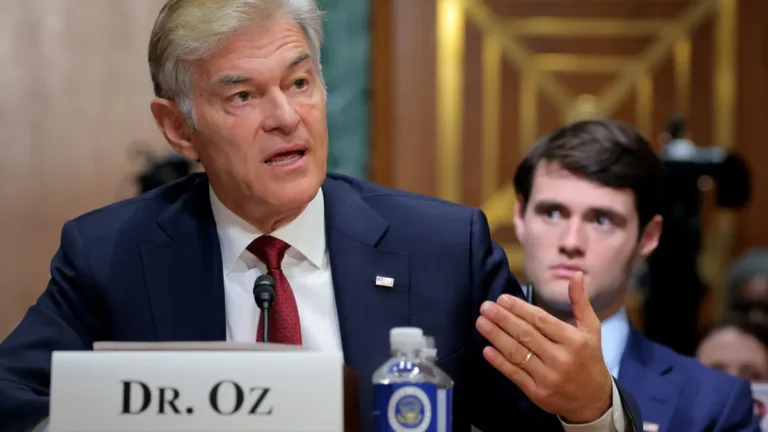
The National Institute of Allergy and Infectious Diseases (NIAID)—the crown jewel of federal infectious disease research and the agency famously led for decades by Anthony Fauci—is once again facing a leadership crisis. Jeffery Taubenberger, who had been serving as the acting head of the institute, has stepped down from his post, according to disclosures made during a Senate Appropriations Committee hearing on Thursday.
The news, first revealed by Sen. Tammy Baldwin (D-Wis.), confirms a period of profound uncertainty at the helm of an agency tasked with everything from pandemic preparedness and vaccine development to the study of chronic immunological conditions. The sudden nature of the departure, combined with the lack of official communication from the Department of Health and Human Services (HHS), has left the scientific community and NIAID staff in a state of growing unease.
Main Facts: The Disappearance of Leadership
The revelation that Taubenberger is no longer leading the NIAID was not issued via a press release from the NIH or HHS, but rather through a legislative oversight process. During Thursday’s Senate hearing, Sen. Baldwin addressed the leadership vacancy, noting that Taubenberger had vacated the position.
Taubenberger had been serving in the acting capacity since April 2025. His tenure was viewed by many in the research community as a period of necessary stability following the high-profile departure of previous leadership. However, industry insiders and academic researchers had begun circulating rumors roughly two weeks ago that Taubenberger had quietly exited the role.
As of this writing, HHS has remained steadfastly silent. STAT reporters have made repeated inquiries to the department regarding Taubenberger’s status, the timeline of his departure, and the identity of his successor. All such queries have been met with total silence, a departure from the standard transparency protocols expected of a federal agency of such critical importance to public health.

Chronology: A Timeline of Instability
To understand the gravity of the current situation, one must look at the recent history of the NIAID.
- Pre-2022: The NIAID enjoyed a period of unprecedented institutional stability under Dr. Anthony Fauci, who led the institute from 1984 through December 2022.
- January 2023: Dr. Hugh Auchincloss took over as acting director following Fauci’s retirement, tasked with steering the institute through the post-pandemic transition.
- April 2025: Jeffery Taubenberger, a highly respected virologist known for his foundational work on the 1918 influenza virus, assumed the role of acting director.
- Mid-October 2025: Whispers begin circulating within the infectious disease community regarding Taubenberger’s status.
- Late October 2025: Internal staff at NIAID report that they have not been briefed on the change in leadership, despite rumors gaining traction.
- Thursday, November 2025: Sen. Tammy Baldwin publicly acknowledges the vacancy during a Senate Appropriations Committee hearing, officially confirming the leadership vacuum.
The lack of a formal announcement suggests a chaotic transition process that stands in stark contrast to the standard operating procedures for executive-level appointments within the federal government.
Supporting Data: The Importance of NIAID
The NIAID is not merely a bureaucratic entity; it is the primary engine of global infectious disease research. Its budget, which typically sits in the billions, funds thousands of clinical trials and basic science research projects annually.
Key Areas of Responsibility:
- Pandemic Preparedness: The institute maintains the strategic vision for how the United States responds to emerging threats, including novel coronaviruses, H5N1 avian influenza, and other zoonotic pathogens.
- HIV/AIDS Research: NIAID continues to lead the global effort to develop an HIV vaccine and improved therapeutics, an effort that has spanned over four decades.
- Allergy and Immunology: Beyond infectious diseases, the institute is the primary funder for research into asthma, food allergies, and autoimmune disorders that affect millions of Americans.
- Clinical Trial Infrastructure: Through programs like the Vaccine Research Center, the NIAID provides the physical and intellectual infrastructure for rapid vaccine deployment during crises.
Without a permanent—or even a clearly defined acting—director, the institute’s ability to pivot during an emergency or manage long-term research grants is significantly hampered.
The Silence from HHS: A Failure of Communication?
The absence of an official statement from the Department of Health and Human Services is perhaps the most concerning aspect of this development. In the federal system, the NIH director and the directors of its various institutes are positions that require clear accountability.
"It is deeply troubling," says one academic researcher who works closely with NIAID on vaccine initiatives. "We are in the midst of a flu season where avian influenza remains a constant, if quiet, threat. To have the leadership of the premier infectious disease agency shrouded in this level of secrecy is not just poor management—it is a public health risk."

When journalists reach out to a federal agency for clarification on leadership, the failure to acknowledge the query is often interpreted as an indication of internal dysfunction. Whether the silence is a result of a pending political appointment or an internal disagreement over the future of the institute remains the subject of intense speculation in the D.C. Beltway.
Implications: What This Means for Science
The departure of a leader, especially an acting one, often triggers a "wait-and-see" approach among the scientific workforce. When the leadership of a multibillion-dollar agency is in flux, the following ripple effects are typically observed:
1. Stalled Strategic Initiatives
Long-term projects—such as the development of universal flu vaccines or next-generation HIV treatments—require steady, consistent leadership to navigate the bureaucratic hurdles of the NIH. When the person at the top is constantly changing, projects can lose momentum or suffer from budgetary ambiguity.
2. Loss of Institutional Knowledge
Jeffery Taubenberger brought decades of virology expertise to the role. His departure removes a significant scientific voice from the decision-making process at a time when the agency needs to grapple with complex scientific questions regarding climate change, zoonotic spillover, and antimicrobial resistance.
3. Morale Among Staff
The internal culture at NIAID is historically one of dedication and scientific rigor. However, as one anonymous staff member noted, the environment is currently one of confusion. "We hear the same things the public hears," the employee said. "When you don’t know who is calling the shots, it becomes difficult to maintain the focus necessary for high-level research."
4. Congressional Oversight
As evidenced by Sen. Baldwin’s comments, Congress is paying attention. The NIAID is a major recipient of taxpayer funding, and legislators are becoming increasingly frustrated with the lack of transparency. If the vacancy persists, it is likely that the Senate Appropriations Committee will demand a formal briefing from the HHS Secretary to explain the instability.

Conclusion: A Critical Juncture
The NIAID is at a critical juncture. The post-Fauci era has proven to be more volatile than many anticipated. While the institute is filled with world-class scientists who continue to push the boundaries of medicine, the lack of consistent, public-facing leadership creates an unnecessary distraction and a potential vulnerability.
As the scientific community waits for HHS to break its silence, the fundamental question remains: Who will guide the NIAID through the next phase of its history? Until that question is answered, the institute—and by extension, the nation’s infectious disease preparedness—will remain in a state of suspended animation.
For now, the hallways of the NIAID remain busy with the vital work of science, but the office of the director remains conspicuously empty. Whether this vacancy is filled by a permanent appointee or a new acting director, the urgency of the situation cannot be overstated. The public, the research community, and the legislative branch deserve clarity, transparency, and, most importantly, the stable leadership required to face the inevitable health challenges of the future.