







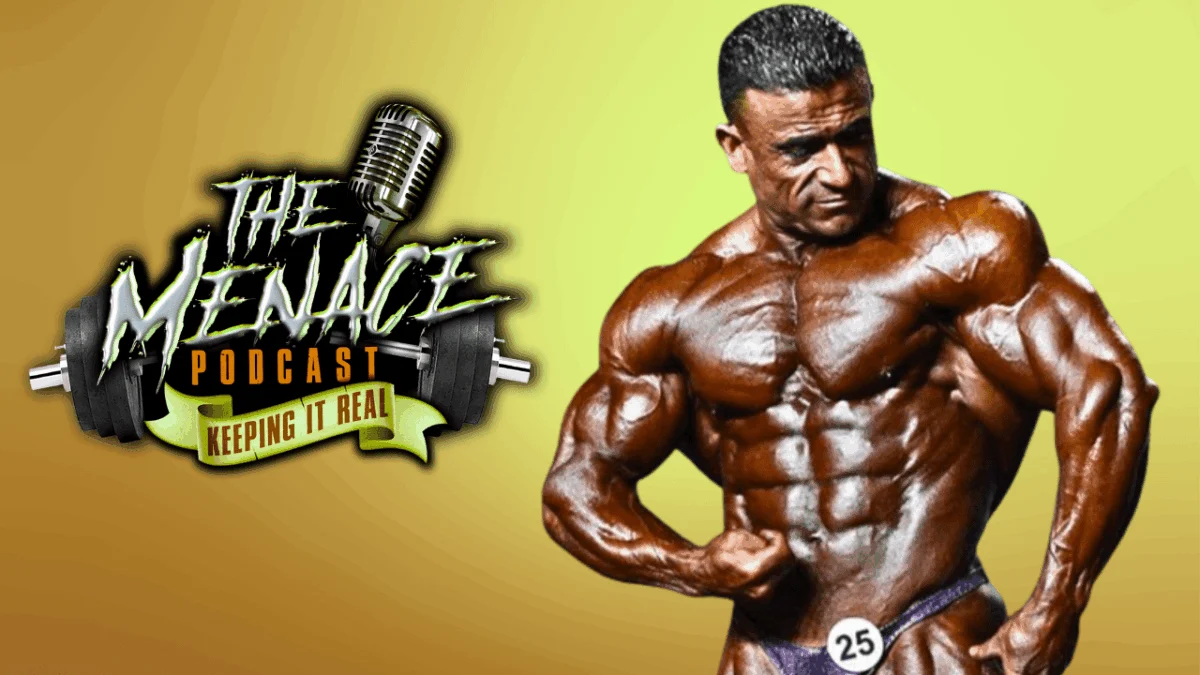
In the high-stakes world of professional bodybuilding, where physical perfection is the ultimate goal, the relationship between a coach and an athlete is often likened to a marriage. It requires absolute trust, shared sacrifice, and a clear understanding of expectations. However, a seismic shift has occurred in the bodybuilding landscape following Episode 285 of The Menace Podcast. Kamal Elgargni, a decorated legend of the sport and the tactical mind behind Andrew Jacked’s recent meteoric rise, has publicly revealed that their professional partnership is likely at an end.
The revelation, delivered to a stunned panel featuring host Dennis James, Milos Sarcev, and Jose Raymond, has sent shockwaves through the community. What was once considered one of the most promising coaching pairings in the IFBB Pro League has dissolved into a public dispute over compensation, professional respect, and the fundamental structure of athlete-coach agreements.
The Main Facts: A Breakdown of the Dispute
Kamal Elgargni, a 212 Olympia champion (2019), Arnold Classic winner (2018), and the 2023 Masters Olympia Open champion, is widely respected for his technical expertise and "old-school" discipline. When he began mentoring Andrew Jacked—a competitor noted for his freakish proportions and aesthetic appeal—the results were immediate and lucrative.
Under Elgargni’s guidance, Jacked secured historic victories at the Arnold Classic U.S. and the Arnold Classic U.K., netting a combined $1 million in prize money. Despite these monumental successes, Elgargni alleges that the financial arrangement governing their collaboration was never formalized, leading to a breakdown in communication that eventually rendered the partnership untenable.
The core of the dispute centers on three specific grievances:
- Lack of Transparent Compensation: Elgargni claims he was never properly remunerated for the intensive coaching provided during the 2025 Olympia and Romania Pro cycles.
- Perceived Disrespect: A specific incident involving travel arrangements for the Arnold Classic U.K. served as the catalyst for the irreparable damage to their relationship.
- The "Valuation" Gap: Disagreements regarding the use of gifts (such as a luxury watch) in lieu of professional fees, and a fundamental impasse over percentage-based compensation.
Chronology of the Fallout
The timeline of this breakdown illustrates how a lack of clear, written contracts can jeopardize even the most successful professional unions.
Phase 1: The Honeymoon Period
The collaboration began following the 2025 Olympia. At the time, Elgargni entered the arrangement with a focus on mentorship and development, perhaps underestimating the necessity of a strict financial contract. Throughout the 2025 Olympia and the Romania Pro, where Jacked secured a top-three finish and a victory respectively, no concrete financial terms were established.
Phase 2: The $3,000 Gesture
Following the early successes, Andrew Jacked provided a $3,000 payment to Elgargni. From the athlete’s perspective, this may have been seen as a token of appreciation. However, Elgargni and his wife viewed the amount as a significant insult, arguing that it failed to account for the travel, time, and intellectual property invested into Jacked’s physique.
Phase 3: The "Airport Incident"
The situation reached a boiling point in March 2026, while the pair was traveling to the Arnold Classic U.K. Elgargni recounts that upon arrival at the airport, he discovered that Jacked had booked himself in business class while Elgargni was placed in economy. While Jacked reportedly cited a "frequent flyer upgrade" as the reason for his premium seat, the optics of the situation—and the lack of consideration for his mentor—deeply wounded Elgargni. He described the moment as feeling like being "stabbed in the back."
Phase 4: Failed Reconciliation Attempts
Attempting to salvage the relationship, Jacked later sent a Rolex watch to Elgargni’s home. Elgargni, however, rejected the gesture, emphasizing that his services required professional compensation rather than material gifts. Subsequent negotiations, including an offer of $5,000 for the 2026 Olympia prep, were dismissed by Elgargni, who countered with a demand for 5% of the total prize money. This remains the primary point of impasse.
Supporting Data: The Economics of Elite Bodybuilding
To understand why this dispute has captivated the industry, one must look at the financial stakes involved in modern bodybuilding. When Andrew Jacked won $750,000 at the Arnold Classic U.S., it set a new industry benchmark for prize purses.
In professional sports, coaching fees typically range from a flat monthly rate to a percentage of total earnings (usually between 5% and 10% for high-level athletes). Elgargni’s request for 5% is, by most industry standards, modest. As Dennis James noted during the podcast, "5% is actually cheap."
The confusion stems from the informal nature of the "gentleman’s agreement." In the bodybuilding world, many coaches and athletes begin their relationships on a foundation of friendship and mutual benefit. However, as the prize money reaches the six-figure mark, these informal agreements inevitably collapse under the weight of financial realities.
Official Perspectives and Industry Commentary
The Menace Podcast panel offered a balanced, if critical, look at the situation.
- Dennis James: James highlighted the dangers of "ambiguity." He noted that because Elgargni initially signaled he wasn’t primarily focused on money, Jacked likely interpreted the lack of a contract as a lack of need for one. James emphasized that in the modern era, "you need to be clear upfront before everything starts."
- Milos Sarcev: Bringing his own experience as a high-profile coach, Sarcev advocated for "crystal clear" written agreements. He noted that he has navigated similar pitfalls and now insists on formalized contracts to avoid the exact type of "misunderstanding" currently plaguing Elgargni and Jacked.
The sentiment among the fanbase, as seen in the comments section of the Muscle & Fitness YouTube channel, is largely in favor of professional transparency. The prevailing view is that whether it is a $1,000 or a $1,000,000 prize, the professional nature of the relationship should have been codified from day one.
Implications: What This Means for the 2026 Olympia
The most pressing question for the bodybuilding community is how this split will affect Andrew Jacked’s performance at the 2026 Mr. Olympia.
For Andrew Jacked:
The athlete now finds himself in a difficult position. Replacing a mentor of Elgargni’s caliber just months before the biggest show on earth is a massive hurdle. Furthermore, the public nature of this fallout could potentially alienate other elite coaches who may fear that their financial security will not be guaranteed. Additionally, Jacked’s public comments regarding his intent to donate prize money to charity—a claim Elgargni openly questioned—have added a layer of skepticism to the athlete’s public persona.
For Kamal Elgargni:
Elgargni has proven that he can transform top-tier talent into champions. His reputation as a coach remains largely intact, though this episode serves as a cautionary tale about the necessity of protecting one’s own interests. It is likely that Elgargni will return to coaching, but future athletes under his wing can expect a more rigid, contractual approach to their financial dealings.
For the Industry:
This situation serves as a "wake-up call" for the sport. As bodybuilding continues to grow and prize purses increase, the "old-school" way of doing business—handshakes and verbal promises—is becoming obsolete. The future of professional bodybuilding will likely demand a more corporate, transparent, and regulated approach to athlete management.
Ultimately, the partnership between Kamal Elgargni and Andrew Jacked stands as a classic case of what happens when personal respect and professional expectations fail to align. Whether this leads to a reconciliation or a definitive end, the story has already left an indelible mark on the road to the 2026 Olympia. The bodybuilding world will be watching closely to see how both parties navigate the aftermath of this high-profile fallout.