





18 May, 2026 – As the medical community turns its gaze toward Barcelona for the highly anticipated European Respiratory Society (ERS) Congress 2026, organizers are issuing a robust advisory to protect delegates from an increasingly sophisticated wave of cyber-fraud. Scheduled to take place both in-person in Barcelona, Spain, and via a global digital platform from 5–9 September, 2026, the Congress represents the pinnacle of respiratory research. However, its prestige has also made it a prime target for malicious actors looking to exploit the thousands of scientists, clinicians, and researchers expected to attend.
The ERS is taking proactive steps to ensure that the focus remains on groundbreaking scientific exchange rather than the threat of identity theft or financial fraud.
I. Main Facts: The Threat Landscape
The ERS Congress is an annual highlight for the global respiratory health calendar, drawing thousands of professionals. Unfortunately, the event’s high profile has attracted a persistent and organized network of scammers. These entities frequently set up sophisticated, "look-alike" websites that mimic the official ERS branding. These fraudulent portals often lure unsuspecting attendees with promises of discounted registration fees, exclusive hotel rates, or priority travel bookings.
The objective of these syndicates is twofold: to steal financial data through fake payment gateways and to harvest personal information (PII) that can later be used for identity theft or targeted phishing campaigns. In recent years, these "congress scams" have become more localized and professionalized, making them increasingly difficult for the average user to distinguish from legitimate service providers.
II. Chronology of Security Measures
The ERS has established a clear timeline for the 2026 Congress to ensure that prospective attendees remain protected throughout the planning cycle:
- 18 May, 2026: Formal issuance of the security and fraud awareness advisory to the international scientific community.
- Ongoing (Pre-Registration Phase): Continuous monitoring of the digital landscape for spoofed URLs and unauthorized ERS-branded platforms.
- 1 July, 2026: Early-bird registration deadline. This date is critical, as scammers often ramp up activity just before significant financial deadlines, creating a sense of "artificial urgency."
- 5–9 September, 2026: The ERS Congress 2026 in Barcelona. Vigilance continues throughout the event, as scammers may target attendees with "on-site" travel updates or late-registration "deals."
III. Supporting Data: Why Vigilance Matters
Recent trends in conference-related fraud suggest that the healthcare sector is a primary target. According to international cybersecurity reports, medical congresses are vulnerable due to the high volume of international travel and the necessity for professional certification.
In previous years, attendees have reported being contacted by entities claiming to be "official housing bureaus" for major European cities. These groups use high-pressure tactics, demanding immediate payment via wire transfer—a red flag that should always be avoided. The ERS has reiterated that all official transactions are handled through verified, secure portals. By directing attendees to specific, vetted partners, the ERS aims to eliminate the gray area where these scammers typically operate.
IV. The Four Pillars of Protection: Official ERS Guidance
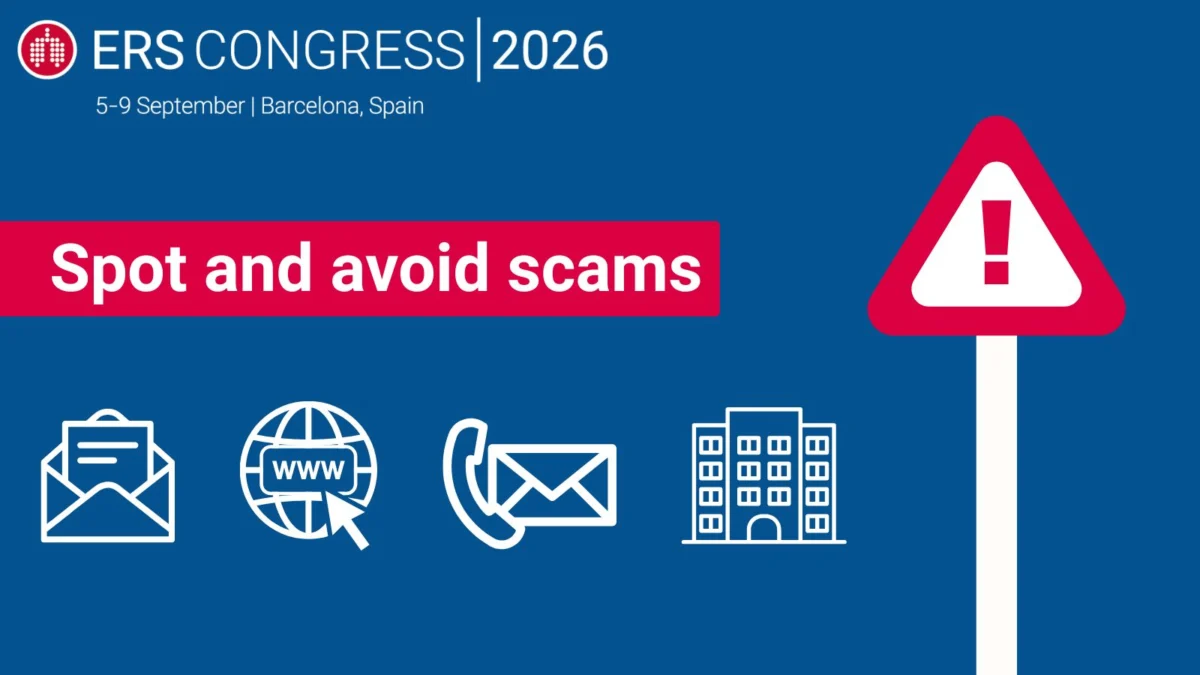
To ensure a secure experience for all delegates, the ERS has released four essential tips to mitigate risk:
1. Verify the Sender (Email Authenticity)
Not all digital communication is created equal. The ERS emphasizes that all official congress-related emails originate from one of two sources:
- Directly from the
@ersnet.orgdomain. - From a confirmed list of official partners and suppliers, which can be verified via the official ERS Partners page.
If an email claims to be from the ERS but originates from a public domain like Gmail, Outlook, or a slightly misspelled domain, it should be treated as suspicious immediately.
2. Utilize Only Verified Partners
The administration of the ERS Congress 2026 is strictly centralized. Registration is managed exclusively by K.I.T. Group GmbH. For hotel and travel logistics, the designated official partner is bnetwork.
Delegates are strongly encouraged to book through the official Venue, Accommodation and Travel page. Using third-party "discount" sites often results in non-existent hotel bookings or, worse, the compromise of credit card information.
3. Verify Before You Act
If a communication seems unusual, urgent, or deviates from standard professional practices, do not engage. The ERS team is available to confirm the legitimacy of any correspondence. When in doubt, navigate directly to the official ERS website by typing the address into your browser rather than clicking links embedded in unsolicited emails.
4. Cease and Report
If an attendee suspects they are in contact with a fraudulent entity, the advice is simple: cease all communication immediately. Do not provide any further information, bank details, or personal data. Report the incident directly to the ERS at [email protected] so that the organization can track the scammer’s tactics and warn other delegates.
V. Official Responses and Institutional Stance
The leadership of the ERS remains committed to the safety of its delegates. An official spokesperson noted: "Our priority is the advancement of respiratory medicine. We take the protection of our community’s personal and financial data as seriously as we take the quality of our scientific program. We are working closely with cybersecurity experts and our partners at K.I.T. Group and bnetwork to maintain a secure environment for all participants."
The ERS has invested in robust digital infrastructure to ensure that their payment gateways meet the highest international security standards (PCI-DSS compliant). They remind all attendees that no legitimate registration or housing partner will ever request payment via cryptocurrency or untraceable money transfer services.
VI. Implications for the Future of Medical Congresses
The rise in targeted cyber-fraud is a sobering reminder of the changing landscape for international scientific conferences. As medical congresses shift toward hybrid models—combining physical presence in cities like Barcelona with global digital access—the attack surface for malicious actors expands.
For the individual researcher, these threats emphasize the need for digital hygiene. It is no longer enough to be an expert in one’s medical field; one must also be a cautious participant in the digital economy. The ERS’s proactive communication is a model for other global organizations, demonstrating that transparent, ongoing education is the most effective defense against sophisticated fraud.
Moving Forward with Confidence
As the 1 July early-bird deadline approaches, the excitement for the ERS Congress 2026 continues to build. By adhering to the security protocols outlined by the ERS, delegates can ensure that their experience in Barcelona is defined by the exchange of vital medical knowledge rather than the frustration of cybercrime.
Key Contacts for Delegates:
- For Registration Queries: Contact [K.I.T. Group GmbH](mailto:[email protected]).
- To Report Fraud: Contact the [ERS Secretariat](mailto:[email protected]).
- Official Website: ersnet.org
The ERS looks forward to welcoming the global respiratory community to a safe, secure, and highly productive 2026 Congress. Remember: stay vigilant, verify your sources, and protect your digital footprint.